 0
0
 0
0
The study on oxytocin juvenile brain sex differences provides new insight into how the so-called “love hormone” influences brain development in fundamentally different ways in males and females. Rather than simply being associated with bonding and social behavior, Oxytocin plays a critical role in shaping learning, memory, and neural plasticity during early development.
Recent findings published in a neuroscience research journal and supported by work indexed through Nature reveal that oxytocin’s effects on the juvenile brain are far more complex than previously understood. The results highlight how sex-specific differences in brain development could influence vulnerability to neurological and psychiatric conditions later in life.
Oxytocin Juvenile Brain Sex Differences in Early Neural Development
The research into oxytocin juvenile brain sex differences focused on how oxytocin influences the hippocampus during a critical developmental period.
Why the Juvenile Brain Matters
The juvenile stage of brain development is one of the most sensitive phases for:
- Memory formation
- Learning capacity
- Synaptic strengthening
- Neural circuit development
During this stage, the brain is highly plastic, meaning it is more responsive to chemical signals that shape its long-term structure and function.
Focus on the Hippocampus
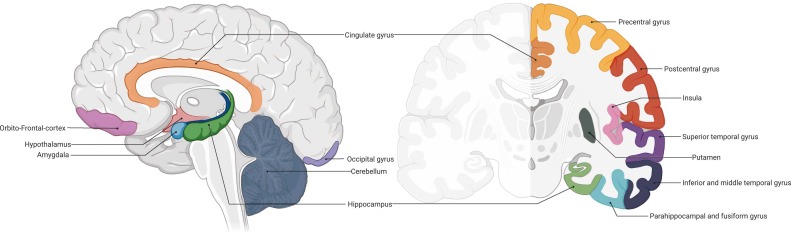
The study specifically examined the hippocampus, a brain region responsible for:
- Learning and memory processing
- Synaptic communication
- Cognitive flexibility
Researchers targeted this area because it plays a central role in long-term brain function and developmental stability.
How Oxytocin Was Studied in the Juvenile Brain
To understand oxytocin juvenile brain sex differences, scientists used a highly controlled experimental approach to isolate oxytocin’s effects.
Use of a Synthetic Oxytocin Agonist
Instead of using natural oxytocin directly, researchers used a synthetic compound called TGOT to avoid interference from similar brain chemicals.
This allowed precise observation of oxytocin-specific activity without activating related pathways.
Advanced Brain Recording Techniques
The study used detailed neuroscience methods including:
- Whole-cell patch-clamp recordings
- Electrophysiological measurements
- Synaptic activity tracking
These tools allowed researchers to monitor how individual neurons responded in real time.
Male and Female Brain Responses Show Clear Differences
One of the most important findings in the research is that male and female brains responded in completely different ways.
Effects Observed in Male Juvenile Brains
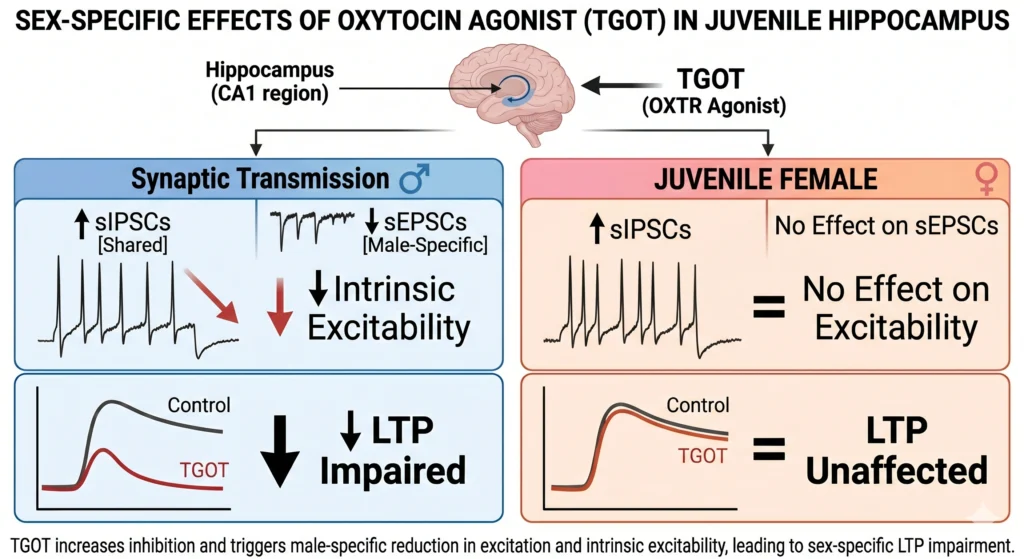
In male subjects, oxytocin significantly altered brain activity by reducing neural responsiveness.
Key findings in males included:
- Reduced neuronal excitability
- Decreased spontaneous excitatory signals
- Weakened synaptic strengthening ability
- Impaired long-term potentiation (LTP)
These changes suggest that oxytocin can dampen learning-related processes in the male juvenile brain during this stage of development.
Effects Observed in Female Juvenile Brains
In contrast, female juvenile brains showed remarkable stability.
Key findings in females included:
- No significant change in excitability
- Stable synaptic activity
- Unaffected long-term potentiation
- Preserved neural communication strength
This suggests that female juvenile brains may be less sensitive to oxytocin’s inhibitory effects during early development.
Shared Effects Across Both Sexes
Although oxytocin juvenile brain sex differences were clear, some effects were observed in both male and female brains.
Increased Inhibitory Activity
In both sexes, oxytocin increased inhibitory signaling in the brain. This means:
- Neurons were more likely to be suppressed
- Overall excitatory balance shifted slightly
- Neural regulation became more controlled
However, only males showed a strong reduction in overall brain plasticity.
What Oxytocin Juvenile Brain Sex Differences Mean for Brain Development
The findings suggest that oxytocin juvenile brain sex differences may have long-term implications for how brains develop and adapt.
Importance of Brain Plasticity
Brain plasticity refers to the brain’s ability to:
- Form new connections
- Strengthen learning pathways
- Adapt to environmental changes
When plasticity is reduced, learning and memory formation can be affected.
Potential Developmental Implications
The study suggests that sex-based biological differences could influence:
- Cognitive development pathways
- Learning efficiency
- Sensitivity to neurochemical signals
- Risk for neurological conditions
Why Sex Differences in Brain Research Matter
The discovery of oxytocin juvenile brain sex differences reinforces a major principle in neuroscience: male and female brains cannot always be treated as identical in research.
Biological Sex as a Key Research Factor
The findings emphasize that:
- Biological sex affects brain chemistry
- Developmental responses vary significantly
- One-size-fits-all models may miss critical differences
Relevance to Mental Health Research
These differences may help explain why certain neurological or psychiatric conditions show varying prevalence between males and females.
Broader Scientific Impact of the Findings
The research on oxytocin juvenile brain sex differences contributes to a growing body of work exploring how early brain development shapes lifelong outcomes.
Implications for Neuroscience
The study supports the idea that:
- Neurochemicals act differently depending on sex
- Early brain development is highly sensitive to hormonal signaling
- Cognitive outcomes may be biologically influenced from early stages
Future Research Directions
Scientists may now explore:
- How these differences evolve into adulthood
- Whether similar patterns exist in humans
- How other neurochemicals interact with sex-based brain development
Study Reference and Publication Context
The findings were published in a peer-reviewed neuroscience study and are part of ongoing research efforts in brain development science. The work contributes to broader neuroscience discussions hosted within journals indexed by Nature.
FAQ
What are oxytocin juvenile brain sex differences?
They refer to how oxytocin affects brain development differently in male and female juvenile brains.
How does oxytocin affect the juvenile brain?
It influences synaptic activity, learning ability, and memory formation in developing brains.
Why is sex important in brain research?
Because male and female brains may respond differently to the same neurochemicals during development.
What brain region was studied in this research?
The hippocampus, which is responsible for learning and memory.
Conclusion
The research on oxytocin juvenile brain sex differences reveals that brain development is far more complex than previously believed. Oxytocin, often associated with bonding and social behavior, plays a deeply influential role in shaping neural activity during early life, but its effects vary significantly between males and females. These findings highlight the importance of considering biological sex in neuroscience research and may help guide future studies on brain development and mental health.
PLEASE CLICK HERE FOR MORE NEWS