 0
0
 0
0
The Denmark train collision Hillerod Kagerup has left several passengers injured after two trains crashed early in the morning, prompting a large-scale emergency response north of Copenhagen.
Early Morning Crash Near Hillerod
The incident occurred at approximately 6:30 a.m. local time on a railway line between Hillerod and Kagerup. The area lies about 40 kilometers north of Denmark’s capital, Copenhagen.
Authorities confirmed that two trains collided on the track, resulting in a major emergency situation. Emergency services quickly arrived at the scene, including fire crews, police, and medical responders.
Location and Timing Details
The crash took place during early commuter hours, a time when many residents rely on public transportation.
Key details include:
- Time of incident: Around 6:30 a.m.
- Location: Between Hillerod and Kagerup
- Distance from Copenhagen: Approximately 40 km
Nature of the Collision
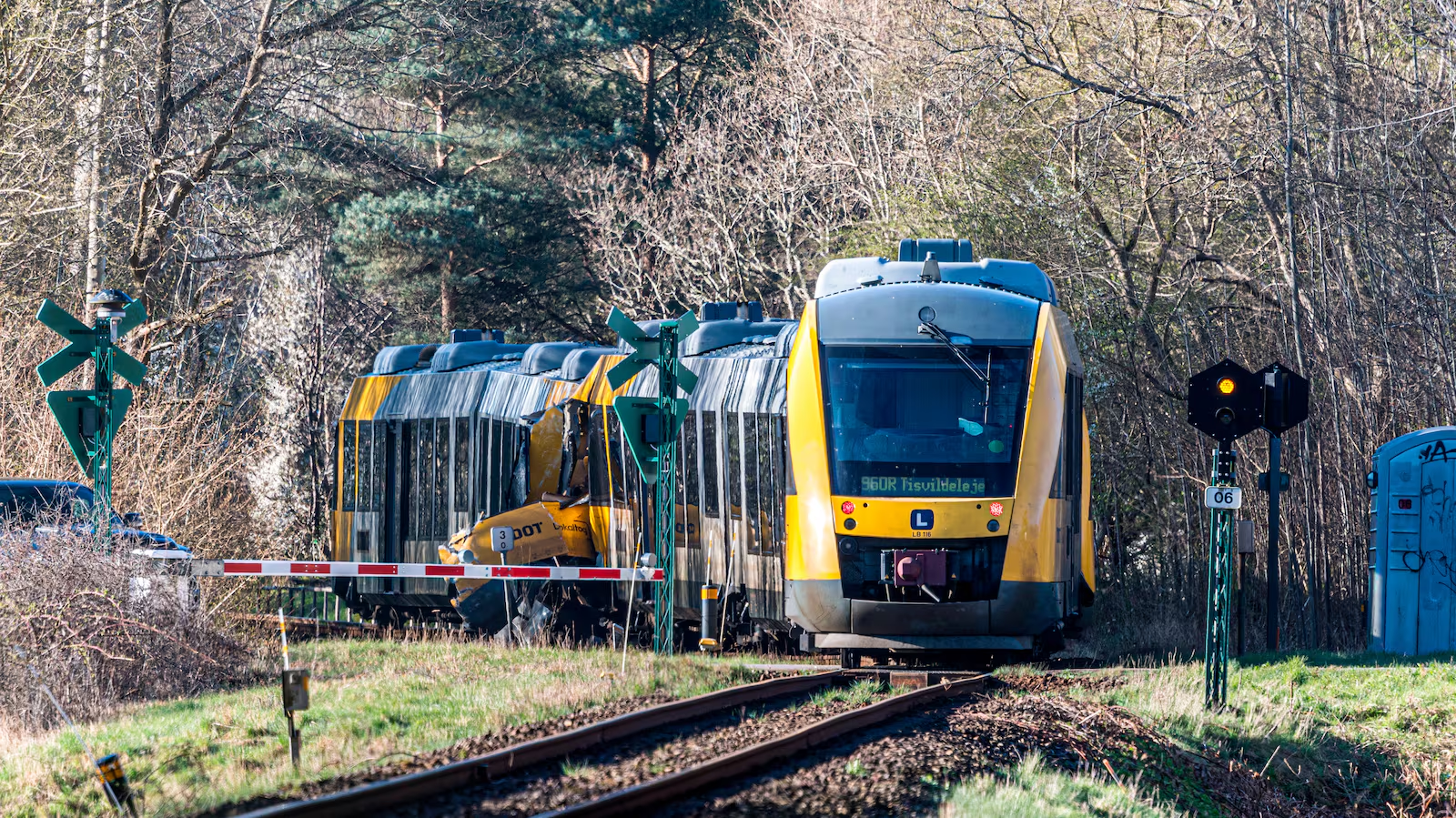
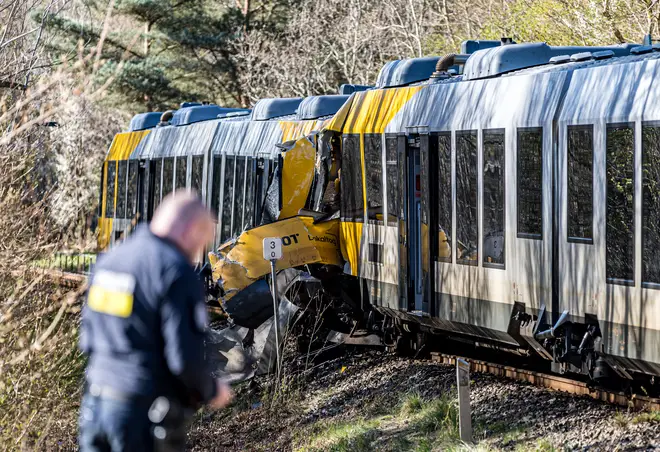
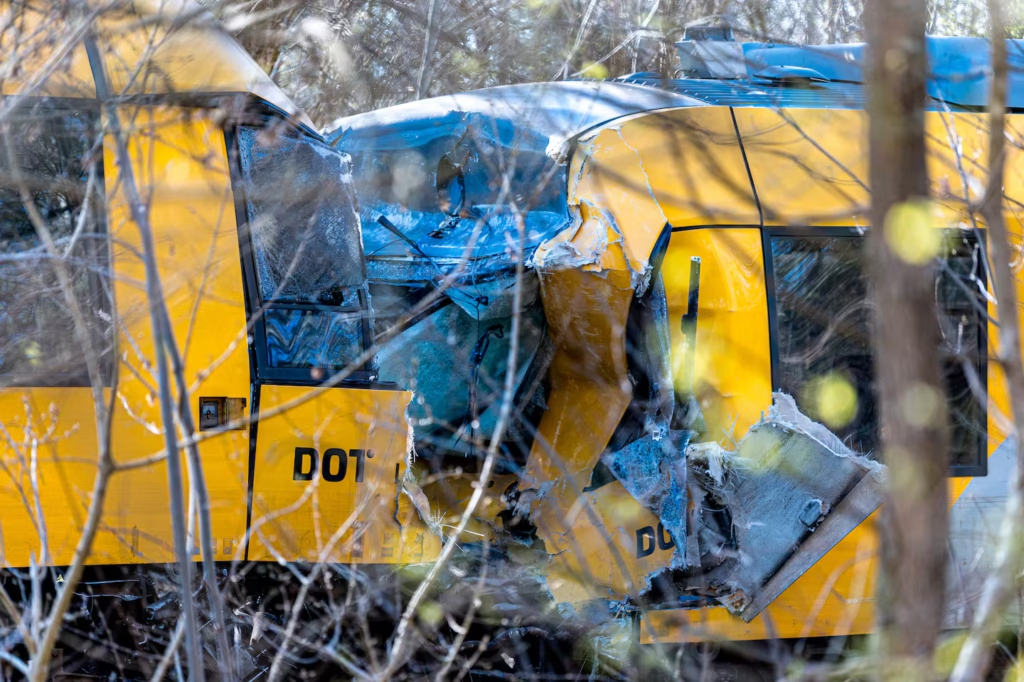
Images from the scene show significant damage to the front sections of both trains. Despite the impact, both trains remained upright on the tracks, which likely helped prevent more severe casualties.
Investigators are now examining the sequence of events that led to the Denmark train collision Hillerod Kagerup, though no official cause has been confirmed yet.
Casualties and Injuries Reported
Emergency officials reported that four individuals sustained critical injuries in the crash. In addition, at least 12 others were treated for minor injuries.
Breakdown of Injuries
- 4 people critically injured
- 12 people with minor injuries
Medical teams on-site provided immediate care before transporting victims to nearby hospitals.
Emergency Medical Response
Some of the seriously injured passengers were airlifted to hospitals for urgent treatment. This rapid response reflects the severity of the situation and the need for immediate medical attention.
The Denmark train collision Hillerod Kagerup required coordination between multiple emergency services to ensure all victims received care as quickly as possible.
Evacuation and Rescue Efforts
Authorities confirmed that all passengers were safely evacuated from the trains. Rescue teams worked efficiently to secure the area and assist those trapped or injured.
Steps Taken by Emergency Teams
- Evacuation of all passengers
- On-site medical treatment
- Airlifting critical victims
- Securing the crash site
Firefighters and rescue workers carefully assessed the trains to ensure there were no additional risks, such as fire hazards or structural instability.
Scale of Emergency Response
The incident was described as a “major emergency” by local police. Multiple agencies collaborated to handle the situation, demonstrating a coordinated emergency response system.
The Denmark train collision Hillerod Kagerup drew significant attention due to its scale and the number of people involved.
Impact on Local Community
The railway line where the crash occurred is commonly used by residents, workers, and students in the surrounding communities.
Importance of the Rail Line
According to local officials, the route serves:
- Daily commuters traveling to work
- Students heading to schools
- Residents connecting to nearby towns
This makes the Denmark train collision Hillerod Kagerup particularly disruptive to daily life in the region.
Local Reaction
Officials from nearby municipalities expressed concern over the incident, noting the importance of the rail line to the community.
Some passengers and residents described the situation as alarming, especially given the timing during peak travel hours.
Investigation Into the Cause
Authorities have launched an investigation to determine the exact cause of the crash. At this stage, no official explanation has been released.
Areas Under Investigation
Investigators are expected to examine:
- Train signaling systems
- Track conditions
- Communication between operators
- Mechanical issues
Understanding these factors will be essential in determining what led to the Denmark train collision Hillerod Kagerup.
Safety Measures and Next Steps
Officials are likely to review safety protocols and infrastructure to prevent similar incidents in the future. Rail safety remains a priority, especially on heavily used commuter lines.
Visual Evidence From the Scene
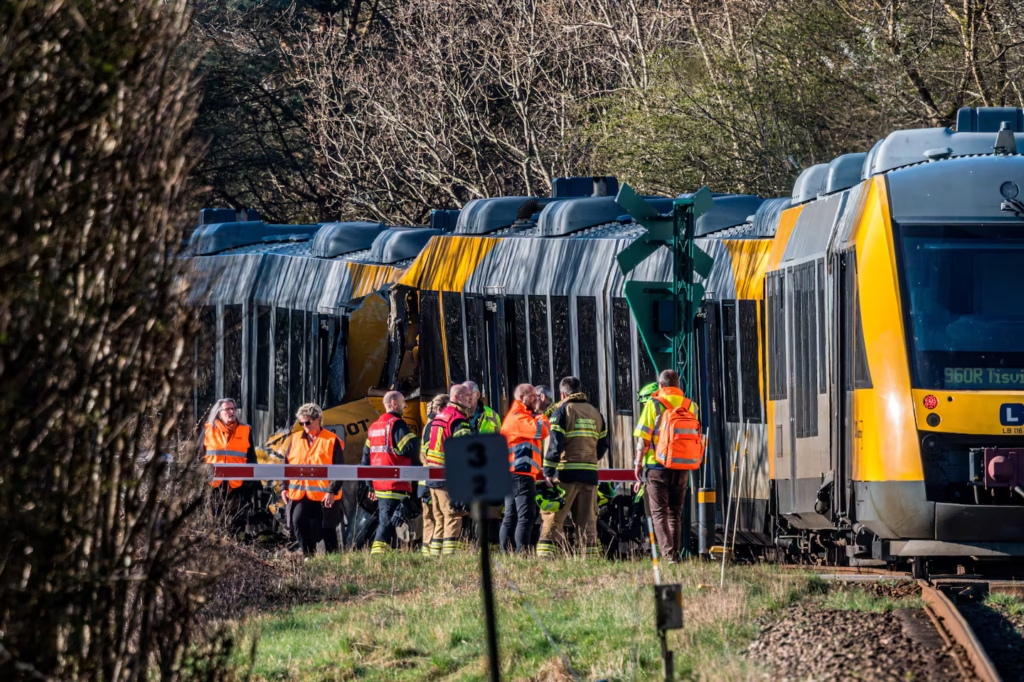
Photos from the crash site show both trains with heavily damaged front ends. Despite the visible destruction, the fact that the trains stayed upright may have prevented a more catastrophic outcome.
Observations From Images
- Front sections of trains severely damaged
- Carriages remained on tracks
- Emergency responders working at the scene
These visuals provide insight into the force of the collision and the immediate response efforts.
Broader Context of Rail Safety in Europe
Rail travel is generally considered one of the safest forms of transportation in Europe. However, incidents like the Denmark train collision Hillerod Kagerup highlight the importance of ongoing maintenance and monitoring.
Common Safety Measures
- Advanced signaling systems
- Regular track inspections
- Operator training and communication protocols
While accidents are rare, they often prompt reviews of existing systems to improve safety standards.
FAQ Section
What caused the Denmark train collision near Hillerod and Kagerup?
The exact cause is still under investigation. Authorities are examining signaling systems, track conditions, and operational factors.
How many people were injured in the Denmark train crash?
Four people were critically injured, while at least 12 others sustained minor injuries.
Were passengers safely evacuated after the train collision?
Yes, all passengers were evacuated from both trains, and emergency teams ensured their safety.
How did emergency services respond to the Denmark train collision?
Multiple agencies responded quickly, providing medical care, evacuating passengers, and airlifting critically injured individuals.
Conclusion
The Denmark train collision Hillerod Kagerup serves as a reminder of the potential risks in even well-developed transport systems. While emergency services responded effectively and prevented further harm, the incident has raised important questions about rail safety and infrastructure. As investigations continue, authorities will aim to identify the cause and implement measures to reduce the likelihood of similar accidents in the future.
PLEASE CLICK HERE FOR MORE NEWS