 0
0
 0
0
The Iranian cargo ship seizure dispute has intensified diplomatic tensions after China rejected claims made by United States President Donald Trump regarding a seized Iranian vessel allegedly carrying a “gift from China.” The incident has added another layer of complexity to already strained relations between Washington, Tehran, and Beijing.
The controversy centers on the Iranian-flagged cargo ship TOUSKA, which was intercepted by US forces in the Strait of Hormuz and remains under American custody. The situation has sparked global debate over maritime security, sanctions enforcement, and competing geopolitical narratives.
Background of the Iranian Cargo Ship TOUSKA Seizure
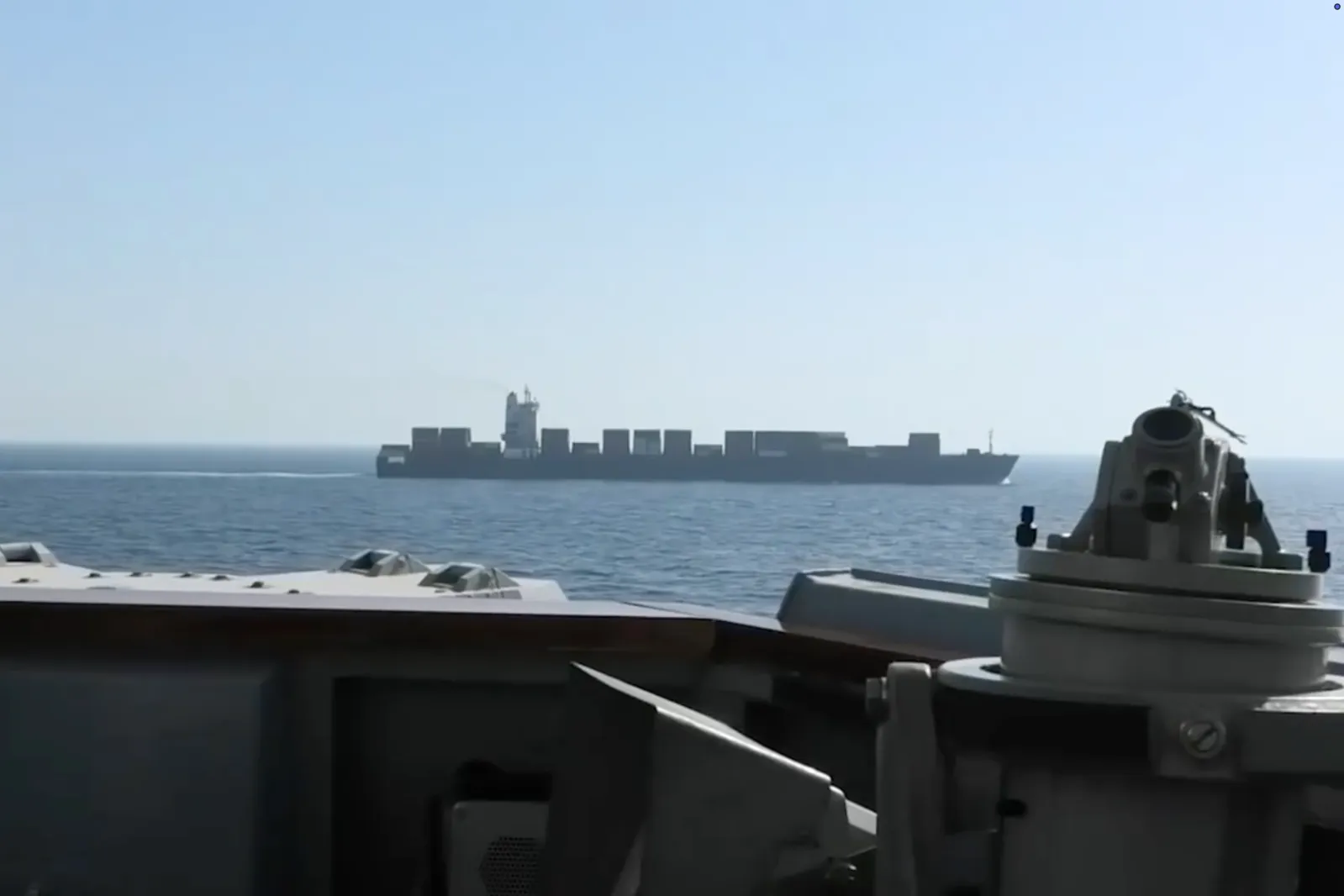
The situation began when US forces intercepted the Iranian-flagged cargo ship TOUSKA in the strategically important Strait of Hormuz. The Iranian cargo ship seizure dispute escalated after the vessel reportedly failed to comply with US instructions during a maritime blockade operation.
H3: Why the Strait of Hormuz matters
The Strait of Hormuz is one of the world’s most critical oil transit routes. Any disruption in this narrow waterway can have global economic consequences.
Key facts include:
- It handles a significant portion of global oil shipments daily
- It connects the Persian Gulf to the Gulf of Oman
- It has long been a flashpoint for US–Iran tensions
H3: US interception of the TOUSKA
According to US Central Command, the vessel remains in US custody following the interception. The ship was reportedly stopped during a broader enforcement action linked to recent maritime restrictions.
The Iranian cargo ship seizure dispute quickly became a diplomatic issue after differing narratives emerged about what the vessel was carrying and why it was intercepted.
Beijing Responds to Trump’s “Gift from China” Claim
China firmly rejected allegations made by President Donald Trump suggesting that the seized Iranian vessel was carrying a “gift from China.” Beijing emphasized that it had no involvement in the contents or purpose of the ship’s cargo.
H3: China’s official position
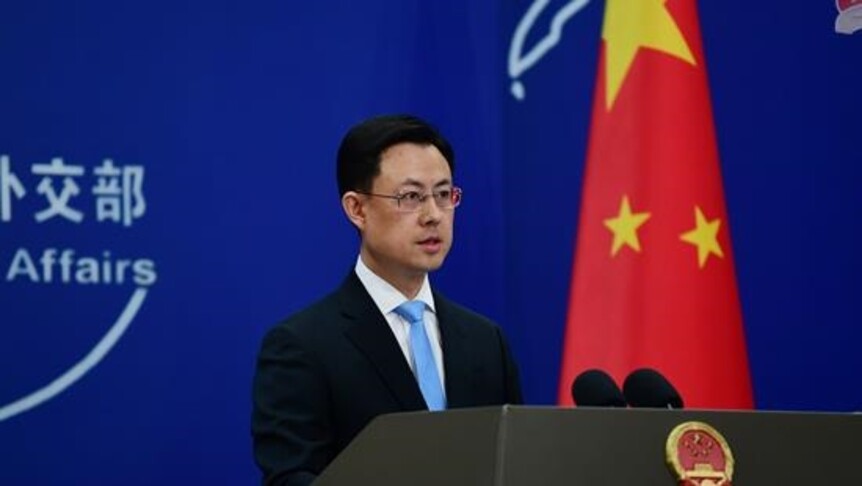
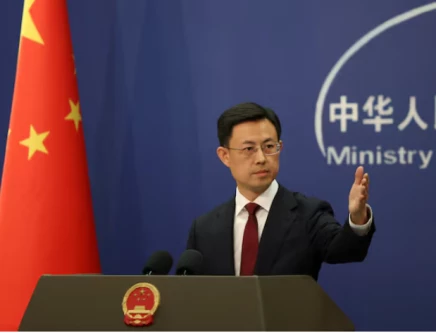
A spokesperson from China’s Foreign Ministry addressed the claim during a press briefing in Beijing, stating that China consistently adheres to its international obligations.
Key points from the response:
- China denies involvement in the vessel’s cargo
- It insists it acts as a responsible global trading partner
- It urges restraint in making unverified public claims
This response directly counters speculation surrounding the Iranian cargo ship seizure dispute, which has fueled diplomatic friction between major global powers.
H3: Diplomatic sensitivity around maritime claims
Such statements are particularly sensitive because:
- They can influence international public perception
- They may escalate already tense diplomatic relationships
- They affect ongoing negotiations in conflict regions
Beijing’s rejection of the claim highlights the importance of verified information in global maritime disputes.
US Blockade and Strategic Maritime Tensions
The United States recently imposed a blockade in the Strait of Hormuz, citing security concerns and enforcement of maritime compliance. This move came shortly after high-level discussions between US and Iranian officials.
H3: Purpose of the blockade
The blockade is linked to:
- Enforcement of shipping regulations
- Prevention of unauthorized maritime activity
- Increased security monitoring in the Gulf region
The Iranian cargo ship seizure dispute emerged directly from this blockade enforcement, with the TOUSKA being one of the vessels affected.
H3: Confirmation of US custody
US Central Command confirmed that the ship remains under American control. However, details regarding its cargo and destination have not been fully disclosed publicly, contributing to ongoing speculation.
Iran–US Relations and Ceasefire Extension
The incident occurs against the backdrop of fragile diplomatic efforts between Iran and the United States. Tensions have remained high despite attempts to establish temporary ceasefires and dialogue frameworks.
H3: Ongoing negotiations and uncertainty
Recent developments include:
- A temporary ceasefire arrangement earlier in the month
- Talks held in Islamabad involving multiple stakeholders
- Uncertainty over a long-term agreement
The Iranian cargo ship seizure dispute has complicated these diplomatic efforts by introducing new points of disagreement.
H3: Extension of ceasefire timeline
Reports indicate that a previously agreed two-week ceasefire was extended without a clearly defined end date. This extension reflects ongoing uncertainty in negotiations between the involved parties.
International Reactions and Geopolitical Implications
The situation has drawn attention from multiple global actors due to its potential impact on international trade and diplomacy.
H3: Concerns over maritime stability
Observers have raised concerns that:
- Increased interceptions could disrupt global shipping routes
- Miscommunication between nations may escalate tensions
- Strategic waterways remain vulnerable to political disputes
The Iranian cargo ship seizure dispute is being closely monitored as it may influence future maritime enforcement policies.
H3: Role of global powers
China’s involvement in responding to the claims highlights its growing role in international maritime and diplomatic discussions, even when not directly involved in operational matters.
At the same time, the US continues to assert its enforcement actions in strategic waterways, maintaining its position on security operations in the region.
Broader Context of the Dispute
Beyond the immediate incident, the situation reflects broader geopolitical competition and longstanding tensions in the region.
H3: Key underlying issues
- Control and security of international shipping lanes
- Sanctions and enforcement actions
- Competing narratives between global powers
The Iranian cargo ship seizure dispute reflects how quickly localized maritime incidents can escalate into international diplomatic debates.
FAQ
What is the Iranian cargo ship seizure dispute about?
It refers to the interception of the Iranian-flagged vessel TOUSKA by US forces and the diplomatic disagreement that followed involving China’s alleged connection to its cargo.
Why did China deny Trump’s claim about the Iranian ship?
China rejected the claim, stating it had no involvement in the ship’s cargo and emphasizing its commitment to international obligations.
Where was the Iranian ship TOUSKA seized?
The vessel was intercepted in the Strait of Hormuz, a major global shipping route located near the Persian Gulf.
What impact could this dispute have internationally?
It may affect diplomatic relations between major powers and influence security policies in key maritime routes.
Conclusion
The Iranian cargo ship seizure dispute continues to unfold as a complex intersection of maritime security, diplomatic messaging, and international relations. China’s rejection of claims linking it to the vessel underscores the sensitivity surrounding global shipping narratives, while the US maintains its enforcement position in the Strait of Hormuz. As investigations and diplomatic discussions continue, the situation remains a key point of attention in global geopolitics.
Click here for more news