 0
0
 0
0
The China Quad bloc confrontation warning has intensified diplomatic tensions in the Indo-Pacific after Beijing criticized the growing cooperation between the United States, India, Japan, and Australia under the Quad alliance. The warning came during a high-level diplomatic meeting in New Delhi involving the four member states.
The statement reflects ongoing geopolitical competition in the region as China continues to oppose what it describes as “exclusive security groupings” targeting its interests.
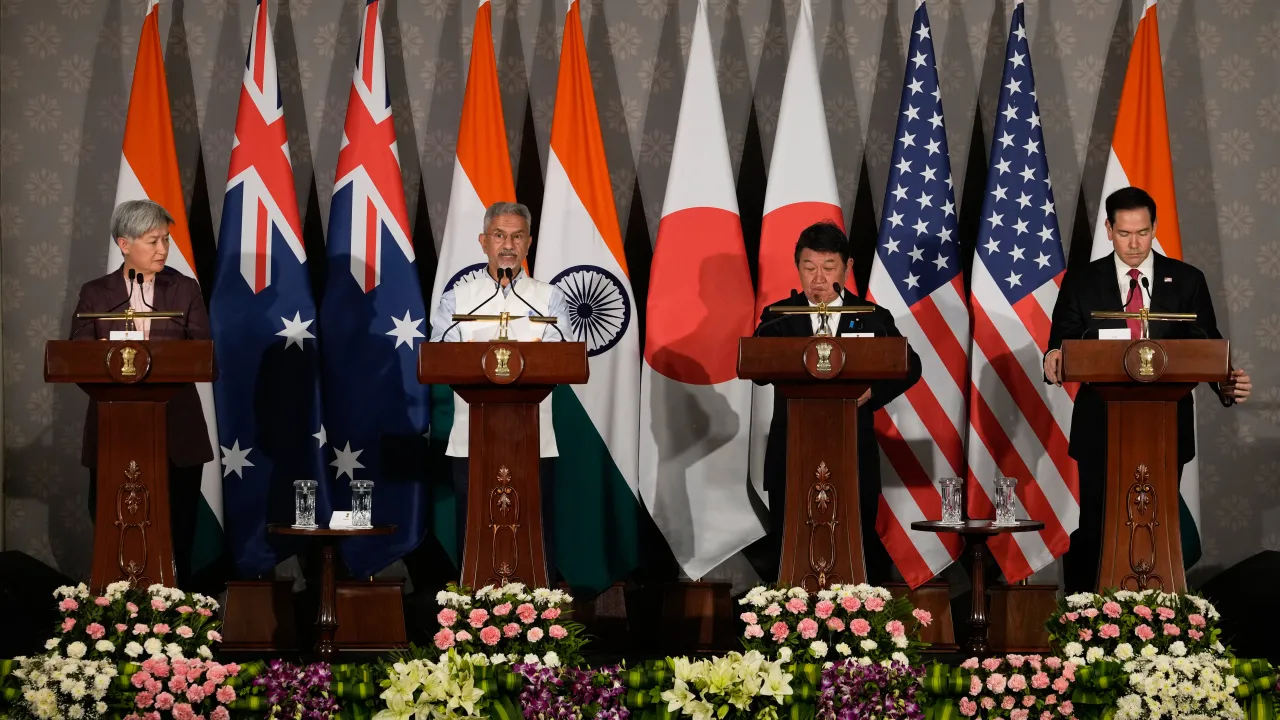
China Quad bloc confrontation warning issued during Quad meeting
The China Quad bloc confrontation warning was delivered by Chinese Foreign Ministry spokesperson Mao Ning during a press briefing held on the same day Quad foreign ministers met in India.
Beijing’s official position on Quad cooperation
China reiterated its opposition to what it calls “small circles” or exclusive alliances, arguing that such groupings undermine regional trust.
Key points from China’s position include:
- Opposition to bloc-based geopolitical alliances
- Rejection of any cooperation targeting third countries
- Emphasis on regional peace and stability
- Warning against undermining mutual trust
Beijing stressed that cooperation in the region should be inclusive rather than confrontational.
Timing of the statement
The China Quad bloc confrontation warning came as Quad foreign ministers gathered in New Delhi for discussions on regional security, maritime surveillance, and supply chain cooperation.
Quad foreign ministers respond amid China Quad bloc confrontation warning
The Quad meeting included top diplomats from the United States, India, Japan, and Australia, who reaffirmed their commitment to regional cooperation.
Key outcomes from the Quad meeting
During the discussions, the four countries announced new areas of collaboration, including:
- Maritime surveillance initiatives
- Critical mineral supply chain cooperation
- Energy security frameworks
- Regional security coordination
The China Quad bloc confrontation warning contrasted sharply with the Quad’s emphasis on joint development and stability efforts.
Concerns over South China Sea tensions
In a joint statement, Quad members expressed concern over ongoing tensions in disputed maritime regions.
They highlighted:
- Instability in the South China Sea
- Rising tensions in the East China Sea
- Opposition to coercive or unilateral actions
- Support for freedom of navigation
These issues remain central to regional geopolitical disagreements.
China Quad bloc confrontation warning and Indo-Pacific rivalry
The China Quad bloc confrontation warning reflects broader strategic competition in the Indo-Pacific, where major powers are expanding diplomatic and security partnerships.
Background of the Quad alliance
The Quad alliance consists of:
- United States
- India
- Japan
- Australia
Originally formed in 2007, the group has expanded cooperation in recent years, particularly in response to shifting regional security dynamics.
China’s concerns over security alliances
China has repeatedly expressed concern that such alliances are aimed at containing its influence. The latest China Quad bloc confrontation warning continues that long-standing diplomatic position.
China Quad bloc confrontation warning and Japan response
The Chinese statement also addressed remarks from Japanese officials regarding regional security and historical military policy.
Diplomatic exchange with Japan
China responded to comments made by Japan’s government emphasizing its defensive military stance. Beijing urged Tokyo to maintain trust with neighboring countries through consistent policy actions.
Key remarks included:
- Calls for Japan to reflect on historical responsibilities
- Emphasis on peaceful regional engagement
- Warning that actions matter more than statements
The China Quad bloc confrontation warning thus extended beyond Quad members to broader regional diplomacy.

Implications of the China Quad bloc confrontation warning
The China Quad bloc confrontation warning highlights ongoing strategic friction in Asia-Pacific relations, particularly as countries strengthen security and economic partnerships.
Regional security impact
The situation contributes to:
- Increased diplomatic tensions in the Indo-Pacific
- Expansion of security-focused alliances
- Greater focus on maritime and trade security
- Competing narratives on regional stability
Economic and strategic cooperation trends
Despite tensions, Quad nations continue to pursue collaboration in:
- Supply chain resilience
- Energy transition projects
- Critical minerals access
- Maritime domain awareness
These efforts aim to balance security concerns with economic cooperation.
FAQ
What is the China Quad bloc confrontation warning about?
It is China’s warning against the Quad alliance, urging the US, India, Japan, and Australia not to form exclusive security blocs.
Why did China issue a warning to Quad countries?
China believes the Quad could undermine regional trust and target third countries through strategic cooperation.
What is the Quad alliance?
The Quad is a strategic partnership between the United States, India, Japan, and Australia focused on regional cooperation.
What issues did Quad members discuss at the meeting?
They discussed maritime security, supply chains, energy cooperation, and regional stability in the Indo-Pacific.
Conclusion
The China Quad bloc confrontation warning underscores growing strategic competition in the Indo-Pacific as major powers continue to strengthen alliances and issue competing diplomatic messages. While China calls for inclusive cooperation, Quad members are expanding collaboration on security and economic resilience, reflecting an increasingly complex regional balance.
PLEASE CLICK HERE FOR MORE NEWS