 0
0
 0
0
The Iran war US military insight report has highlighted how ongoing conflict in the Middle East is reportedly providing China, Russia, and North Korea with rare real-time access to observe United States military operations. According to reporting attributed to the Wall Street Journal, these global powers are closely analyzing battlefield developments, weapons performance, and tactical outcomes from the conflict.
The situation is being described as an unusual opportunity for strategic observation, allowing rival nations to assess both strengths and limitations of modern US military systems during active deployment.
Global Powers Observing US Military Operations in Real Time
The Iran war US military insight report suggests that some of Washington’s most closely monitored strategic competitors are using the conflict as a live case study of US military capability.
Nations Reportedly Monitoring the Conflict
The report identifies several countries as key observers:
- China
- Russia
- North Korea
These nations are described as major security concerns for the United States and are believed to be closely studying the conflict’s military dynamics.
Strategic Value of Battlefield Observation
Real-time conflicts provide rare opportunities to evaluate:
- Weapon performance under combat conditions
- Tactical decision-making in modern warfare
- Effectiveness of air defense systems
The Iran war US military insight report notes that such access to live operational data is highly valuable for military planning.
Advanced US Weapons Reportedly Used in the Conflict
According to the report, the conflict has featured the deployment of advanced US military technologies, offering observers insight into their effectiveness in real combat environments.
AI-Assisted Precision Strikes
One of the highlighted developments includes the use of artificial intelligence-supported targeting systems. These systems are reportedly used to:
- Improve strike accuracy
- Reduce response time
- Enhance coordination of air operations
High-Speed Missile Systems
The report also references high-speed precision strike weapons, including:
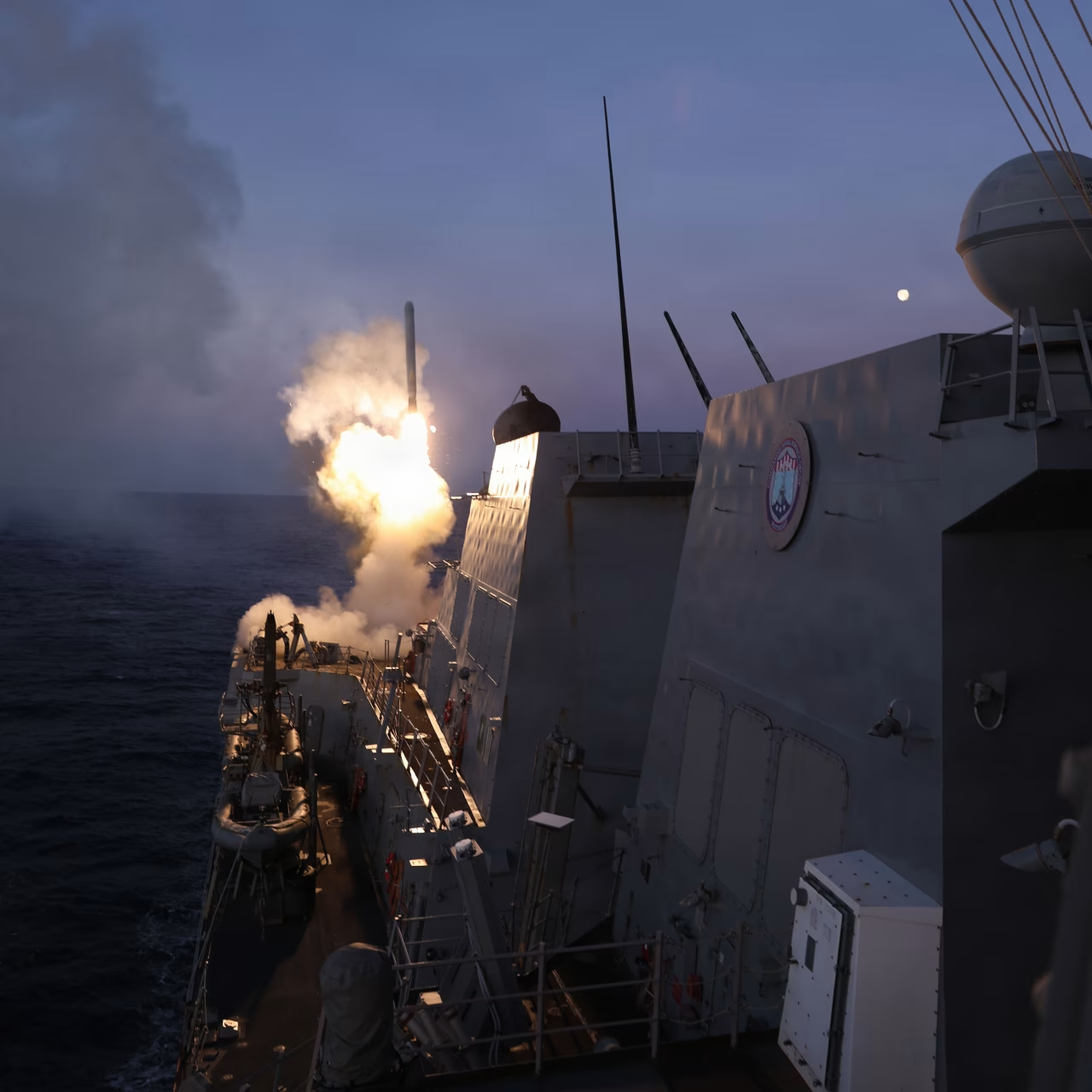
- Long-range cruise missile systems
- Air defense interception technology
- Advanced targeting platforms
These systems are central to modern US military operations and are closely studied by rival nations.

Concerns Over Missile Stockpiles and Defense Systems
The Iran war US military insight report also points to operational challenges faced during the conflict, particularly regarding the consumption of critical missile stockpiles.
Rapid Use of Key Munitions
According to the analysis, the United States reportedly experienced:
- High usage of Tomahawk cruise missiles
- Significant deployment of Patriot interceptor systems
- Increased demand for precision-guided munitions
These systems are essential for both offensive and defensive operations.
Strategic Implications of Supply Usage
Military analysts often view ammunition consumption as a key indicator of:
- Sustainability in prolonged conflicts
- Industrial production capacity
- Readiness for multi-theater operations
Role of Drone Warfare in the Iran Conflict
A major focus of the Iran war US military insight report is the growing importance of drone warfare and its impact on modern military strategy.
Low-Cost Drone Threats
The report highlights that inexpensive drones have been used effectively in the conflict, posing challenges to advanced defense systems.
Key concerns include:
- Difficulty in detecting small unmanned systems
- Low-cost attacks against high-value targets
- Saturation of air defense systems
Impact on Regional Allies
These drone operations have reportedly threatened US allies in the Gulf region, raising concerns about:
- Airbase security
- Infrastructure protection
- Early warning system effectiveness
Technology Transfer and Foreign Military Learning
The Iran war US military insight report also suggests that some Iranian military systems are influenced by foreign technology sources.
Chinese Components in Military Systems
The report notes that:
- Some Iranian equipment contains Chinese-made components
- Certain systems may be based on imported or adapted designs
- Battlefield performance provides indirect data for Chinese analysis
Operational Data Collection
For China, observing the conflict may provide insight into:
- Effectiveness of Iranian strike strategies
- US defensive response patterns
- Real-world performance of mixed-origin military systems
Russia’s Strategic Interest in the Conflict
The report emphasizes that Russia has particular interest in how US systems perform against Iranian weapons, especially in relation to its own ongoing military engagements.

Comparison With Ukraine Conflict
Analysts suggest Russia may use insights from the Iran conflict to:
- Evaluate US weapons supplied to Ukraine
- Assess NATO defense systems
- Improve drone warfare tactics
Future Military Planning Considerations
Such observations may also influence:
- Future battlefield strategies
- Weapons development programs
- Electronic warfare capabilities
Broader Geopolitical Implications
The Iran war US military insight report highlights wider global consequences beyond the immediate battlefield.
Shifting Nature of Modern Warfare
Modern conflicts increasingly involve:
- Real-time intelligence gathering
- Drone and AI integration
- Rapid missile deployment cycles
Global Security Competition
The ability of rival nations to observe active conflicts adds a new layer of:
- Strategic competition
- Military intelligence development
- Defense technology benchmarking
Frequently Asked Questions (FAQ)
What is the Iran war US military insight report about?
It refers to reports suggesting China, Russia, and North Korea are studying US military operations during the Iran conflict in real time.
Why is the Iran conflict important for military analysis?
Because it provides real-world data on how advanced US weapons perform in active combat situations.
What types of weapons are being analyzed?
Reports mention AI-assisted strikes, cruise missiles like Tomahawk, and Patriot air defense systems.
How does drone warfare affect the conflict?
Low-cost drones are challenging advanced defense systems and influencing modern battlefield strategies.
Conclusion
The Iran war US military insight report highlights how modern conflicts are no longer limited to the battlefield alone, but also serve as live data sources for global military powers. With China and Russia reportedly observing US weapons and strategies in real time, the implications extend beyond the region, shaping future defense planning and global security dynamics.
Click here for more news