 0
0
 0
0
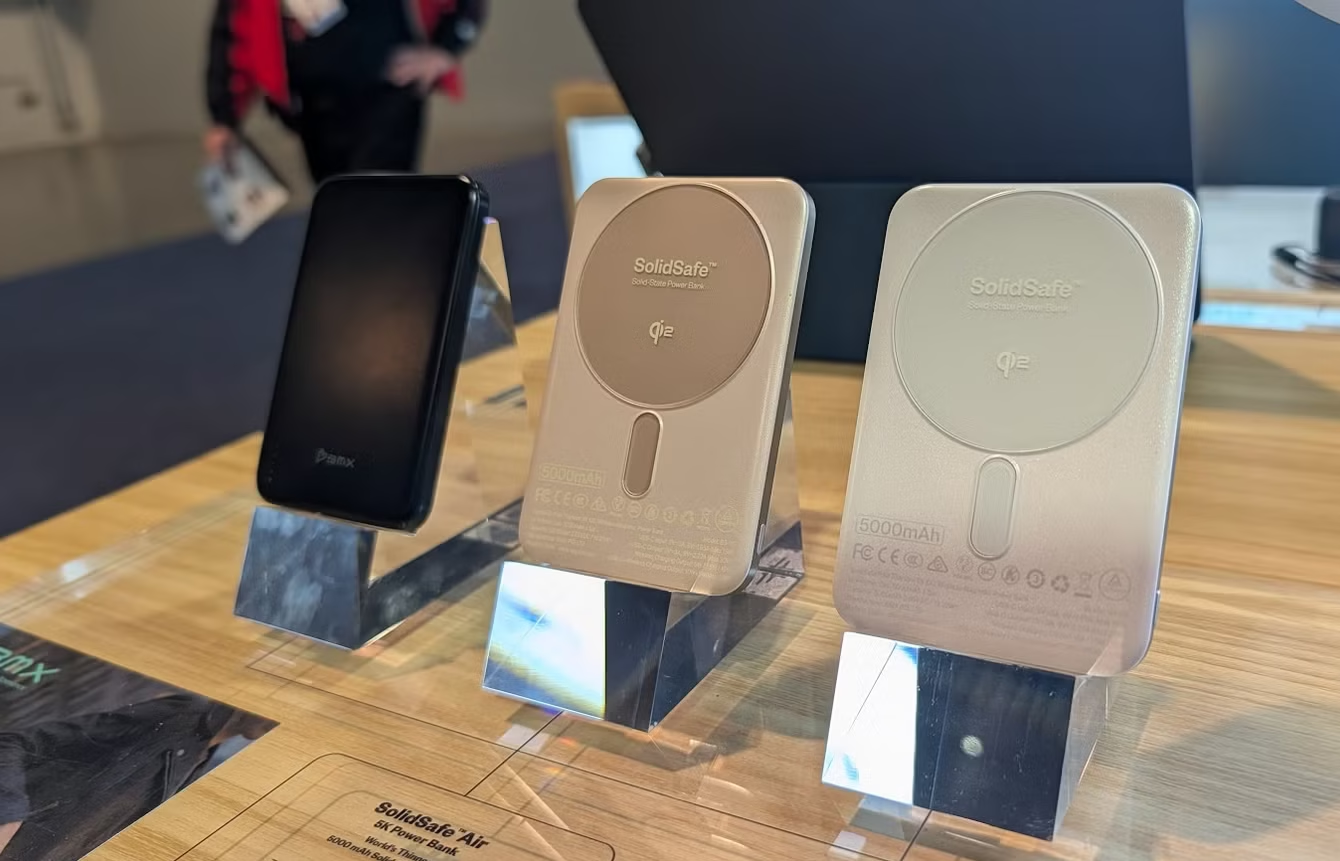
The ultra-thin solid state power bank is quickly becoming one of the most talked-about innovations in mobile charging technology, thanks to its unusual combination of slim design, magnetic attachment, and improved safety features compared to traditional lithium-ion batteries.
A recent hands-on experience with a next-generation semi-solid-state power bank highlights just how far portable charging has evolved, especially for users who want convenience without bulk.
A New Generation of Power Bank Technology
The ultra-thin solid state power bank represents a shift away from conventional lithium-ion charging packs, which have dominated the market for years.
Instead of relying heavily on liquid electrolytes, semi-solid-state designs reduce liquid content to improve safety and energy stability.

Why Semi-Solid-State Batteries Matter
Unlike traditional battery packs, semi-solid-state power banks are designed to:
- Reduce overheating risks
- Improve structural durability
- Allow thinner device construction
- Maintain stable performance during charging
- Enhance portability for everyday use
This makes them especially appealing for mobile users who carry power banks daily.
Safety Improvements Over Lithium-Ion Packs
One of the key advantages highlighted in the ultra-thin solid state power bank design is improved safety.
Manufacturers suggest that the reduced liquid composition lowers the risk of thermal runaway, a common issue in lithium-ion batteries under stress.
In practical terms, this means users can expect:
- Lower heat buildup
- Reduced fire risk
- More stable charging under load
Ultra-Thin Design Changes Everyday Usage
One of the most noticeable improvements is the size of the device itself.
The ultra-thin solid state power bank is reportedly thinner than many modern smartphones, making it easy to attach and forget.
Magnetic Attachment Improves Convenience
The power bank uses a magnetic connection system that allows it to snap directly onto the back of a phone.
This creates a seamless experience where users can:
- Walk around while charging
- Avoid carrying extra cables
- Keep the power bank attached all day
- Use both devices comfortably together
Everyday Charging Becomes Effortless
Instead of treating the power bank as a separate device, users can essentially treat it as an extension of the phone.
In real-world use, this leads to a major behavioral shift: people stop thinking about charging altogether and simply continue using their phone normally.
Real-World Performance and Heat Management
The ultra-thin solid state power bank typically features a capacity around 5,000mAh, which is enough for emergency top-ups and partial daily charging.
Temperature Behavior During Use
Even during extended use, the device remains relatively stable in terms of heat.
Users report:
- Slight warming during active charging
- No uncomfortable overheating
- Safe handling even in warm environments
This improved thermal behavior is one of the key benefits of semi-solid-state battery design.
Dual Charging Capability
Some versions of the ultra-thin solid state power bank also support:
- Wireless magnetic charging for smartphones
- USB-C output for secondary devices
However, due to limited capacity, simultaneous use is best suited for emergency situations rather than full multi-device charging.

Why Ultra-Thin Power Banks Are Gaining Attention
The growing interest in the ultra-thin solid state power bank is not just about design, but about everyday practicality.
Key Advantages Over Traditional Power Banks
Compared to standard lithium-ion alternatives, these newer designs offer:
- Much thinner profiles
- Easier portability
- Safer battery chemistry
- Better integration with modern smartphones
- More intuitive user experience
The Trade-Off: Price vs Convenience
Despite its benefits, cost remains a major barrier.
Ultra-thin solid state power bank models are typically more expensive than traditional options with similar capacity.
For example:
- Premium ultra-thin models cost more than standard 5,000mAh banks
- Larger 10,000mAh lithium-ion packs are often significantly cheaper
- Established brands still dominate the budget segment
This means users are essentially paying for convenience, design, and safety rather than raw capacity.
The Future of Battery Technology in Mobile Devices
The ultra-thin solid state power bank is part of a broader shift toward next-generation battery innovation.
Semi-Solid-State as a Transitional Technology
Fully solid-state batteries are still under development and not widely available for consumer electronics.
Semi-solid-state technology serves as a practical middle ground, offering:
- Improved safety compared to lithium-ion
- More realistic production costs
- Better compatibility with current devices
- Gradual transition toward full solid-state adoption

Industry Direction and Expectations
Major battery manufacturers are expected to continue refining this technology, with more competition likely from established brands in the near future.
As production scales up, prices may drop, making ultra-thin charging solutions more mainstream.
What This Means for Everyday Users
The most significant impact of the ultra-thin solid state power bank is not just technical—it’s behavioral.
Users no longer need to:
- Carry bulky charging bricks
- Worry about overheating
- Constantly plug and unplug cables
- Plan charging around usage
Instead, charging becomes passive and continuous.
FAQs
What is an ultra-thin solid state power bank?
It is a next-generation portable charger that uses semi-solid-state battery technology to create a thinner, safer, and more convenient charging experience.
Is a solid-state power bank safer than lithium-ion?
Yes, semi-solid-state designs reduce liquid electrolytes, which lowers the risk of overheating and thermal runaway compared to traditional lithium-ion batteries.
How much power do ultra-thin power banks have?
Most models currently offer around 5,000mAh capacity, which is ideal for emergency charging or partial phone top-ups.
Why are ultra-thin power banks more expensive?
They use newer battery technology, magnetic systems, and compact engineering, which increases production costs compared to standard lithium-ion power banks.
Conclusion
The ultra-thin solid state power bank represents an important step forward in portable charging technology. While still expensive and limited in capacity, its combination of safety, convenience, and minimalist design signals where the future of mobile power is headed. As production improves and costs fall, this category could eventually replace traditional bulky power banks entirely.
PLEASE CLICK HERE FOR MORE NEWS