 0
0
 0
0
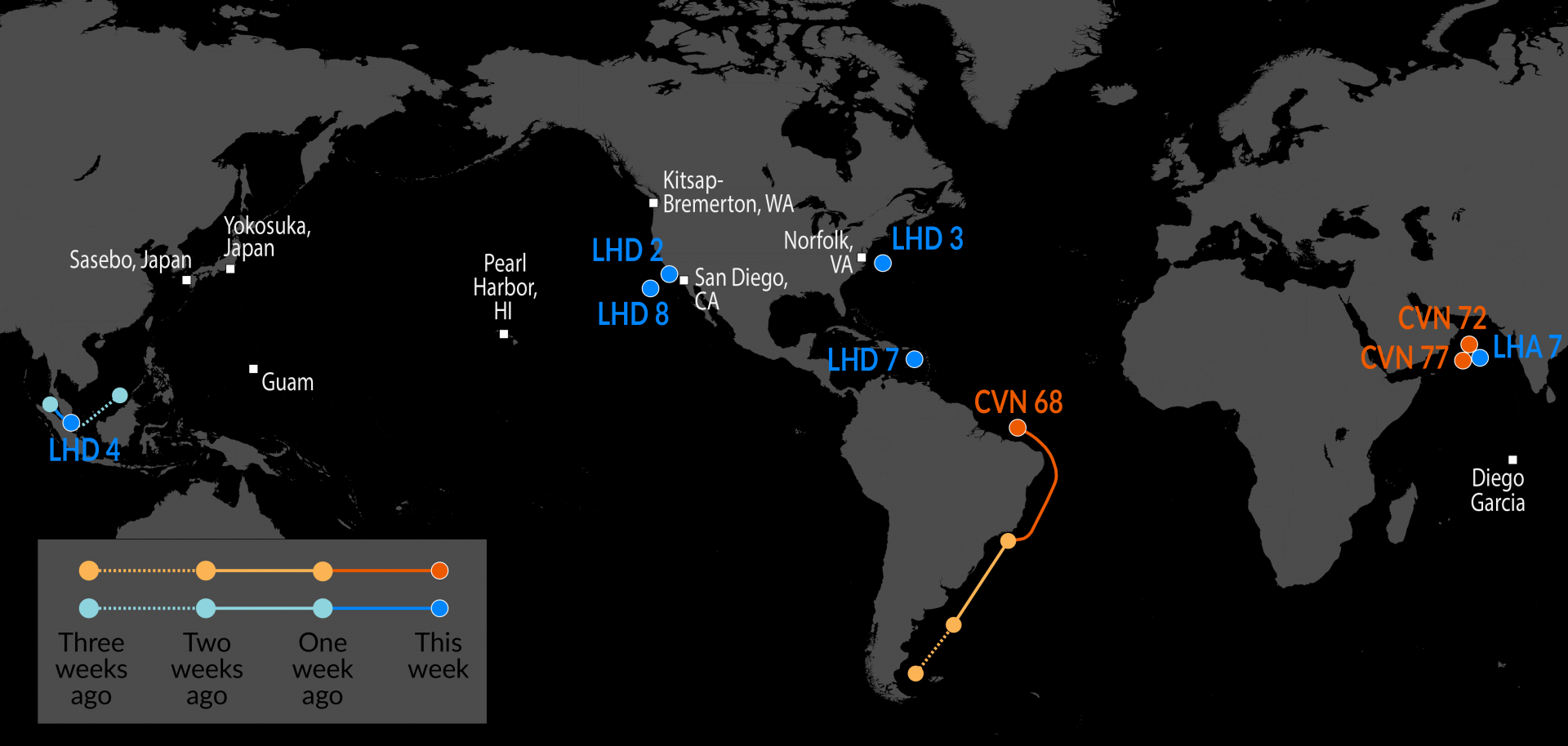
U.S. Naval Update Map 2026 has drawn attention following the latest release showing the approximate locations of United States Carrier Strike Groups and Amphibious Ready Groups operating across global waters. The update, published on May 21, 2026, provides an overview of naval deployments using open-source information without including classified or operationally sensitive details.
The naval map serves as a strategic snapshot of U.S. maritime operations and highlights the global reach of the United States Navy. Carrier Strike Groups and Amphibious Ready Groups remain central to naval power projection, regional deterrence, maritime security, and rapid military response capabilities.

Overview of the U.S. Naval Update Map 2026
The U.S. Naval Update Map 2026 is designed to track the general deployment locations of major naval formations operated by the United States Navy.
The update focuses mainly on:
- Carrier Strike Groups (CSGs)
- Amphibious Ready Groups (ARGs)
- Marine Expeditionary Units (MEUs)
These naval formations are critical to maintaining U.S. military presence across major oceans and strategic waterways.
Purpose of the Naval Deployment Map
The map helps observers understand:
- Current naval positioning
- Maritime security operations
- Strategic military presence
- Regional force distribution
The information is compiled using publicly available and verified open-source intelligence.
Open-Source Intelligence and Security Measures
The published naval positions are approximate and intentionally limited to avoid exposing sensitive operational details.
No classified information is disclosed in the weekly naval update, maintaining operational security while providing public insight into fleet movements.
What Are Carrier Strike Groups?
Carrier Strike Groups represent one of the most powerful naval formations in modern military operations.
Core Components of a Carrier Strike Group
A standard Carrier Strike Group is usually centered around:
- One aircraft carrier
- Guided missile destroyers
- Guided missile cruisers
- Submarine support elements
- Supply and logistics vessels
Role of Aircraft Carriers in Naval Operations
Aircraft carriers serve as floating military airbases capable of launching and recovering combat aircraft at sea.
These vessels support:
- Air superiority missions
- Surveillance operations
- Precision strike capabilities
- Maritime defense operations
Strategic Importance of Carrier Strike Groups
Carrier Strike Groups allow the United States to rapidly project military power into various regions without relying on land-based facilities.
Their mobility enables fast deployment during:
- Regional conflicts
- Humanitarian crises
- Maritime security operations
- Strategic deterrence missions
Understanding Amphibious Ready Groups
The U.S. Naval Update Map 2026 also tracks Amphibious Ready Groups, commonly known as ARGs.
Structure of Amphibious Ready Groups
An ARG usually consists of:
- Three amphibious warfare ships
- Marine Expeditionary Unit personnel
- Helicopters and aircraft
- Amphibious combat equipment
Role of Marine Expeditionary Units
Marine Expeditionary Units embarked within ARGs are trained for rapid-response operations.
Their responsibilities may include:
- Amphibious assaults
- Evacuation operations
- Disaster relief missions
- Counterterrorism support
Importance of Amphibious Naval Operations
Amphibious forces provide operational flexibility during military and humanitarian missions near coastal regions.
They can quickly deploy personnel and equipment directly from sea-based platforms.
Global Presence of U.S. Naval Forces
The U.S. Naval Update Map 2026 reflects America’s long-standing strategy of maintaining a forward naval presence around the world.
Major Strategic Regions Monitored
Carrier Strike Groups and ARGs are commonly deployed in:
- The Pacific Ocean
- The Atlantic Ocean
- The Mediterranean Sea
- The Middle East region
- The Indo-Pacific corridor
Maritime Security and Trade Protection
Naval deployments also help secure major shipping lanes and international trade routes.
The U.S. Navy frequently supports operations aimed at:
- Protecting commercial shipping
- Preventing piracy
- Monitoring strategic waterways
- Supporting allied naval forces
Significance of Naval Mobility in Modern Warfare
Modern naval strategy relies heavily on flexibility, mobility, and rapid response capability.
Advantages of Sea-Based Military Power
Sea-based military formations offer several advantages:
- Global mobility
- Reduced dependence on foreign bases
- Rapid deployment capability
- Long-duration operational presence
Naval Aviation and Strike Capabilities
Aircraft carriers significantly enhance military reach through onboard aviation operations.
Carrier-based aircraft can perform:
- Air combat missions
- Reconnaissance operations
- Electronic warfare
- Long-range strikes
Evolution of U.S. Naval Deployment Strategy
The structure of Carrier Strike Groups and Amphibious Ready Groups has evolved over decades.
Changes in Naval Technology
Modern naval operations now incorporate:
- Advanced radar systems
- Missile defense capabilities
- Cyber warfare support
- Unmanned surveillance systems
Focus on Indo-Pacific Operations
Recent years have seen increased naval attention toward the Indo-Pacific region due to rising geopolitical competition and maritime security concerns.
Why Naval Update Maps Attract Attention
The U.S. Naval Update Map 2026 often generates interest among military analysts, defense observers, and geopolitical researchers.
Monitoring Geopolitical Developments
Naval deployments can reflect broader international developments and military priorities.
Observers often analyze deployments to understand:
- Regional tensions
- Military readiness
- Strategic deterrence efforts
Public Interest in Military Operations
The map also attracts attention because naval operations influence international security, global trade, and diplomatic relations.
Limitations of Public Naval Tracking
Although naval update maps provide useful information, they are not exact real-time tracking systems.
Delayed and Approximate Data
Publicly available naval information may contain:
- Time delays
- Approximate coordinates
- Incomplete movement data

Operational Security Considerations
Military organizations intentionally limit disclosure of exact ship locations to protect operational effectiveness and personnel safety.
Role of Naval Power in Global Stability
Naval forces continue to play a major role in maintaining international maritime stability.
Humanitarian and Disaster Response Missions
Beyond military operations, naval groups also support:
- Emergency evacuations
- Medical assistance missions
- Humanitarian aid delivery
- Natural disaster response
Cooperation With Allied Nations
The U.S. Navy frequently conducts joint exercises and operations with allied countries to strengthen international security partnerships.
FAQ
What is the U.S. Naval Update Map 2026?
It is a public map showing the approximate locations of U.S. Carrier Strike Groups and Amphibious Ready Groups based on open-source information.
What is a Carrier Strike Group?
A Carrier Strike Group is a naval formation centered around an aircraft carrier supported by destroyers, cruisers, submarines, and logistics ships.
What is the purpose of Amphibious Ready Groups?
Amphibious Ready Groups support rapid-response missions involving Marine Expeditionary Units, including amphibious operations and humanitarian assistance.
Does the U.S. Naval Update Map show classified information?
No. The map only uses publicly available information and avoids revealing operationally sensitive details.
The U.S. Naval Update Map 2026 provides a broad overview of current naval deployments and highlights the strategic importance of Carrier Strike Groups and Amphibious Ready Groups in modern maritime operations. As global security dynamics continue to evolve, naval mobility and sea-based military capability remain central components of international defense strategy.
Click here for more news