 0
0
 0
0
The Orange County chemical leak evacuation has prompted one of the largest emergency responses in the region this year, as firefighters continue monitoring a damaged industrial tank containing hazardous materials. More than 50,000 residents remain under evacuation orders while authorities evaluate the stability of the chemical storage system.
Officials say the situation remains highly unstable as emergency teams work to determine whether internal pressure inside the tank could still trigger a catastrophic explosion.
Emergency Response Intensifies in Orange County Chemical Leak Evacuation Zone
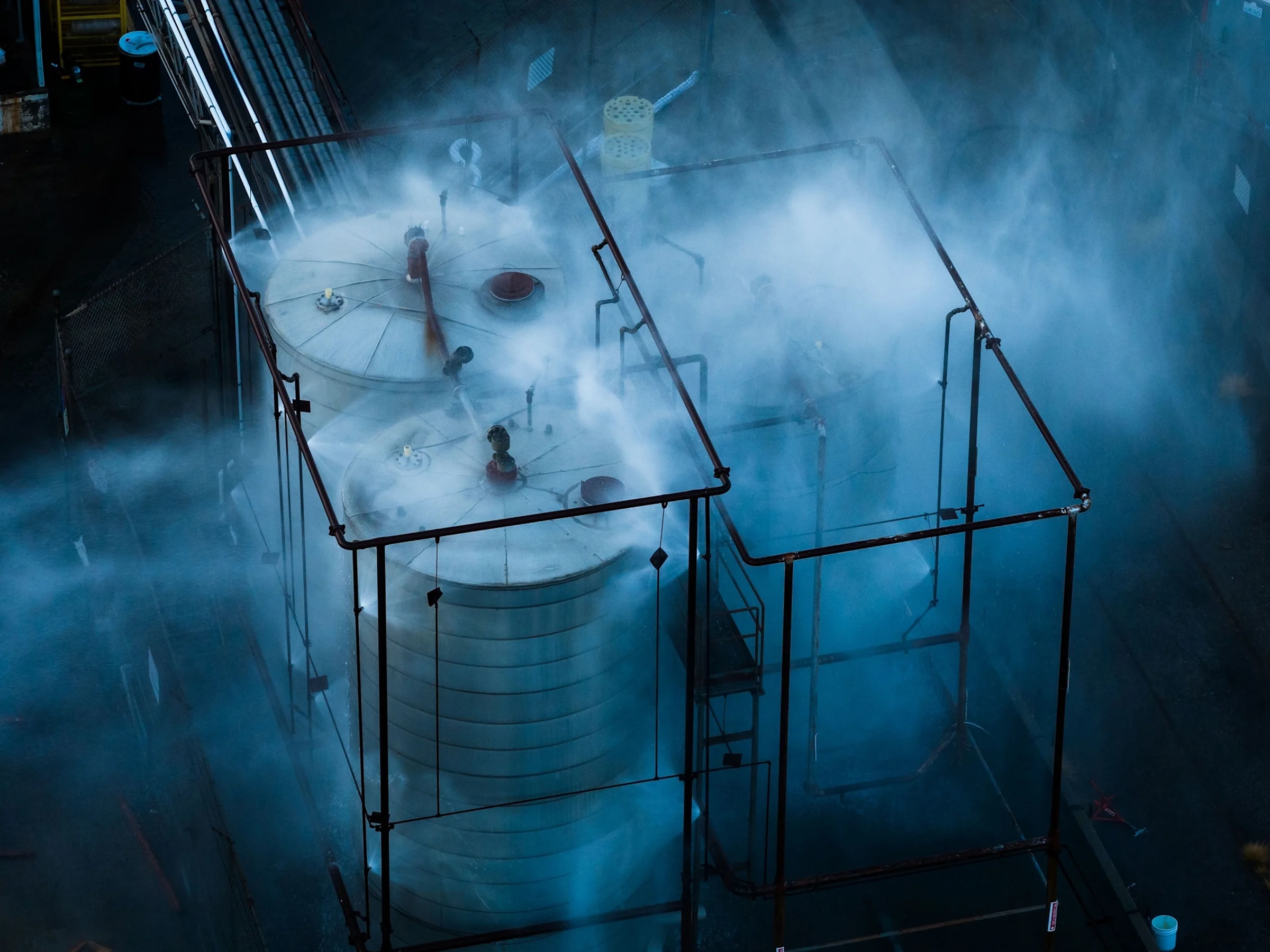
Authorities in Orange County, California, have deployed extensive emergency resources to manage the ongoing chemical leak incident. Firefighters and hazardous materials teams are operating around the clock to stabilize the situation and prevent further escalation.
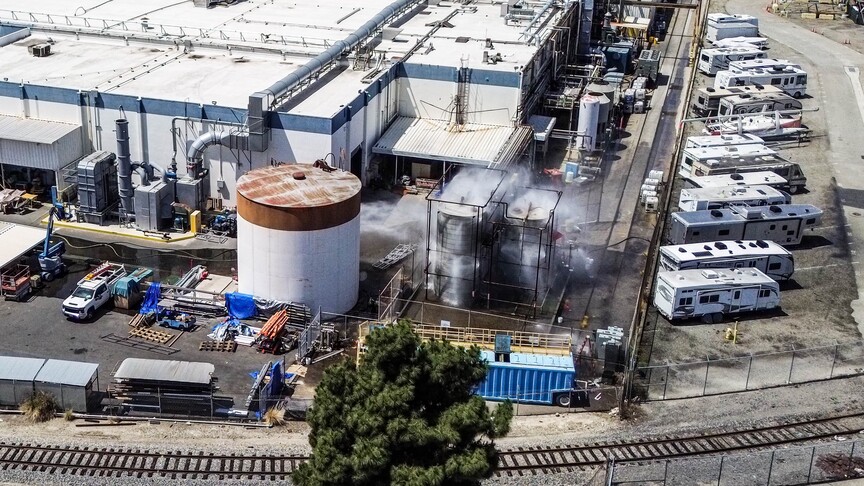
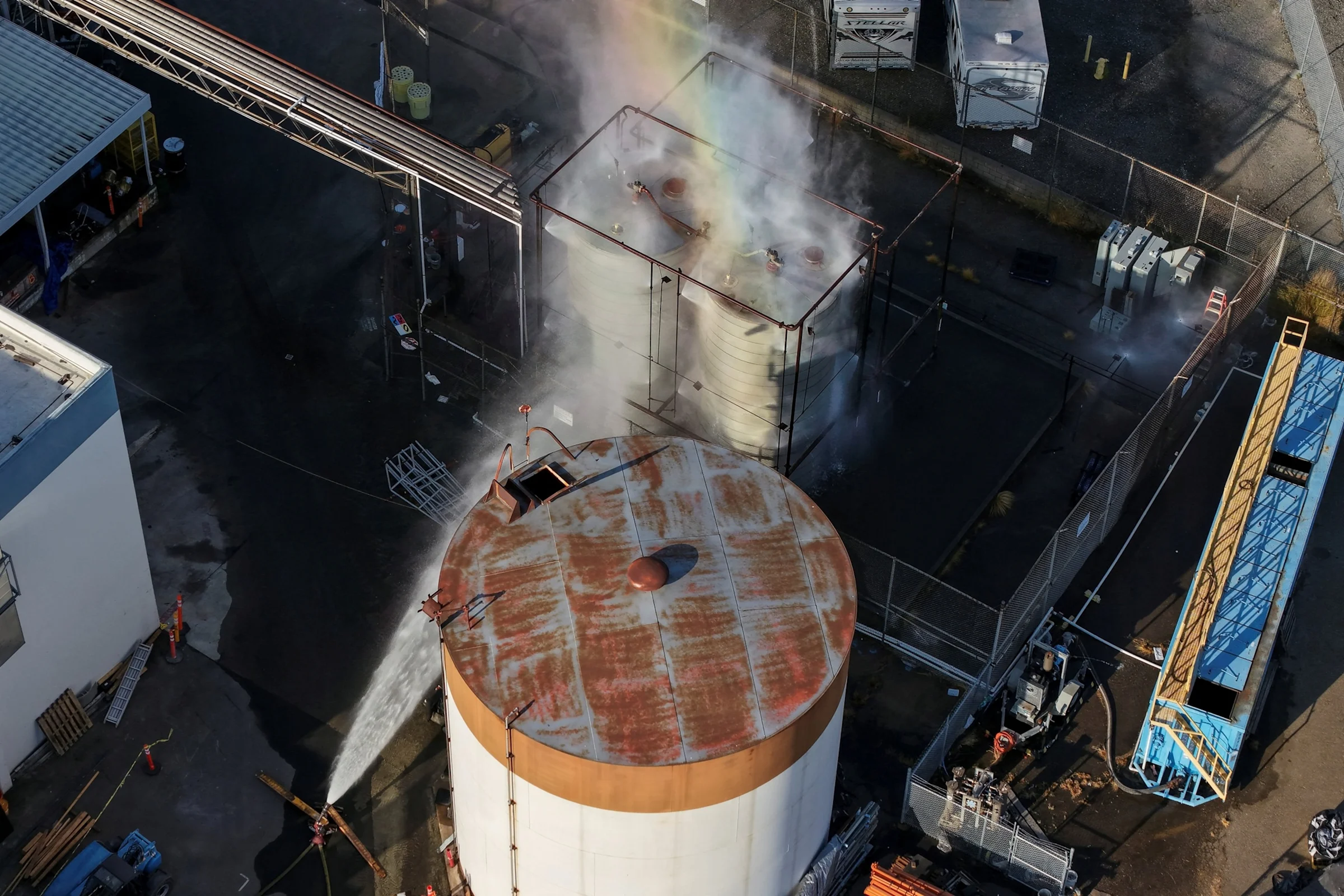
The incident originated at the GKN Aerospace facility in Garden Grove, where a storage tank containing approximately 7,000 gallons of methyl methacrylate was damaged.
What triggered the emergency situation
Emergency officials report that the crisis began when structural damage was detected in a chemical storage tank.
Key developments include:
- A confirmed crack discovered in the storage tank
- Evidence of structural damage and compromised exterior materials
- Continuous heat buildup inside the container
- Ongoing risk of vapor pressure accumulation
Scale of evacuation and public safety measures
The Orange County chemical leak evacuation has impacted surrounding neighborhoods, leading to large-scale displacement.
Authorities have implemented:
- Mandatory evacuation orders for over 50,000 residents
- Establishment of restricted safety perimeters
- Continuous air quality and temperature monitoring
- Deployment of hazardous materials response teams
Explosion Risk Concerns: BLEVE Threat Under Investigation
A major focus of the ongoing response is the potential risk of a Boiling Liquid Expanding Vapor Explosion (BLEVE), a dangerous scenario that can occur when pressurized containers holding volatile substances fail under heat.
Officials are working to determine whether internal conditions inside the tank still pose this risk.
Understanding the BLEVE risk in chemical storage incidents
A BLEVE can occur when:
- A pressurized container overheats
- Internal pressure rises beyond structural limits
- The tank shell weakens or ruptures
- Rapid vapor expansion leads to explosive release
Fire officials have emphasized that while the risk is being actively assessed, conditions remain unstable.
Overnight operations to assess tank stability
Emergency crews are conducting controlled operations to evaluate pressure levels inside the tank.
These operations include:
- Monitoring internal temperature readings
- Assessing vapor pressure conditions
- Evaluating structural integrity of the tank
- Determining safe pressure release options
Officials stated that findings from overnight assessments will guide the next phase of response strategy in the Orange County chemical leak evacuation zone.
GKN Aerospace Facility Identified as Incident Source
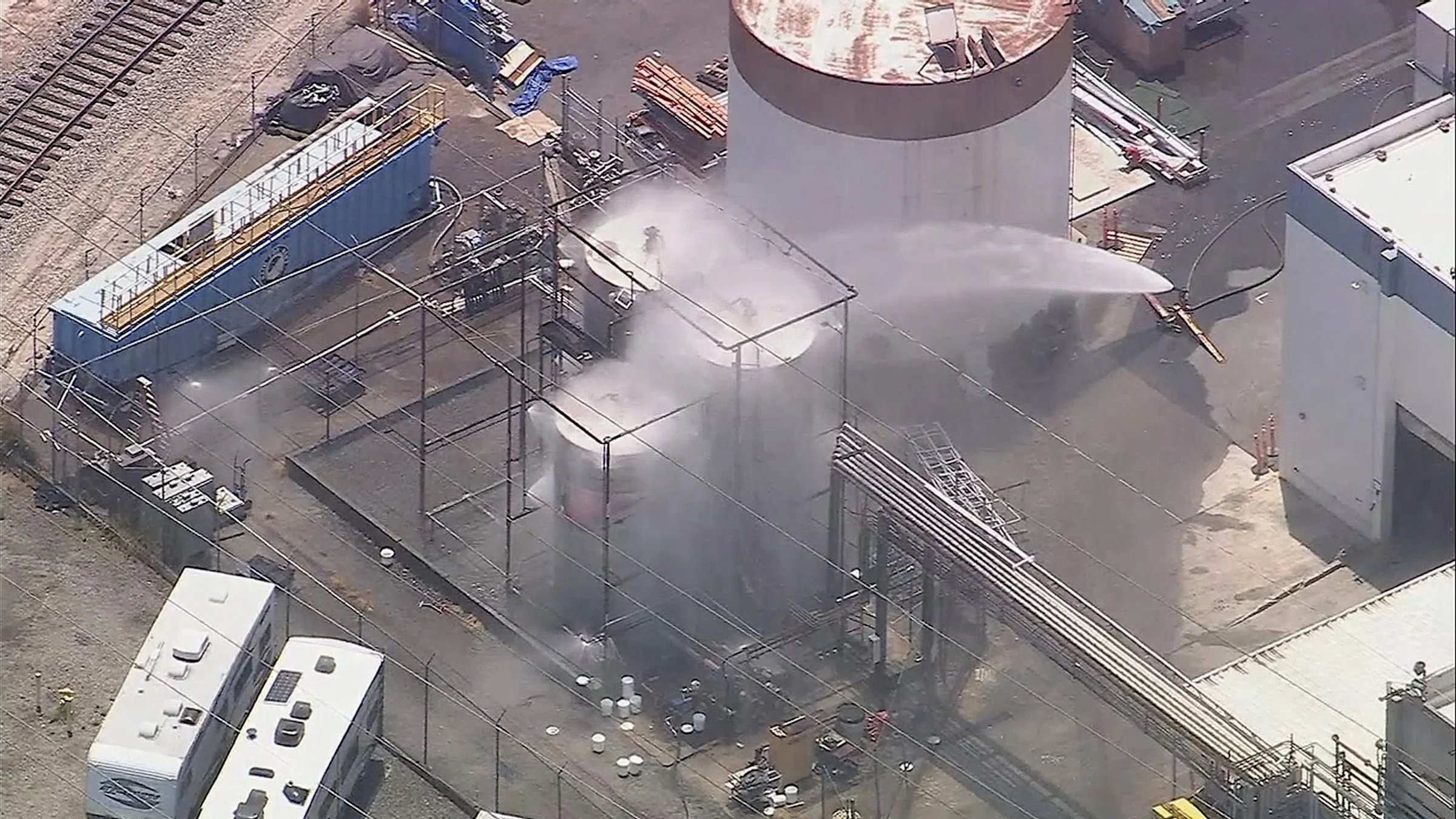
The chemical release has been traced to an industrial site in Garden Grove operated by GKN Aerospace. The facility stores industrial chemicals used in manufacturing processes, including methyl methacrylate.
Chemical involved and its industrial use
Methyl methacrylate is commonly used in:
- Acrylic plastics production
- Adhesives and coatings manufacturing
- Automotive and aerospace components
- Industrial fabrication processes
Structural damage and tank condition
Investigators confirmed damage to the storage unit, including:
- One verified crack on the tank surface
- Weather stripping deterioration on exterior sections
- Possible water-related surface damage from firefighting efforts
Officials clarified that some observed structural concerns were caused by water application used during suppression operations rather than additional tank failures.
Heat and Pressure Build-Up Raises Ongoing Concerns
One of the most critical challenges in the Orange County chemical leak evacuation response is the sustained internal heat inside the damaged tank.
Temperature readings exceed safe limits
Fire crews reported that internal temperatures have exceeded 100 degrees Celsius, well above safe operating thresholds for the chemical involved.
This has increased concerns about:
- Accelerated vapor formation
- Pressure instability inside the tank
- Potential structural weakening
- Risk of uncontrolled release
Safety challenges for emergency responders
Officials have emphasized that response operations require careful coordination due to high-risk conditions.
Fire personnel are operating under strict protocols:
- Controlled approach distances
- Continuous temperature monitoring
- Protective hazmat equipment usage
- Step-by-step pressure assessment procedures
Large-Scale Emergency Coordination and Federal Support Request
California state officials have escalated the response by requesting federal assistance to support ongoing containment and recovery efforts.
Request for FEMA support and emergency declaration
Governor Gavin Newsom has requested a federal emergency declaration to unlock additional resources, including support from the Federal Emergency Management Agency (FEMA).
This request aims to:
- Strengthen coordination between federal and state agencies
- Provide additional funding for emergency operations
- Expand logistical support for displaced residents
- Accelerate containment and recovery efforts
Multi-agency deployment across Orange County
Emergency response efforts include collaboration between multiple agencies:
- Local fire departments
- Orange County Fire Authority (OCFA)
- State emergency management teams
- Federal advisory support units
More than 785 responders remain deployed in and around the affected area.
Public Safety Measures and Ongoing Monitoring Efforts
Authorities continue to prioritize public safety as the situation evolves. Evacuation orders remain in place while monitoring systems track air quality and tank stability.
Continuous monitoring operations
Key monitoring efforts include:
- Air quality testing in surrounding neighborhoods
- Thermal imaging of storage infrastructure
- Structural assessment of containment systems
- Real-time communication with emergency command centers
Community impact and evacuation conditions
Residents affected by the Orange County chemical leak evacuation are being urged to remain away from restricted zones until official clearance is issued.
Local authorities have stressed that premature return could expose individuals to hazardous conditions.
FAQ
What caused the Orange County chemical leak evacuation?
The evacuation was triggered by a damaged chemical storage tank at an aerospace facility in Garden Grove, California.
What chemical is involved in the Orange County incident?
The tank contains methyl methacrylate, an industrial chemical used in plastics and coatings production.
Why are officials concerned about an explosion risk?
Authorities are monitoring the possibility of a BLEVE, a dangerous explosion that can occur under high heat and pressure in storage tanks.
How many people are affected by the evacuation order?
More than 50,000 residents have been ordered to evacuate while safety assessments continue.
Conclusion
The Orange County chemical leak evacuation remains an active and evolving emergency as officials continue efforts to stabilize a damaged chemical storage tank and prevent further escalation. With evacuation orders still in place and technical assessments ongoing, authorities are focusing on reducing pressure risks, ensuring public safety, and coordinating multi-level emergency response operations. The outcome will depend on whether internal conditions inside the tank can be safely controlled in the coming hours.
Click here for more news