 0
0
 0
0
US Ebola airport screening is being expanded as health authorities confirm new monitoring measures at one of the country’s busiest travel hubs. The Centers for Disease Control and Prevention (CDC) announced that Hartsfield-Jackson Atlanta International Airport has been added to the list of locations implementing enhanced Ebola screening procedures.
The move reflects ongoing efforts by US health officials to strengthen disease surveillance systems and improve early detection at major entry points.

CDC Confirms Expansion of Ebola Screening Program
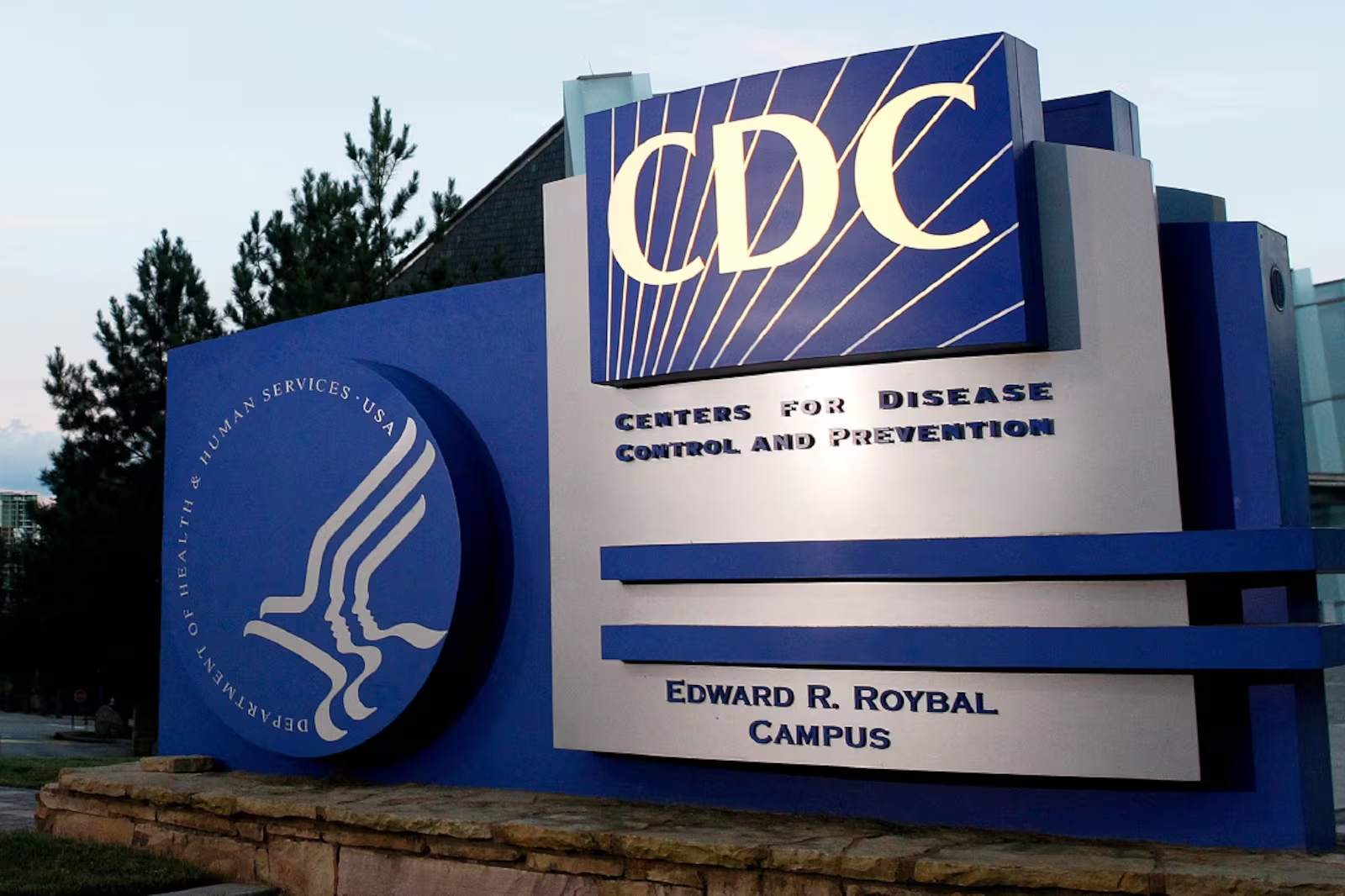
The Centers for Disease Control and Prevention (CDC) stated that the expansion includes Atlanta’s Hartsfield-Jackson International Airport, a major global transit hub.
This update is part of the broader US Ebola airport screening strategy designed to detect potential cases early and reduce public health risks.
What the CDC Announcement Means
According to the CDC, the enhanced screening process involves additional monitoring of travelers arriving from regions where Ebola risk is considered higher.
Key elements include:
- Health questionnaires for selected travelers
- Temperature and symptom screening
- Additional public health monitoring procedures
- Referral systems for further medical evaluation if needed
These measures aim to improve early detection without disrupting normal airport operations.
Role of Hartsfield-Jackson Atlanta International Airport
Hartsfield-Jackson Atlanta International Airport is one of the busiest airports in the world, handling millions of passengers annually.
Its inclusion in the US Ebola airport screening system highlights its importance as a global entry point.
Hartsfield-Jackson Atlanta International Airport
The airport connects international travelers from multiple continents, making it a strategic location for public health monitoring.
US Ebola Airport Screening Expansion Explained
The expansion of US Ebola airport screening reflects increased attention to infectious disease preparedness at major travel hubs.
Public health officials aim to identify potential cases early before they can spread within the country.
Why Atlanta Was Added
Health experts note several reasons why Atlanta became part of the expanded screening network:
- High international passenger traffic
- Extensive global flight connections
- Strategic location in the US air travel system
- Existing public health infrastructure support
These factors make it a key point for monitoring incoming travelers.
Strengthening Border Health Security
The US has long maintained disease screening systems at select airports, especially during outbreaks or global health alerts.
The current expansion reinforces:
- Early detection of infectious diseases
- Rapid response to potential health threats
- Coordination between airport authorities and health agencies
Role of the CDC in Ebola Monitoring
The CDC plays a central role in managing infectious disease risks in the United States.
Centers for Disease Control and Prevention
Its responsibilities include surveillance, prevention, and response coordination for diseases such as Ebola.
How Ebola Screening Works
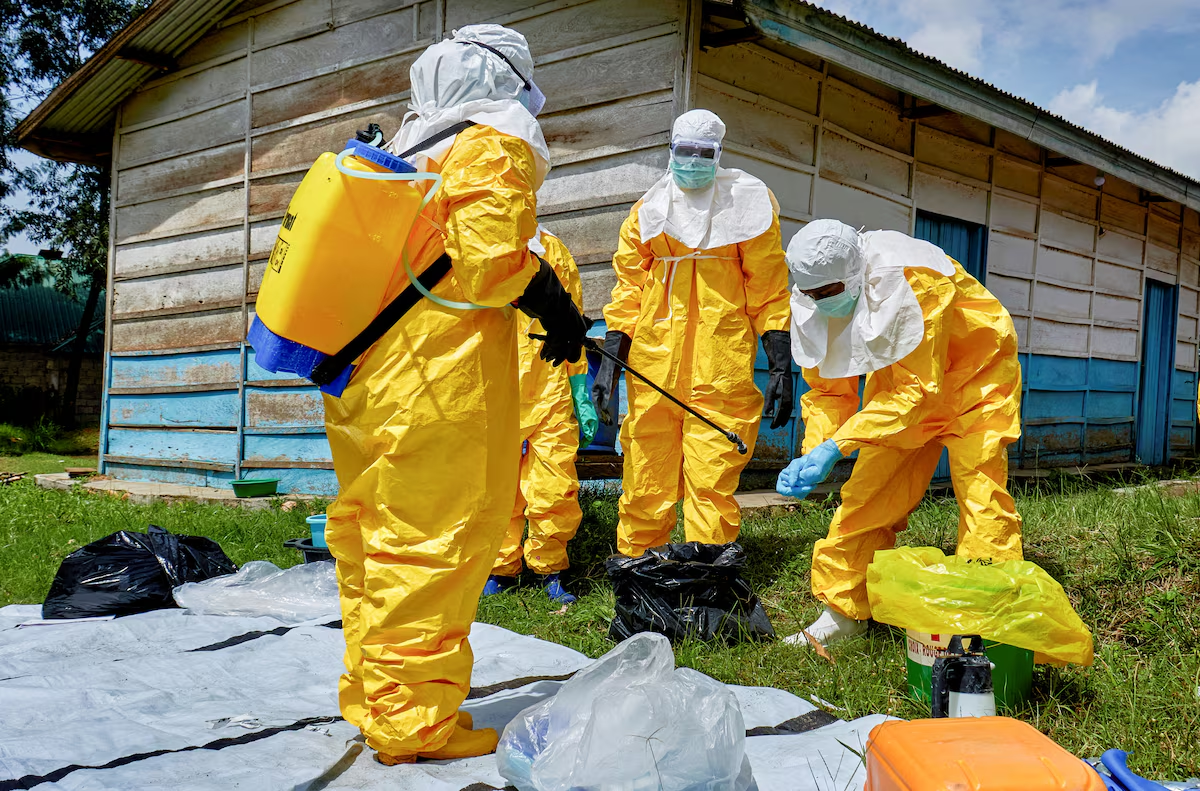
The Ebola screening process at airports is designed to identify symptoms and travel history risks.
Typical steps include:
- Initial traveler assessment
- Review of recent travel from affected regions
- Temperature and symptom checks
- Follow-up evaluation if needed
Focus on Early Detection
Early identification is essential in controlling infectious diseases like Ebola.
Health officials emphasize that screening is not a diagnostic test but a preventive measure to flag potential risks.
Background on Ebola and Global Health Concerns
Ebola is a rare but serious viral disease that can spread through direct contact with infected bodily fluids.
Past outbreaks in parts of Africa have led to international monitoring and emergency preparedness measures.
Why Airports Are Important in Disease Control
Airports are critical checkpoints in global disease control because:
- They connect international travel routes
- They handle large volumes of passengers daily
- They can help detect symptoms early
- They reduce cross-border transmission risks
Global Coordination Efforts
Countries often coordinate with international health bodies to manage outbreaks and prevent global spread.
The CDC works alongside global partners to ensure consistent monitoring standards.
Impact on Travelers and Airport Operations
The expansion of US Ebola airport screening is expected to have minimal disruption for passengers.
What Travelers May Experience
Passengers may encounter:
- Brief health questionnaires
- Visual health assessments
- Temperature checks in selected cases
- Additional screening for flagged travel history
These procedures are generally designed to be non-intrusive.
Airport Efficiency Considerations
Authorities aim to balance public health safety with efficient airport operations.
To achieve this, screening systems are integrated into existing passenger flow processes.
Public Health Preparedness in the United States
The inclusion of Atlanta airport reflects broader preparedness strategies across the US public health system.
Key Preparedness Goals
The US health system focuses on:
- Rapid detection of infectious diseases
- Strong airport screening systems
- Coordination between federal and local agencies
- Public awareness and safety measures
Lessons from Past Outbreaks
Previous global outbreaks have shaped current health policies, leading to stronger screening protocols at major entry points.
Role of International Reporting and Monitoring
News of the expansion was reported by international media outlets, including Reuters, which highlighted the CDC’s updated screening measures.
This reflects continued global interest in how countries manage infectious disease risks.
FAQ
What is US Ebola airport screening?
US Ebola airport screening refers to health monitoring measures at airports to detect potential Ebola symptoms in travelers arriving from higher-risk regions.
Why was Atlanta airport added to the screening program?
Hartsfield-Jackson Atlanta International Airport was added due to its high international passenger traffic and strategic role in global travel.
Does Ebola screening delay passengers?
Screening is generally designed to be quick and minimally disruptive, often involving simple checks and questionnaires.
Is Ebola currently widespread in the US?
There is no widespread Ebola outbreak in the US; screening is a preventive measure to enhance public health safety.
Conclusion
The expansion of US Ebola airport screening to include Atlanta reflects ongoing efforts by health authorities to strengthen disease surveillance and preparedness. By enhancing monitoring at one of the nation’s busiest airports, the CDC aims to improve early detection capabilities while maintaining efficient travel operations. The move underscores the importance of proactive public health systems in managing global infectious disease risks.
Click here for more news