 0
0
 0
0
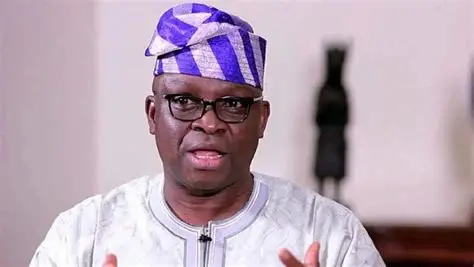
The Fayose Tinubu 2027 election prediction has sparked political discussions after former Ekiti State Governor Ayodele Fayose declared that President Bola Tinubu remains the clear favourite ahead of Nigeria’s next presidential election.
Speaking during a television interview, Fayose argued that the opposition has failed to build the level of unity required to present a formidable challenge to the ruling party. According to him, political fragmentation among opposition figures has significantly weakened their chances of unseating the incumbent president in 2027.
His remarks come amid ongoing debates about Nigeria’s political future, economic challenges, security concerns, and the possible emergence of opposition coalitions ahead of the next general election.

Fayose’s Assessment of the 2027 Presidential Race
Fayose expressed confidence that President Tinubu currently enjoys a strong political advantage heading into the 2027 election cycle.
According to the former governor, public conversations on social media do not necessarily reflect the realities of electoral politics across the country.
He maintained that while many Nigerians continue to express concerns about governance issues, there is currently no opposition figure or political movement that appears capable of mounting a serious nationwide challenge against the president.
“Reality and Social Media Are Different”
During the interview, Fayose emphasized what he described as the difference between public sentiment online and actual political realities on the ground.
He suggested that social media discussions often create perceptions that may not accurately represent voting patterns or political structures across Nigeria.
According to him, electoral success is determined by organization, grassroots support, political alliances, and party strength rather than online popularity alone.
Why Fayose Believes Tinubu Has an Advantage
Fayose pointed to several factors that he believes currently favor the president:
- The absence of a united opposition front
- Fragmentation among opposition political parties
- Multiple presidential hopefuls pursuing separate ambitions
- Established political structures across the country
- The electoral strength of the ruling party
He argued that these factors collectively place Tinubu in a stronger position ahead of the next election cycle.
Opposition Unity Remains a Major Challenge
A central theme of the Fayose Tinubu 2027 election prediction is the issue of opposition unity.
The former governor stated that the opposition’s inability to rally around a single platform has weakened its chances of competing effectively against the ruling party.
Political observers have frequently identified coalition-building as one of the key factors that could shape the outcome of future elections in Nigeria.
The Importance of a United Coalition
According to Fayose, a united opposition coalition would have presented a more significant challenge to the incumbent president.
He suggested that if major opposition figures had remained together under one political platform, the electoral contest could have become considerably more competitive.
Coalitions have historically played important roles in democratic systems around the world, particularly when opposition groups seek to combine resources, voter bases, and political influence.
Multiple Parties, Multiple Candidates
Another issue highlighted by Fayose is the growing number of political parties and presidential aspirants.
He argued that when opposition votes are divided among several candidates and parties, it becomes more difficult for any single challenger to build sufficient momentum.
This situation could potentially benefit an incumbent candidate by reducing the likelihood of a unified electoral challenge.

Concerns Over Governance and Public Sentiment
Fayose’s comments come at a time when many Nigerians continue to discuss national issues such as:
- Economic reforms
- Inflation and cost of living pressures
- Security challenges
- Employment opportunities
- Infrastructure development
These issues have remained central topics in political discussions across the country.
Economic Challenges and Political Debate
The Nigerian economy has experienced significant changes in recent years, leading to ongoing debates among policymakers, political leaders, and citizens.
Supporters of government reforms argue that certain policies are necessary for long-term economic stability, while critics point to the immediate impact on households and businesses.
Despite these concerns, Fayose believes the current political landscape still favors the incumbent president.
Security Remains a Key Election Issue
Security is expected to remain one of the most important issues leading into the 2027 election.
Various regions of the country continue to face different security challenges, making the issue a major consideration for voters and political stakeholders alike.
As campaigns gradually begin to take shape in the coming years, candidates from different parties are expected to present their approaches to addressing these concerns.
Tinubu’s Position Ahead of 2027
President Bola Tinubu was elected in the 2023 presidential election and is expected to seek a second term if he decides to contest in 2027.
Under Nigeria’s constitutional framework, a president can serve a maximum of two four-year terms.
As a result, political discussions about potential candidates and electoral strategies have already begun among various political groups.
Strength of Incumbency in Nigerian Politics
Political analysts often point to incumbency as an important factor in elections.
Incumbent leaders typically benefit from:
- Greater national visibility
- Existing political structures
- Access to established party networks
- Ongoing engagement with government institutions
- Recognition among voters
However, incumbency alone does not guarantee electoral victory, as voter sentiment and political developments can significantly influence outcomes.
What Could Change Before 2027?
Although Fayose believes Tinubu is currently the favourite, Nigeria’s political environment remains dynamic.
Several factors could influence the election landscape before 2027:
- Formation of new political alliances
- Emergence of influential candidates
- Economic performance
- Security developments
- Internal party dynamics
- Voter engagement and turnout
Political conditions can evolve considerably over a four-year electoral cycle, making long-term predictions subject to change.
Reactions to Fayose’s Comments
The Fayose Tinubu 2027 election prediction has generated reactions across Nigeria’s political space.
Supporters of the ruling party view his comments as recognition of the president’s political strength and organizational advantage.
Meanwhile, some opposition supporters argue that it is too early to determine the outcome of the election, noting that political alliances and public sentiment can shift significantly before voting begins.
Such differing opinions reflect the broader political debates already emerging ahead of the next presidential contest.
Looking Ahead to the 2027 Election
Although the election remains some distance away, political actors are already evaluating potential strategies and alliances.
Political parties are expected to focus on strengthening their structures, expanding membership, and building support across different regions of the country.
The coming months and years may provide greater clarity regarding potential candidates, coalition efforts, and the issues likely to dominate campaign discussions.
For now, Fayose maintains that the opposition remains too divided to present a serious threat to President Tinubu’s reelection prospects.

FAQ
Why did Fayose say nobody is contesting against Tinubu in 2027?
Fayose argued that the opposition remains fragmented and has not formed a united coalition capable of mounting a strong challenge against President Tinubu.
What is Fayose’s prediction for the 2027 presidential election?
He believes President Bola Tinubu is currently the clear favourite due to the lack of opposition unity and the strength of existing political structures.
Could a united opposition challenge Tinubu in 2027?
According to Fayose, a single opposition coalition could have made the race more competitive by consolidating support under one platform.
What factors could affect the 2027 election outcome?
Economic performance, security developments, political alliances, voter sentiment, party structures, and candidate selection could all influence the election.
In conclusion, Ayodele Fayose’s remarks have added to the growing conversation about Nigeria’s 2027 presidential election. While he believes President Bola Tinubu currently holds a strong advantage due to a divided opposition, the political landscape remains subject to change. As parties continue to organize and potential alliances emerge, the road to 2027 is expected to remain a major topic of national political discussion.
Click here for more news