0
0
 0
0
Claude Code limits frustration has become a growing talking point among developers as AI-assisted coding tools continue to evolve. While these tools are transforming software development workflows, concerns around usage caps, inconsistent access, and pricing models are increasingly shaping user preferences and long-term adoption decisions.
Recent discussions across developer communities suggest that despite strong model performance, limitations in availability and session caps are pushing some users to consider alternative platforms such as Codex-style coding agents.
The rise of AI-assisted coding and agent-based development
The shift toward AI-assisted development has accelerated rapidly in recent years, fundamentally changing how code is written and maintained.

From manual coding to agent-based workflows
Traditional workflows required developers to:
• Write code line by line
• Manually debug errors
• Run tests independently
• Manage entire repositories manually
However, modern AI tools now offer:
• Automated code generation
• Repository-wide context awareness
• Test execution and debugging support
• Terminal-based autonomous agents
This transition has made tools like Claude Code and Codex part of a broader movement toward “agentic development environments.”
Terminal-based AI agents reshaping workflows
Unlike earlier chatbot-based coding assistants, newer systems operate directly inside the terminal environment.
This allows them to:
• Read full codebases
• Execute commands directly
• Run automated testing pipelines
• Iterate on code without constant user input
These capabilities significantly improve productivity but also introduce new constraints related to compute usage and system limits.
Growing concerns around Claude Code limits frustration
Despite strong technical performance, Claude Code limits frustration is increasingly centered on one key issue: usage restrictions that interrupt workflows.
Inconsistent usage caps affecting developers
Many users report that usage limits can be unpredictable, even on premium plans. This creates challenges such as:
• Unexpected session interruptions
• Forced waiting periods before resuming work
• Reduced productivity during peak hours
• Difficulty planning long development sessions
For developers working on time-sensitive tasks, these interruptions can be disruptive.
Pricing vs access expectations
A recurring concern involves the perceived mismatch between subscription cost and usable runtime.
Common observations include:
• Higher-tier plans still hitting limits quickly
• Short work sessions before throttling
• Uneven performance during high demand periods
This has contributed significantly to Claude Code limits frustration across both casual and professional users.
Peak usage policies and workflow disruption
Some users have reported that usage throttling varies depending on system demand.
This has led to concerns that:
• Work schedules may need adjustment to match system availability
• Productivity depends on backend load conditions
• Access may not be consistent throughout the day
Such unpredictability can make planning development work more difficult.
Comparing Claude Code and Codex-style AI tools
The growing comparison between Claude Code and Codex alternatives highlights how usage models influence user preferences as much as technical capability.
Codex-style tools and perceived stability
Codex-style coding systems are often described as offering more consistent usage behavior in day-to-day tasks.
Users frequently highlight:
• More predictable session durations
• Fewer mid-task interruptions
• Stable access during working hours
• Smooth integration into development environments
While performance varies depending on implementation, consistency is often a key advantage.
Why developers are comparing alternatives
The comparison is not solely about model intelligence. Instead, it often focuses on:
• Reliability during extended coding sessions
• Ability to complete full development workflows
• Cost-to-usage ratio
• Predictability of service limits
As a result, Claude Code limits frustration is often mentioned alongside discussions about switching tools.
Improvements in Claude’s model performance
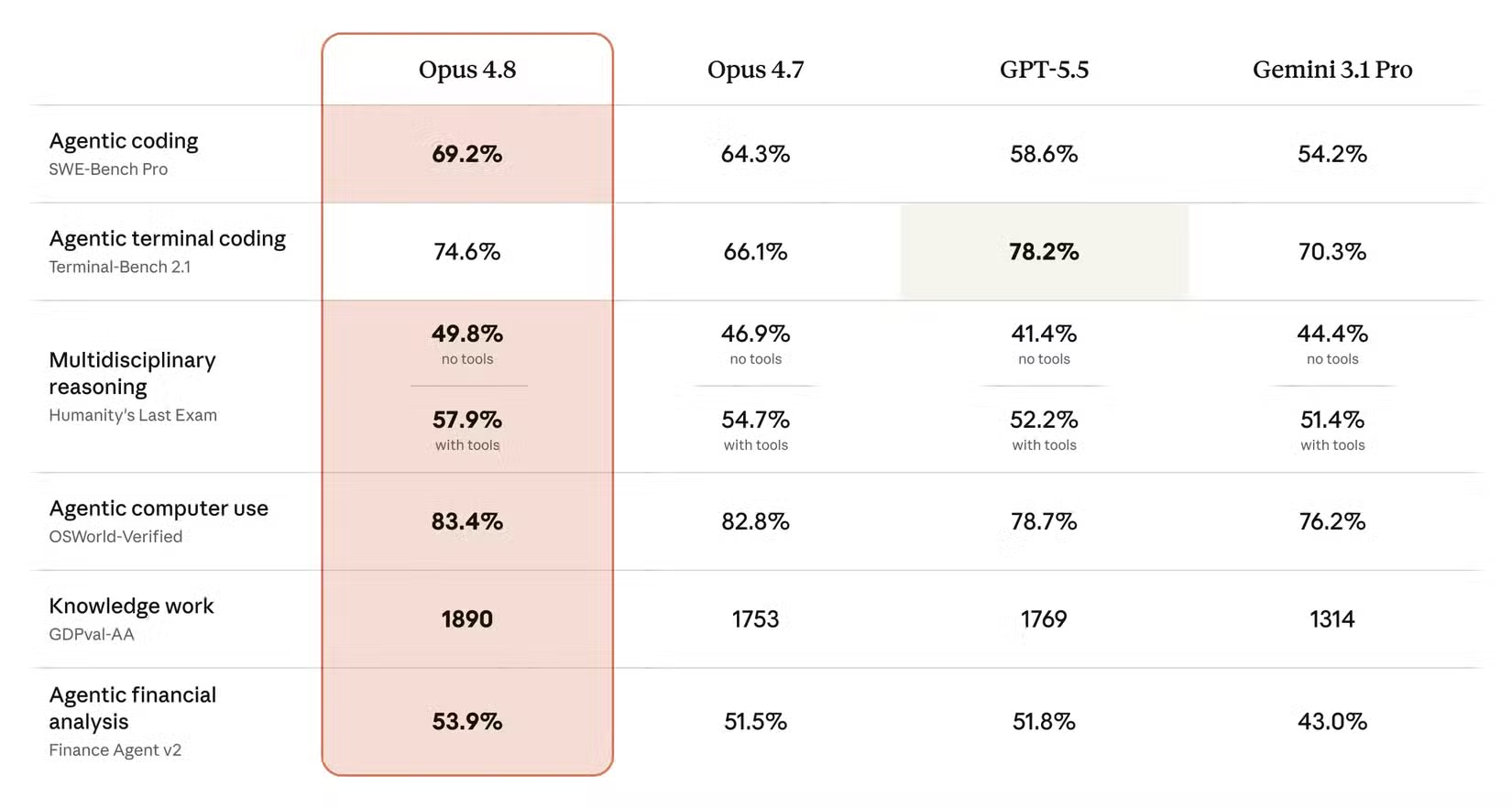
It is important to note that Claude’s underlying models continue to show strong performance improvements in coding benchmarks and real-world tasks.
Advancements in reasoning and coding benchmarks
Recent model updates have reportedly improved performance on software engineering benchmarks designed to simulate real development tasks.
These improvements typically include:
• Better code understanding across large repositories
• More accurate debugging suggestions
• Improved task planning for complex projects
• Stronger reasoning over multi-step workflows
Enhanced agent capabilities
Newer features in AI coding agents now include:
• Multi-agent task execution
• Parallel problem-solving workflows
• Automated planning and execution pipelines
• Improved context handling for large projects
These advancements show that the core technology continues to evolve rapidly.
Infrastructure changes and capacity expansion efforts
In response to growing demand, providers have announced infrastructure improvements aimed at expanding compute availability and reducing bottlenecks.
Expanding backend capacity
Recent updates in the AI industry indicate significant investment in compute infrastructure to support:
• Higher request volumes
• Larger model deployments
• Faster response times
• Expanded enterprise usage
These improvements are intended to reduce limitations during peak demand periods.
Impact on user experience
While infrastructure expansion is promising, users often report that:
• Improvements are not immediately noticeable
• Usage caps still feel restrictive
• High-demand periods remain challenging
This contributes to ongoing Claude Code limits frustration even as systems improve.

Developer community response and real-world impact
Developer discussions across online communities highlight mixed sentiment about AI coding tools.
Common user experiences
Reported experiences include:
• Interruptions during long coding sessions
• Switching tools mid-project due to limits
• Planning work around availability windows
• Comparing multiple AI coding platforms
Productivity implications
For developers relying heavily on AI tools, limitations can affect:
• Project timelines
• Workflow consistency
• Task completion speed
• Learning and experimentation cycles
Even small interruptions can compound into significant productivity losses over time.
Why usage limits matter more than model quality
One of the key insights from ongoing discussions is that model performance alone is not enough to determine user satisfaction.
Balance between intelligence and availability
Users typically evaluate AI tools based on:
• Output quality
• Response speed
• Availability during work hours
• Session continuity
Even highly capable models may feel less useful if access is inconsistent.
Practical expectations for professional use
For professional developers, expectations often include:
• Full workday usability
• Predictable limits
• Stable session durations
• Minimal interruptions during coding tasks
When these expectations are not met, Claude Code limits frustration becomes more pronounced.
Future outlook for AI coding assistants
The AI coding landscape is expected to continue evolving rapidly, with competition driving improvements in both performance and usability.
Likely areas of improvement
Future updates across the industry may focus on:
• Higher usage limits for paid plans
• Better resource distribution during peak hours
• More transparent usage tracking
• Improved long-session stability
Competition driving innovation
As more companies enter the AI coding space, users are likely to benefit from:
• More competitive pricing models
• Improved reliability
• Expanded feature sets
• Greater flexibility in usage policies
This competition may help reduce current concerns over Claude Code limits frustration across the ecosystem.
FAQ
Why are developers frustrated with Claude Code limits?
Developers report that usage caps and inconsistent session durations can interrupt workflows, especially during long coding tasks.
Is Codex more stable than Claude Code?
Some users perceive Codex-style tools as more stable due to more predictable usage patterns, though experiences vary depending on workload.
Do usage limits affect AI coding productivity?
Yes, usage limits can impact productivity by interrupting coding sessions and requiring users to wait before continuing tasks.
Will AI coding tools improve their usage limits in the future?
Industry trends suggest that providers are investing in infrastructure improvements, which may lead to higher limits and more stable access over time.
Conclusion
Claude Code limits frustration reflects a broader challenge in AI-powered development tools: balancing high-performance models with sustainable usage policies. While the underlying technology continues to improve, developers are increasingly prioritizing reliability and uninterrupted access alongside model quality. As competition grows, future updates may help address these concerns and create more consistent experiences for professional users.
PLEASE CLICK HERE FOR MORE NEWS