 0
0
 0
0
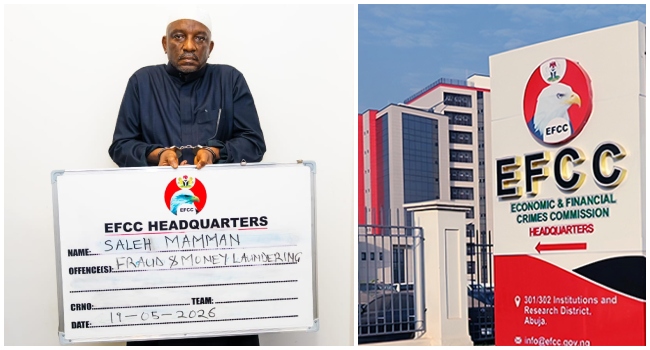
The Saleh Mamman corruption arrest Nigeria case has drawn widespread attention following the detention of Nigeria’s former Power Minister after he was sentenced to decades in prison for corruption-related offenses. Authorities confirmed that the arrest followed weeks of intelligence operations after the former official reportedly went into hiding.
The development marks a significant moment in Nigeria’s ongoing anti-corruption efforts, particularly involving high-profile political figures accused of mismanaging public funds intended for national development projects.
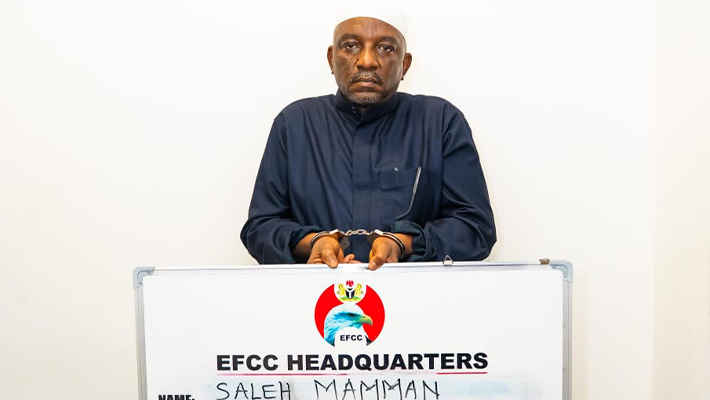
EFCC Arrest of Saleh Mamman After Weeks of Surveillance
Nigeria’s anti-corruption agency confirmed that the former minister was taken into custody in Kaduna State in the early hours of Tuesday. The operation followed what officials described as coordinated surveillance and intelligence gathering over several weeks.
Intelligence-Led Operation in Kaduna
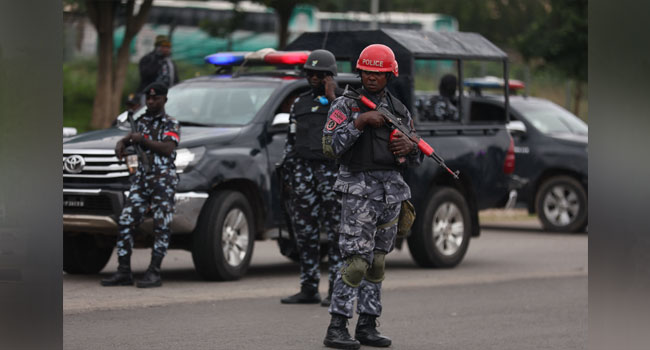
Security operatives reportedly tracked movements linked to the former minister after he failed to appear following his conviction. The Saleh Mamman corruption arrest Nigeria case highlights how enforcement agencies are increasingly relying on intelligence-driven methods to apprehend suspects who attempt to evade sentencing.
Key details of the arrest include:
- Location: Kaduna State, northern Nigeria
- Timing: Early hours of Tuesday morning
- Method: Surveillance and intelligence tracking
- Outcome: Custody without reported resistance
EFCC Position on the Arrest
The Economic and Financial Crimes Commission stated that ensuring the execution of court judgments remains a priority. Officials emphasized that the arrest was necessary to ensure the sentence handed down by the court is fully served.
The agency noted that high-profile convictions must be enforced to strengthen public confidence in the justice system.
Court Conviction and 75-Year Sentence Explained
The Saleh Mamman corruption arrest Nigeria development stems from a recent court ruling that found the former minister guilty on multiple charges linked to corruption and abuse of public office.
Conviction on Multiple Charges
A court in Abuja found Mamman guilty on 12 counts involving the diversion of public funds. The charges were related to money allocated for critical electricity infrastructure projects across the country.
According to court findings:
- Funds were diverted from hydroelectric power projects
- Proxy companies were allegedly used to move money
- Public trust was significantly violated
Breakdown of the Sentence
The court imposed multiple prison terms for each count, structured to run consecutively. This resulted in a cumulative sentence totaling 75 years.
The judge stated that prosecutors proved their case beyond reasonable doubt, noting that the misuse of public funds had long-term consequences for national infrastructure development.
Allegations of ₦22 Billion Power Project Diversion
At the center of the case is the alleged diversion of approximately ₦22 billion meant for power projects aimed at improving electricity supply in Nigeria.
How the Funds Were Allegedly Misused
Investigations revealed claims that public funds intended for development were redirected through intermediaries. The Saleh Mamman corruption arrest Nigeria case is closely tied to these financial allegations.
Reported mechanisms of diversion included:
- Use of proxy or shell companies
- Transfers linked to project contractors
- Misallocation of infrastructure funds
Impact on National Power Projects
The diverted funds were originally allocated to hydroelectric and electricity improvement projects. These projects were intended to support Nigeria’s struggling power infrastructure.
Consequences of the alleged diversion include:
- Delays in power project completion
- Reduced infrastructure efficiency
- Continued reliance on alternative power sources
Ongoing Separate Fraud Trial and Arrest Warrant
Beyond the current conviction, the former minister also faces additional legal proceedings in Abuja related to a separate fraud case.
Additional ₦31 Billion Fraud Allegations
A separate trial involves allegations of financial misconduct involving approximately ₦31 billion. The court issued a warrant for his arrest after he failed to appear for proceedings in that case.
This adds another layer to the broader Saleh Mamman corruption arrest Nigeria situation, indicating multiple ongoing legal challenges.
Legal Status and Next Steps
Authorities have indicated that the arrest ensures compliance with at least one of the active judgments, while other cases remain pending. Legal analysts suggest further proceedings may continue depending on court schedules.
Reactions to Anti-Corruption Enforcement in Nigeria
The arrest has generated discussion about Nigeria’s efforts to address corruption, especially involving senior government officials.
Public and Institutional Reactions
Reactions have focused on the rarity of high-level convictions being fully enforced.
Key themes include:
- Renewed attention to anti-corruption enforcement
- Public concern over governance accountability
- Debate over judicial efficiency and enforcement consistency
EFCC Commitment to Enforcement
Officials reiterated that the enforcement of court rulings is essential in restoring trust in public institutions. The Saleh Mamman corruption arrest Nigeria case is being presented as an example of sustained enforcement efforts.
Nigeria’s Electricity Challenges and Public Concerns
The case has also reignited conversations about Nigeria’s persistent electricity challenges, which continue to affect households and businesses across the country.
Ongoing Power Supply Issues
Despite being one of Africa’s largest energy producers, Nigeria continues to face significant electricity shortages.
Common challenges include:
- Frequent power outages
- Heavy dependence on fuel generators
- High cost of alternative energy sources
Public Sentiment on Infrastructure Development
Many citizens have expressed concern that mismanagement of power sector funds has contributed to ongoing electricity instability. The case underscores broader expectations for transparency in infrastructure development.
FAQ
Why was Saleh Mamman arrested after his conviction?
He was arrested after being sentenced to 75 years in prison and reportedly going into hiding instead of surrendering to authorities.
What is the Saleh Mamman corruption arrest Nigeria case about?
It involves allegations that public funds meant for electricity projects were diverted through unauthorized channels and proxy companies.
How much money is involved in the corruption allegations?
The main case involves about ₦22 billion, while a separate ongoing case includes allegations of ₦31 billion fraud.
What sentence was given in the court ruling?
He received multiple consecutive sentences totaling 75 years in prison for 12 corruption-related charges.
Conclusion
The Saleh Mamman corruption arrest Nigeria case represents a major development in Nigeria’s ongoing anti-corruption enforcement efforts. With the former minister now in custody following a lengthy sentence, attention has shifted to the broader implications for governance, accountability, and public trust.
While legal proceedings continue in related cases, the arrest highlights the judiciary’s stance on corruption and the increasing effort by authorities to ensure that convicted individuals face the consequences of their actions.
Click here for more news