 0
0
 0
0
The Peter Magyar Hungary prime minister swearing-in marks a major political shift in Hungary, as Péter Magyar has officially taken office following an election victory that ended Viktor Orbán’s 16-year rule over the country.
The transition represents one of the most significant changes in Hungarian politics in decades, reshaping both domestic governance and the country’s relationship with the European Union.
Hungary Enters New Political Era After Election Shock
Hungary has entered a new political phase following a historic election result that brought the opposition Tisza party to power.
Election Victory Ends Longstanding Leadership
Péter Magyar’s centre-right Tisza party secured:
- Majority of parliamentary seats
- Higher vote share than ruling Fidesz party
- Strong nationwide electoral support
This result effectively ended the long dominance of Viktor Orbán’s leadership, which lasted more than 16 years.
Historic Shift in Hungarian Politics
The outcome of the election is considered one of the most significant in Hungary’s post-Communist history, marking a clear political realignment.
Key outcomes include:
- Change in governing ideology
- Shift in parliamentary control
- New leadership direction under Magyar
This development forms the foundation of the Peter Magyar Hungary prime minister swearing-in transition.
Péter Magyar Officially Sworn in as Prime Minister
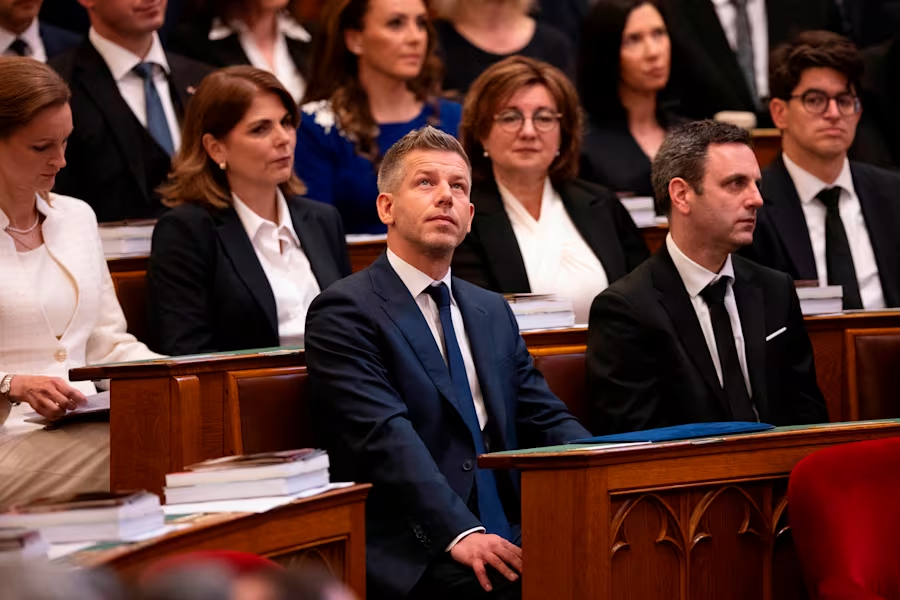
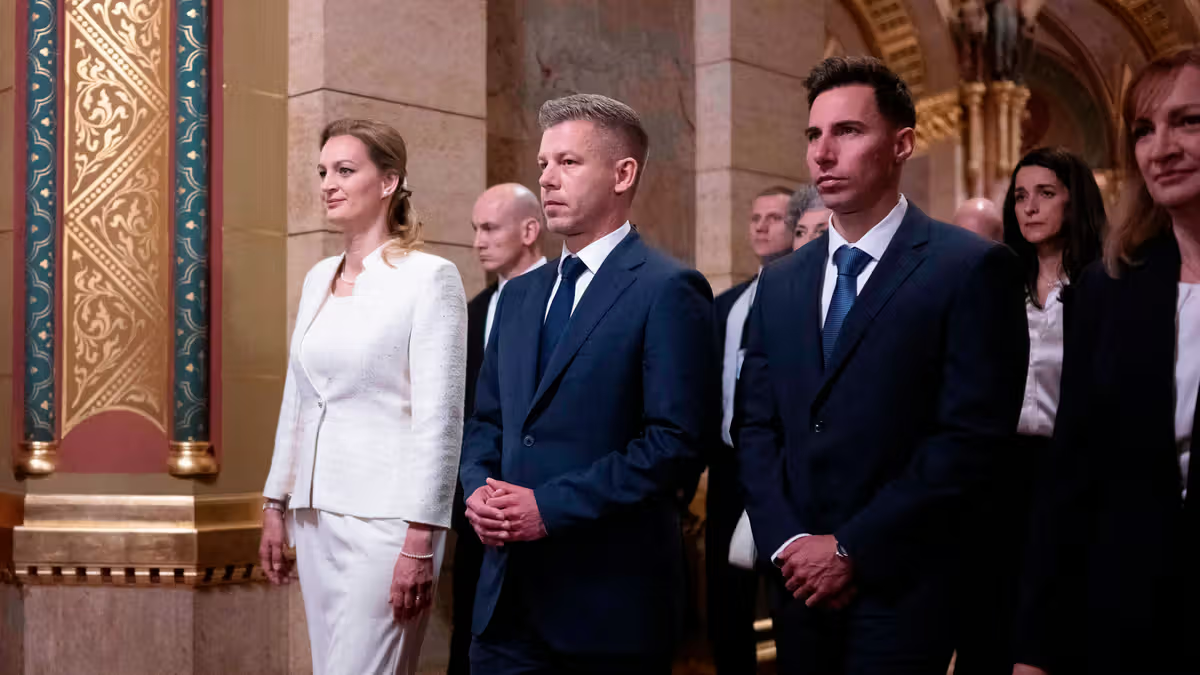
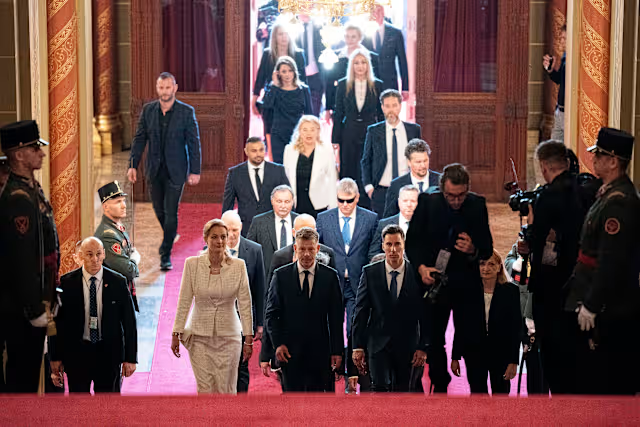
On Saturday, Péter Magyar arrived at the Hungarian Parliament building in Budapest to be formally sworn in as the new prime minister.
Ceremony at the Parliament Building
Magyar entered the historic neo-Gothic Parliament alongside:
- Around 140 Tisza party representatives
- Newly elected members of parliament
- Senior political figures supporting the transition
The ceremony marked the official transfer of executive power.
Parliamentary Majority Shift
Following the election:
- Tisza party holds 141 of 199 seats
- Former ruling coalition reduced to 52 seats
- Far-right Mi Hazánk party secured 6 seats
This major shift reflects the scale of change captured in the Peter Magyar Hungary prime minister swearing-in event.
End of Viktor Orbán’s Long Political Era
The swearing-in also signals the end of Viktor Orbán’s extended leadership in Hungary.
Sixteen Years in Power
Orbán served as Hungary’s prime minister for 16 years, during which his government was widely described as nationalist-populist.
Key features of his rule included:
- Strong centralized governance
- Disputes with European Union institutions
- Controversial political reforms
- Long-term dominance of Fidesz party
Reduced Parliamentary Influence
After the election:
- Fidesz-KDNP coalition lost majority control
- Parliamentary representation dropped significantly
- Opposition parties gained stronger influence
This marks a major political restructuring in Hungary’s leadership landscape.

Policy Direction Under New Leadership
The transition to Péter Magyar’s government is expected to bring policy changes across multiple areas.
Expected Domestic Changes
Observers anticipate reforms in:
- Governance and institutional transparency
- Anti-corruption measures
- Political accountability systems
EU Relations and Foreign Policy
Hungary’s position within the European Union is also expected to shift.
Potential changes include:
- Reduced veto usage in EU decisions
- Improved cooperation with EU institutions
- Policy alignment with broader European frameworks
These developments are closely tied to the Peter Magyar Hungary prime minister swearing-in political transition.
Parliamentary Power Balance Changes
The new election results significantly altered Hungary’s political structure.
Seat Distribution Overview
- Tisza Party: 141 seats
- Fidesz-KDNP: 52 seats
- Mi Hazánk: 6 seats
Impact on Governance
This new balance means:
- Strong majority government under Tisza
- Reduced opposition dominance from Fidesz
- Smaller far-right parliamentary presence
Political Implications for Hungary and Europe
The leadership change in Hungary has broader implications beyond domestic politics.
European Union Relations
Hungary has often had a complex relationship with the EU, particularly under Orbán’s leadership.
Key areas of impact may include:
- Decision-making alignment within EU councils
- Policy coordination on regional issues
- Reduction in political tensions with Brussels
Regional Political Influence
Hungary’s shift in leadership may also affect:
- Central European political alliances
- Regional economic cooperation
- Migration and border policy discussions
Public Reaction and Political Expectations
The election outcome has generated widespread political discussion both domestically and internationally.
Support for Change
Supporters of the new government highlight:
- Desire for political reform
- Calls for transparency and accountability
- Need for renewed international cooperation
Challenges Ahead
The new administration will face challenges such as:
- Managing economic stability
- Delivering promised reforms
- Balancing domestic expectations with international relations
FAQ
Who is Péter Magyar?
Péter Magyar is a Hungarian politician and leader of the Tisza party who became prime minister after winning the national election.
Why did Viktor Orbán leave office?
Orbán’s ruling coalition lost the election, resulting in a parliamentary majority shift to the opposition.
What is the Tisza party?
The Tisza party is a centre-right political movement that won the most seats in Hungary’s recent election.
How will Hungary’s EU relations change?
The new government is expected to improve cooperation with the European Union and reduce past political tensions.
Conclusion
The Peter Magyar Hungary prime minister swearing-in marks a historic turning point in Hungarian politics, ending more than a decade and a half of leadership under Viktor Orbán. With a new parliamentary majority and shifting political direction, Hungary is entering a new phase that may reshape its domestic policies and international relationships.
Click here for more news