 0
0
 0
0
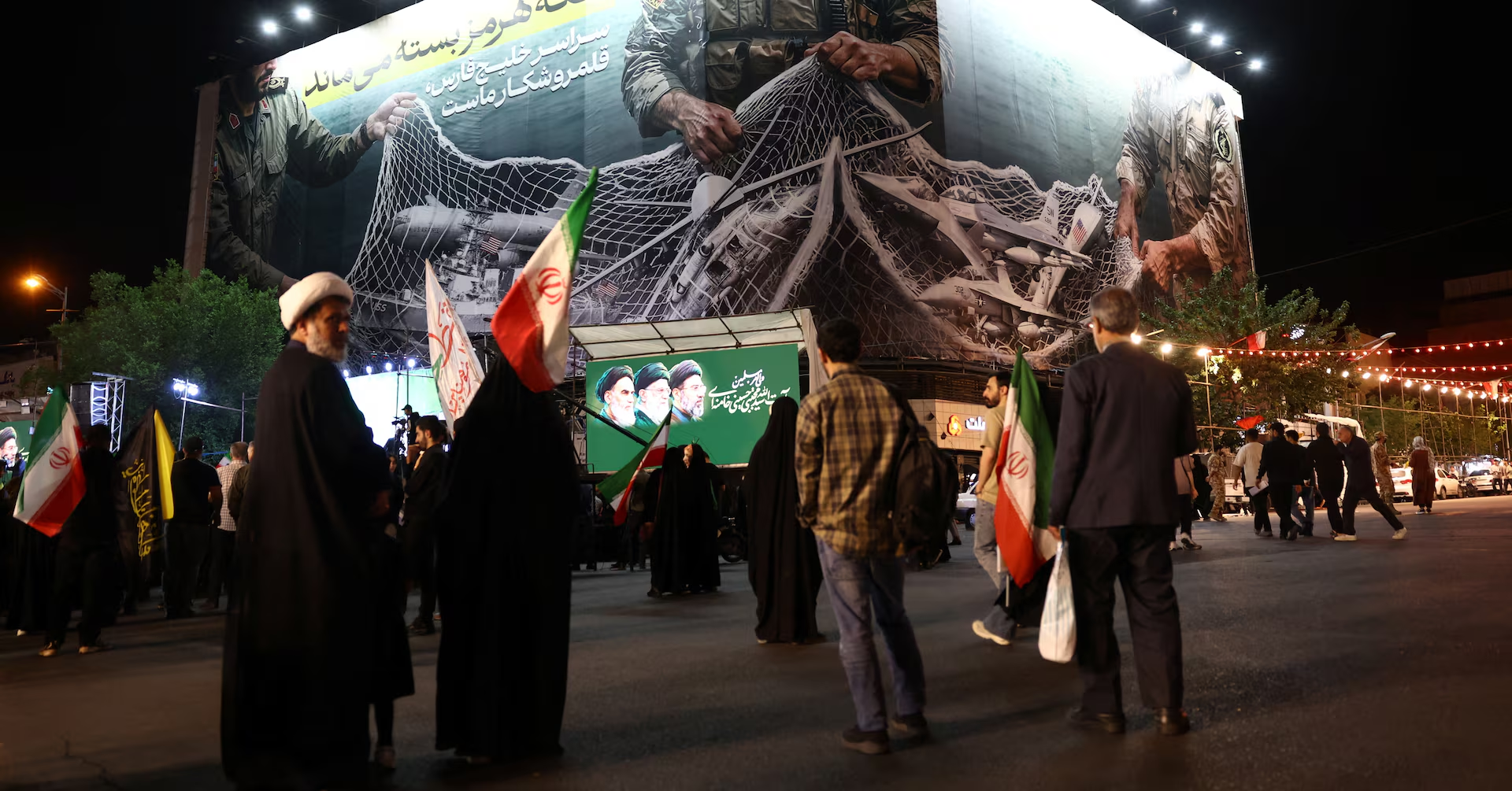
The Iran US blockade resilience has become a major point of discussion following a new report suggesting that Iran could withstand a United States military blockade of its maritime oil routes for several months without triggering an immediate or large-scale economic collapse.
According to the report, while the blockade has disrupted oil exports and created pressure on shipping activity, its short-term economic impact may be more limited than initially expected by policymakers.
The analysis also suggests that Iran’s oil industry, though strained, has not yet suffered irreversible damage.
Initial Expectations vs Emerging Reality
At the beginning of the blockade, expectations were that Iran’s oil exports would face rapid collapse. However, the report indicates that outcomes so far have been more gradual.
Key early assumptions included:
- Immediate shutdown of oil exports
- Rapid financial instability
- Quick disruption of national oil infrastructure
However, current developments show a slower economic response, reinforcing discussions around Iran US blockade resilience in global energy markets.
Impact of the US Blockade on Iran’s Oil Exports
The blockade, which targets maritime routes and shipping operations, has significantly reduced Iran’s ability to export oil at full capacity.
Disruption in Maritime Transport
The Strait of Hormuz, a critical global oil passage, plays a central role in Iran’s export system. With increased monitoring and restrictions, several oil tankers have been delayed or halted.
Reported effects include:
- Reduced tanker movement in key shipping lanes
- Delays in crude oil deliveries
- Increased logistical costs for oil transport
Despite these challenges, Iran has reportedly maintained partial export operations.
Gradual Reduction in Oil Production
The report notes that Iran has begun scaling back production in response to storage limitations and shipping constraints.
This controlled reduction helps avoid immediate shutdowns but introduces long-term risks if restrictions continue.
Oil Storage Capacity and Economic Buffering
A key factor behind Iran US blockade resilience is the country’s ability to store oil temporarily while adjusting production levels.
Storage Limit Constraints
Iran’s oil storage facilities provide a buffer, but they are not unlimited. According to the report:
- Storage capacity could become strained within approximately two months
- Excess oil may force production adjustments
- Some oil wells could be temporarily shut if storage is exhausted
This storage system helps delay immediate economic shock, but it does not eliminate long-term pressure.
Strategic Management of Resources
Iran’s energy sector appears to be managing output carefully to avoid sudden disruption. This includes:
- Adjusting production rates
- Redirecting limited exports through alternative channels
- Prioritizing domestic consumption stability
These measures contribute to short-term resilience under the blockade.
Expectations From US Policy vs Actual Outcomes
Early statements from US leadership suggested that the blockade would quickly cripple Iran’s oil infrastructure and economy.
Statements on Rapid Impact
US political messaging initially implied that economic pressure would escalate quickly. One public claim suggested that Iran’s oil sector could face severe disruption within days of export restrictions intensifying.
One of the most prominent figures associated with this rhetoric was Donald Trump, who indicated that Iran’s oil infrastructure could face rapid deterioration if exports were halted.
Slower-Than-Expected Economic Shift
However, the report indicates that:
- Oil production has declined but not collapsed
- Infrastructure remains operational despite pressure
- Economic effects are building gradually rather than immediately
This divergence between expectation and reality is central to the discussion on Iran US blockade resilience.
Strategic Importance of the Strait of Hormuz
The blockade’s effectiveness is closely tied to control and pressure on maritime routes, particularly the Strait of Hormuz.
Why the Strait Matters
The Strait of Hormuz is one of the world’s most important oil transit chokepoints, handling a significant share of global petroleum shipments.
Key features include:
- High concentration of global oil transport
- Strategic location between major energy producers
- Limited alternative shipping routes
Pressure on Global Oil Supply Routes
Any disruption in this area has broader implications beyond Iran, potentially affecting global energy prices and supply stability.
This is why the blockade is being closely monitored internationally.
Economic Pressure and Long-Term Risks
While Iran appears capable of sustaining itself in the short term, the report highlights several longer-term risks if the blockade continues.
Potential Economic Challenges
- Reduced foreign currency earnings from oil exports
- Pressure on national reserves
- Increasing strain on energy infrastructure
- Possible unemployment in oil-dependent sectors
Risk of Production Shutdowns
If storage capacity reaches its limit, Iran may be forced to:
- Temporarily shut down oil wells
- Further reduce production rates
- Reorganize export strategies
These steps would reflect deeper economic stress over time.
Global Implications of the Blockade
The situation also has broader implications for global oil markets and energy stability.
Market Sensitivity
Even partial disruptions in Iranian exports can influence:
- Global crude oil prices
- Shipping insurance costs
- Energy supply forecasts
Regional Stability Concerns
The blockade also raises geopolitical concerns, particularly in regions dependent on stable maritime trade routes.
Outlook for Iran’s Economic Position
The report ultimately suggests that while Iran is under significant pressure, it retains enough structural resilience to avoid immediate economic collapse.
Short-Term Stability Factors
- Existing oil storage systems
- Controlled production adjustments
- Continued domestic economic activity
Long-Term Uncertainty
However, the sustainability of this resilience depends on:
- Duration of the blockade
- Ability to maintain storage capacity
- Access to alternative trade routes
The ongoing situation continues to evolve, with outcomes dependent on geopolitical developments.
FAQ: Iran US Blockade Resilience and Oil Impact
How long can Iran sustain the US blockade according to reports?
Reports suggest Iran may endure the blockade for several months without a major immediate economic crisis.
Why has Iran not experienced an immediate economic collapse?
Oil storage capacity, controlled production cuts, and partial export continuation have slowed the impact.
What role does the Strait of Hormuz play in the blockade?
It is a key global oil shipping route, and disruptions there directly affect Iran’s export ability.
Could Iran’s oil production shut down completely?
Not immediately, but prolonged storage limits could force temporary shutdowns of some oil wells.
Conclusion
The emerging picture from the report on Iran US blockade resilience shows a more gradual economic impact than initially expected. While oil exports have been disrupted and production has slowed, Iran continues to manage its resources strategically to avoid immediate collapse.
However, continued pressure could eventually strain storage systems and reduce production capacity further, making the long-term outlook dependent on how long the blockade persists and how global conditions evolve.
Click here for more news