 0
0
 0
0
The idea of congenital blindness schizophrenia protection has drawn growing attention from neuroscientists after decades of research revealed a surprising pattern. Studies examining blindness and mental health have found that people born with a rare form of blindness linked to the brain may have an extremely low risk of developing schizophrenia.
Researchers say the finding could help improve understanding of how schizophrenia develops and may eventually lead to new treatment approaches focused on brain prediction systems and sensory processing.

Decades of Research Spark Interest
The discussion around congenital blindness schizophrenia protection began in 1950 when writer Hector Chevigny and psychologist Sydell Braverman noticed something unusual while studying the lives of blind individuals.
They observed that schizophrenia appeared to be absent among people who had been blind since birth. At the time, researchers lacked enough patient data and advanced medical records to fully investigate the pattern.
For many years, the idea remained largely unexplored. However, advancements in national health databases during the early 2000s allowed scientists to monitor large populations over long periods.
A major breakthrough came from a 2018 population-wide study conducted in Western Australia. Researchers tracked nearly 500,000 children born between 1980 and 2001.
Findings From the Australian Study
The study produced striking results:
- 1,870 participants developed schizophrenia
- 66 children had congenital cortical blindness
- None of those 66 children developed schizophrenia
Although the number of blind participants was relatively small, scientists noted that no confirmed case of schizophrenia in a person with congenital cortical blindness has been reported in more than 70 years of medical literature.
Understanding Cortical Blindness
Not all blindness appears connected to reduced schizophrenia risk. Researchers emphasize that the pattern specifically involves congenital cortical blindness.
This condition occurs when damage affects the brain’s visual cortex rather than the eyes themselves.
Difference Between Eye Blindness and Cortical Blindness
People who lose sight because of eye damage can still develop schizophrenia. Similarly, individuals who become blind later in life are not believed to receive the same protective effect.
This distinction suggests that the protection may not come from blindness alone, but from how the brain develops without visual input from birth.
Why Timing Matters
Scientists believe early brain development plays a major role.
When the brain grows without receiving visual information during infancy, important neural pathways may organize differently. This developmental change could influence how the brain processes reality, perception, and sensory information later in life.
Researchers say the timing of blindness appears critical because the brain is highly adaptable during early childhood.
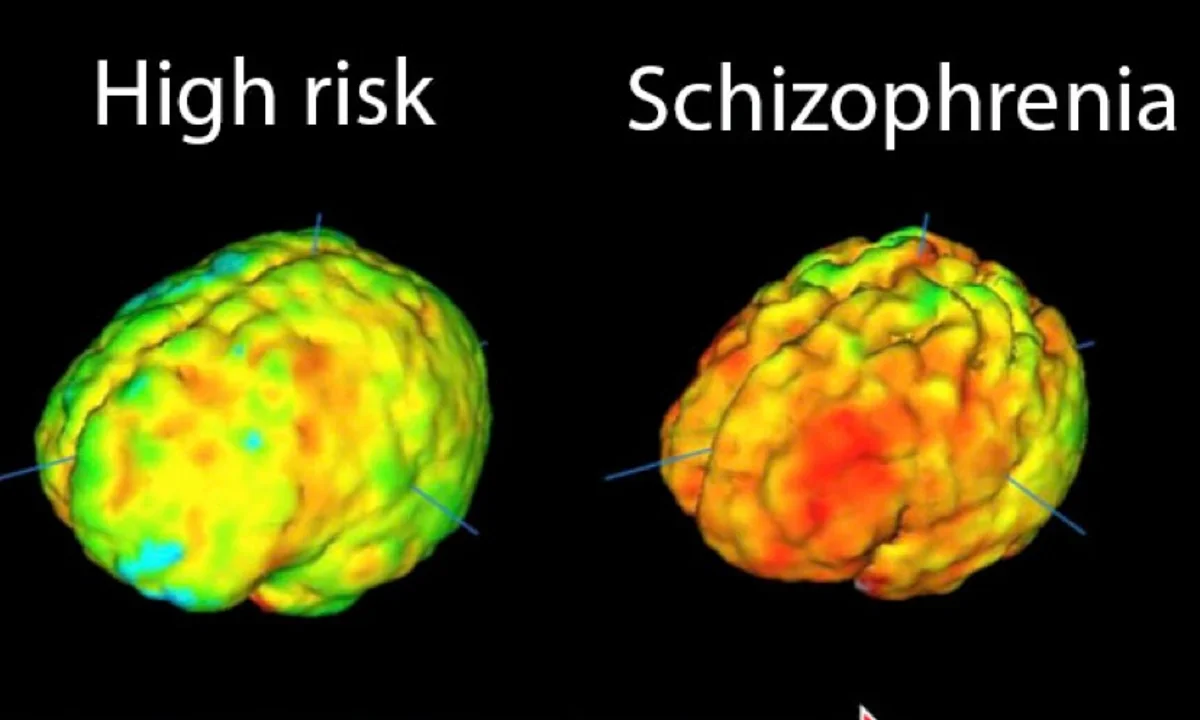
Schizophrenia and the Brain’s Prediction System
Modern neuroscience increasingly describes schizophrenia as a disorder involving prediction and perception.
The brain constantly creates expectations about the surrounding environment. It compares incoming sensory information with previous experiences to help people understand reality quickly and efficiently.
How Prediction Errors May Contribute
In schizophrenia, researchers believe this prediction system may malfunction.
Weak or random signals can become overly important, causing:
- Misinterpretation of events
- False beliefs or delusions
- Auditory hallucinations
- Difficulty distinguishing imagination from reality
This process is sometimes described as a “prediction error” problem, where the brain incorrectly assigns significance to ordinary experiences.
The Role of Visual Processing
Vision plays a central role in helping the brain interpret the world. The visual cortex is among the largest and most interconnected regions in the human brain.
It contributes to:
- Learning
- Attention
- Emotional regulation
- Memory processing
- Spatial awareness
Scientists believe congenital blindness schizophrenia protection may occur because the absence of visual signals changes how the brain develops these systems from an early age.
How the Brain Adapts Without Vision
Brain imaging studies show that people born with cortical blindness often experience significant neural reorganization.
Instead of remaining inactive, the visual cortex can become repurposed for other cognitive functions.
Brain Functions That May Strengthen
Research suggests the visual cortex in congenitally blind individuals may assist with:
- Language processing
- Memory retention
- Reasoning tasks
- Auditory interpretation
This rewiring demonstrates the brain’s ability to adapt through neuroplasticity.
Stable Brain Organization Theory
Some scientists believe this reorganization may create a more stable internal prediction system.
Without a constant stream of visual information, especially ambiguous or unpredictable signals, the brain may rely on more consistent methods of interpreting the environment.
Researchers think this could reduce the likelihood of the distorted predictions associated with schizophrenia.
Why Late Blindness Does Not Offer the Same Effect
The timing of vision loss appears to be one of the most important findings in this research.
People who lose their sight later in life, including during childhood, can still develop schizophrenia. By that stage, the brain has already spent years processing visual experiences and building prediction models based on sight.
Early Brain Development Is Critical
During infancy, the brain rapidly forms connections based on sensory experiences.
When visual input is absent from birth, the brain may develop alternative pathways that shape cognition differently.
Scientists believe these early adaptations could explain why congenital blindness schizophrenia protection is not seen in individuals who become blind later.

Current Schizophrenia Treatments and Challenges
Most treatments for schizophrenia currently focus on dopamine regulation.
Antipsychotic medications can help reduce symptoms for many patients, but they also come with limitations.
Common Challenges With Existing Treatments
Some patients experience:
- Limited symptom improvement
- Weight gain
- Fatigue
- Movement-related side effects
- Emotional dullness
Because of these challenges, researchers continue searching for alternative treatment pathways.
New Research Into Brain Chemicals
Recent studies are examining glutamate, another important brain chemical involved in communication between nerve cells.
Glutamate systems are highly active in the visual cortex and in networks that help the brain filter useful information from background noise.
Potential Future Treatments
Scientists hope future therapies may target:
- Sensory processing systems
- Learning pathways
- Brain prediction mechanisms
- Neural communication stability
These approaches are not intended to recreate blindness but to better understand how early brain organization may influence schizophrenia risk.
The goal is to identify methods that strengthen healthy brain development and reduce vulnerability to severe psychiatric disorders.
Ongoing Questions in Neuroscience
Although the evidence surrounding congenital blindness schizophrenia protection is compelling, researchers caution that many questions remain unanswered.
Important areas still under investigation include:
- Why cortical blindness appears uniquely protective
- How visual processing influences mental health
- Which neural pathways are most important
- Whether protective mechanisms can be replicated therapeutically
Scientists say larger studies and long-term neurological research will be necessary to fully understand the connection.
Broader Impact on Mental Health Research
The findings are helping reshape scientific discussions about schizophrenia.
Rather than viewing the condition only as a chemical imbalance, researchers increasingly see it as a complex interaction involving:
- Brain development
- Sensory interpretation
- Cognitive prediction systems
- Environmental processing
This broader understanding may eventually improve prevention strategies and treatment outcomes.
FAQ
What is congenital cortical blindness?
Congenital cortical blindness is a condition where a person is born without functional vision due to damage in the brain’s visual cortex rather than the eyes themselves.
Why does congenital blindness appear linked to lower schizophrenia risk?
Researchers believe early brain reorganization without visual input may create more stable prediction systems, reducing the risk of schizophrenia-related misinterpretations.
Can people who become blind later in life still develop schizophrenia?
Yes. Studies show that blindness acquired later in life does not appear to provide the same protection against schizophrenia.
Are scientists developing treatments based on congenital blindness research?
Researchers are studying how brain prediction systems and chemicals like glutamate may lead to future schizophrenia treatments inspired by these findings.
Understanding congenital blindness schizophrenia protection may help scientists uncover new insights into how the human brain processes reality and develops psychiatric disorders. While research is still ongoing, the findings continue to influence modern neuroscience and could contribute to future advances in schizophrenia prevention and treatment.
Click here for more news