 0
0
 0
0
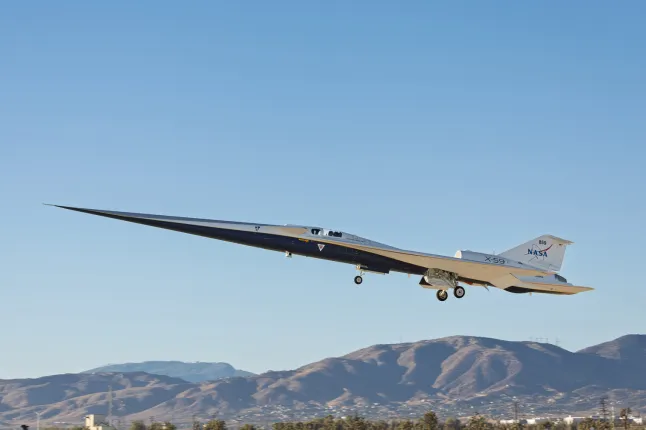
The NASA X-59 supersonic test flight marks a major milestone in aviation research after the experimental aircraft successfully broke the sound barrier for the first time. The aircraft, often described as the “Son of Concorde,” reached supersonic speeds during a recent test flight conducted as part of NASA’s ongoing Quesst mission.
The achievement represents a significant step toward the future of quieter supersonic air travel, a technology that could one day allow passenger aircraft to fly faster than the speed of sound over land with reduced noise impact.
NASA X-59 Supersonic Test Flight Reaches Mach 1.1
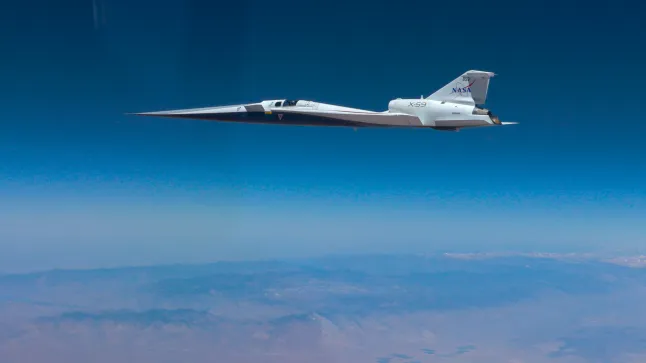
The NASA X-59 supersonic test flight successfully reached Mach 1.1, equivalent to approximately 713 mph, during an 81-minute mission.
The flight took place at an altitude of about 43,400 feet and confirmed that the experimental aircraft performed as expected throughout the test.
Key flight details
- Speed achieved: Mach 1.1 (713 mph)
- Flight duration: 81 minutes
- Altitude: 43,400 feet
- Date of test: June 5, 2026
Pilot observations
NASA test pilot Jim “Clue” Less reported that the transition to supersonic speed felt smooth.
Pilot remarks included:
- No noticeable shock or vibration
- Instrument readings confirmed supersonic speed
- Stable performance throughout the flight
He noted that the aircraft’s performance remained consistent during the entire test phase.
What Makes the NASA X-59 Supersonic Test Flight Unique
The NASA X-59 supersonic test flight is part of a groundbreaking effort to reduce one of aviation’s biggest challenges: the sonic boom.
Design purpose of the X-59 aircraft
The X-59 is engineered to:
- Fly faster than the speed of sound
- Minimize sonic boom noise
- Produce a quieter “thump” instead of a loud boom
- Enable future supersonic passenger travel over land
Why sonic booms matter
Traditional supersonic aircraft create loud sonic booms that:
- Disturb communities below flight paths
- Limit overland supersonic travel
- Restrict commercial aviation development
The X-59 aims to solve this long-standing issue.
Role of NASA’s Quesst Mission
The NASA X-59 supersonic test flight is a central part of NASA’s Quesst mission, which focuses on quiet supersonic technology development.
Objectives of the Quesst mission
NASA’s mission aims to:
- Demonstrate low-noise supersonic flight
- Collect real-world community feedback
- Support future commercial aviation design
- Advance aerospace research capabilities
How testing is conducted
- Aircraft flights over controlled test areas
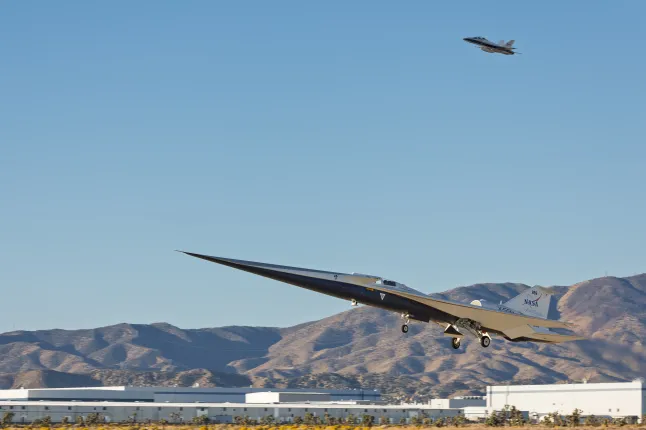
- Monitoring by chase aircraft such as F-15 jets
- Data collection on noise and flight behavior
F-15 Chase Aircraft Monitors Test Flight
During the NASA X-59 supersonic test flight, a NASA F-15 chase aircraft accompanied the X-59.
Purpose of the chase aircraft
The F-15 was used to:
- Monitor aircraft performance
- Track flight stability
- Provide comparison noise data
Key observation during test
NASA reported that the F-15’s sonic booms were louder than any noise produced by the X-59, helping mask its acoustic signature during the flight.
Next Phase of NASA X-59 Supersonic Testing
Following the successful NASA X-59 supersonic test flight, NASA is preparing for more advanced testing phases.
Upcoming test objectives
The next phase will include:
- Higher-speed flights up to Mach 1.4
- Altitudes reaching 55,000 feet
- Long-distance mission simulations
- Community noise evaluation tests
Community involvement
NASA plans to:
- Fly the aircraft over selected communities
- Collect feedback on perceived noise levels
- Study public response to supersonic sound profiles
Supersonic Travel and the Future of Aviation
The NASA X-59 supersonic test flight could play a major role in reshaping commercial aviation in the future.
Potential benefits of quiet supersonic aircraft
- Reduced global travel time
- Faster international passenger flights
- Improved aerospace efficiency
- Expansion of commercial supersonic routes
Challenges ahead
Despite progress, several challenges remain:
- Regulatory approval for overland supersonic flights
- Engineering limitations at higher speeds
- Environmental and noise impact assessments
- Commercial viability of supersonic travel
The Legacy of Concorde and the X-59 Project
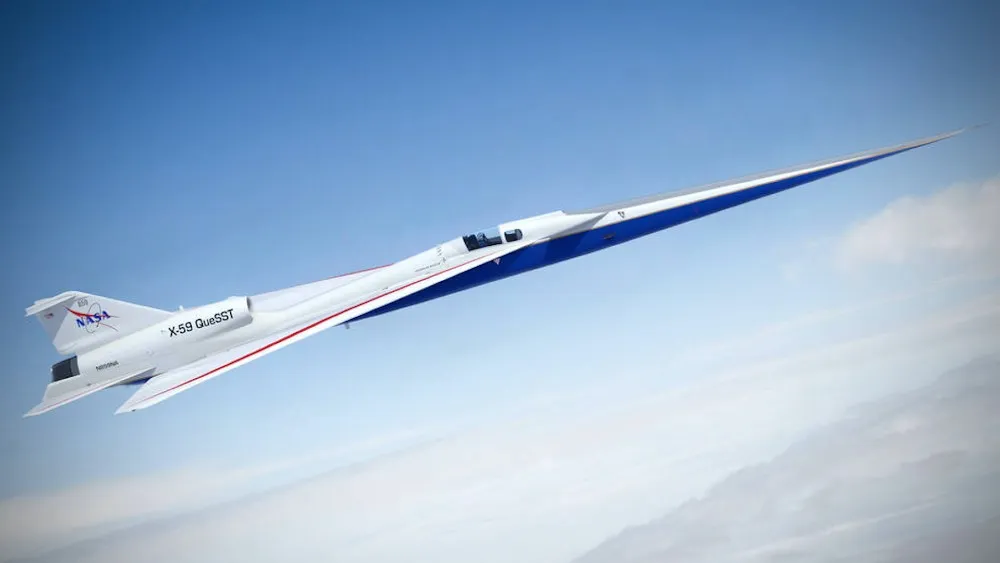
The X-59 is often compared to the Concorde, the iconic supersonic passenger jet retired in 2003.
Key differences from Concorde
- X-59 focuses on noise reduction
- Designed for research, not passenger service
- Aims to enable future commercial designs
- Uses modern aerodynamic technology
Why it is called “Son of Concorde”
The nickname reflects its mission to revive supersonic travel in a quieter, more sustainable form.
FAQ
What is the NASA X-59 supersonic test flight?
It is a NASA experimental flight where the X-59 aircraft successfully broke the sound barrier at Mach 1.1.
Why is the X-59 aircraft important?
It is designed to reduce sonic booms, potentially allowing quieter supersonic travel over land.
How fast did the X-59 fly?
It reached approximately 713 mph, or Mach 1.1, during its first supersonic test.
Will the X-59 carry passengers?
No, the X-59 is a research aircraft used to test technologies for future supersonic passenger planes.
Conclusion
The NASA X-59 supersonic test flight represents a significant advancement in aviation technology, bringing the possibility of quiet supersonic travel closer to reality. While further testing is still required, the successful break of the sound barrier marks an important milestone in NASA’s efforts to transform the future of air travel.
click here for more news