

 0
0
 0
0
The Nigerian Safety Investigation Bureau 2026 has officially moved under the direct supervision of the Presidency, signaling a significant restructuring of the country’s accident investigation framework. This move, approved by President Bola Tinubu on March 5, 2026, reflects the government’s aim to strengthen multimodal safety oversight across aviation, marine, rail, and tracked vehicle systems.
Why the Nigerian Safety Investigation Bureau 2026 Moved to the Presidency
The directive for the transfer was formally communicated to the Aviation Minister, Festus Keyamo, on March 11, 2026, with instructions for immediate implementation. In addition, the Attorney General of the Federation has been tasked with amending the NSIB Establishment Act 2022 to legally reflect the agency’s new reporting structure. These amendments will subsequently be forwarded to the National Assembly for consideration and enactment.
Background of NSIB
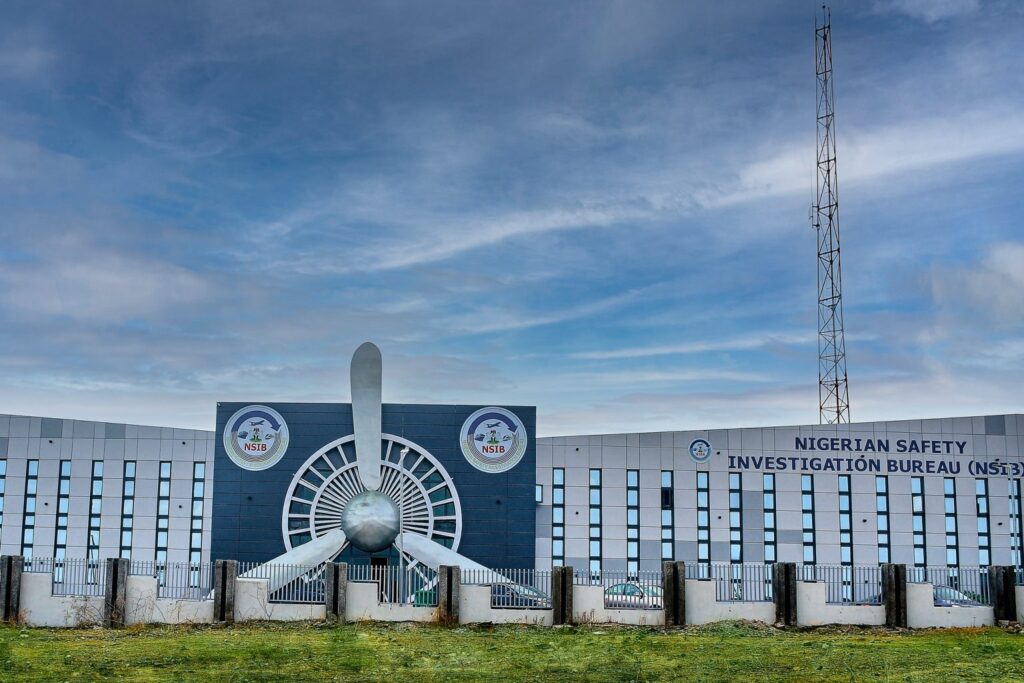
The Nigerian Safety Investigation Bureau (NSIB) was established through Act No. 35 of 2022, replacing the former Accident Investigation Bureau (AIB). Unlike its predecessor, which was limited to aviation incidents, the NSIB now holds jurisdiction over:
-
Air accidents
-
Marine accidents
-
Rail accidents
-
Tracked vehicle accidents
This expansion positions NSIB as Nigeria’s sole multimodal accident investigation authority, responsible for evaluating causes and recommending safety improvements across multiple transport sectors.
Reasons for Presidential Oversight
Analysts suggest that moving the NSIB directly under the Presidency is aimed at:
-
Strengthening accountability in multimodal accident investigations
-
Ensuring faster policy implementation and regulatory compliance
-
Enhancing coordination between transport safety agencies and national authorities
This change underscores the government’s focus on improving national safety standards and preventing major transportation accidents.
Impact on Aviation Ministry
With NSIB no longer under its control, the Ministry of Aviation and Aerospace Development now oversees five agencies:
-
Nigerian College of Aviation Technology (NCAT)
-
Nigeria Civil Aviation Authority (NCAA)
-
Federal Airport Authority of Nigeria (FAAN)
-
Nigerian Meteorological Agency (NiMet)
-
Nigerian Airspace Management Agency (NAMA)
Implications for Aviation Governance
-
Reduced administrative burden for the Aviation Ministry
-
Greater focus on operational efficiency in aviation management
-
Streamlined oversight for aviation-related institutions
The Aviation Ministry is expected to continue collaborating with NSIB on aviation safety matters, but strategic decisions and oversight will now come directly from the Presidency.
NSIB’s Multimodal Role Explained
Expanding the NSIB’s jurisdiction beyond aviation allows it to adopt a holistic approach to safety investigations. Each transport sector presents unique challenges:
Air Transportation
-
Investigates civil and commercial aviation accidents
-
Coordinates with international aviation safety bodies
-
Provides recommendations to improve airport and airline safety protocols
Marine Transportation
-
Handles accidents involving commercial ships and ferries
-
Examines regulatory compliance in maritime safety
-
Develops preventive strategies to reduce accidents in ports and waterways
Rail Transportation
-
Evaluates rail crashes and derailments
-
Advises on infrastructure safety upgrades
-
Monitors rail transport operators for adherence to safety regulations
Tracked Vehicles
-
Investigates accidents involving buses, trucks, and other tracked vehicles
-
Recommends improvements to road transport safety standards
-
Works with transport ministries and agencies to reduce fatal accidents
Timeline of Key Events
-
2022: NSIB established through Act No. 35, replacing the Accident Investigation Bureau (AIB).
-
March 5, 2026: Presidential approval granted for NSIB transfer.
-
March 11, 2026: Communication sent to Aviation Minister for immediate implementation.
-
2026: Attorney General directed to amend NSIB Act to reflect new reporting line to Presidency.
Expected Outcomes
-
Improved accident investigation efficiency
-
Stronger national safety regulations
-
Enhanced coordination among multimodal transport authorities
Challenges Ahead
While the move centralizes oversight, NSIB may face challenges such as:
-
Managing increased workload across multiple transport sectors
-
Coordinating with state and local safety authorities
-
Ensuring adequate funding and technical resources for expanded operations
Related Developments in Nigeria Transport Safety
Other government efforts to improve transportation safety include:
-
Upgrading aviation infrastructure
-
Strengthening railway safety protocols
-
Implementing stricter maritime regulations
These initiatives complement NSIB’s expanded mandate, providing a more comprehensive approach to national transport safety.
Collaboration and International Standards
NSIB is expected to align its operations with international safety investigation standards, such as:
-
International Civil Aviation Organization (ICAO) protocols
-
International Maritime Organization (IMO) accident investigation guidelines
-
Rail accident investigation best practices
Such alignment ensures Nigeria’s safety investigations are credible, internationally recognized, and effective in preventing future accidents.
FAQ
Q1: What does the NSIB 2026 do under Presidential supervision?
The Nigerian Safety Investigation Bureau 2026 investigates accidents across air, marine, rail, and tracked vehicles, reporting directly to the Presidency for oversight and policy implementation.
Q2: Why was the NSIB moved from the Aviation Ministry?
The transfer aims to strengthen accountability, improve coordination, and enhance efficiency in investigating multimodal accidents nationwide.
Q3: How does NSIB differ from the former Accident Investigation Bureau (AIB)?
Unlike AIB, which focused solely on aviation, NSIB investigates accidents across multiple transport sectors, including marine, rail, and tracked vehicles.
Q4: What agencies remain under the Aviation Ministry after NSIB’s transfer?
The Aviation Ministry continues overseeing NCAT, NCAA, FAAN, NiMet, and NAMA.
Conclusion
The transfer of the Nigerian Safety Investigation Bureau 2026 to the direct supervision of the Presidency marks a pivotal shift in Nigeria’s transport safety framework. With expanded authority across multiple transport sectors, NSIB is now positioned to implement more robust safety investigations and provide actionable recommendations that could prevent accidents and save lives nationwide. This Nigerian Safety Investigation Bureau 2026 move reinforces the government’s commitment to improving national safety standards while ensuring accountability and efficiency in multimodal accident investigations.




[…] Previous: Nigerian Safety Investigation Bureau 2026 Shocking Presidency Move […]