
 0
0
 0
0
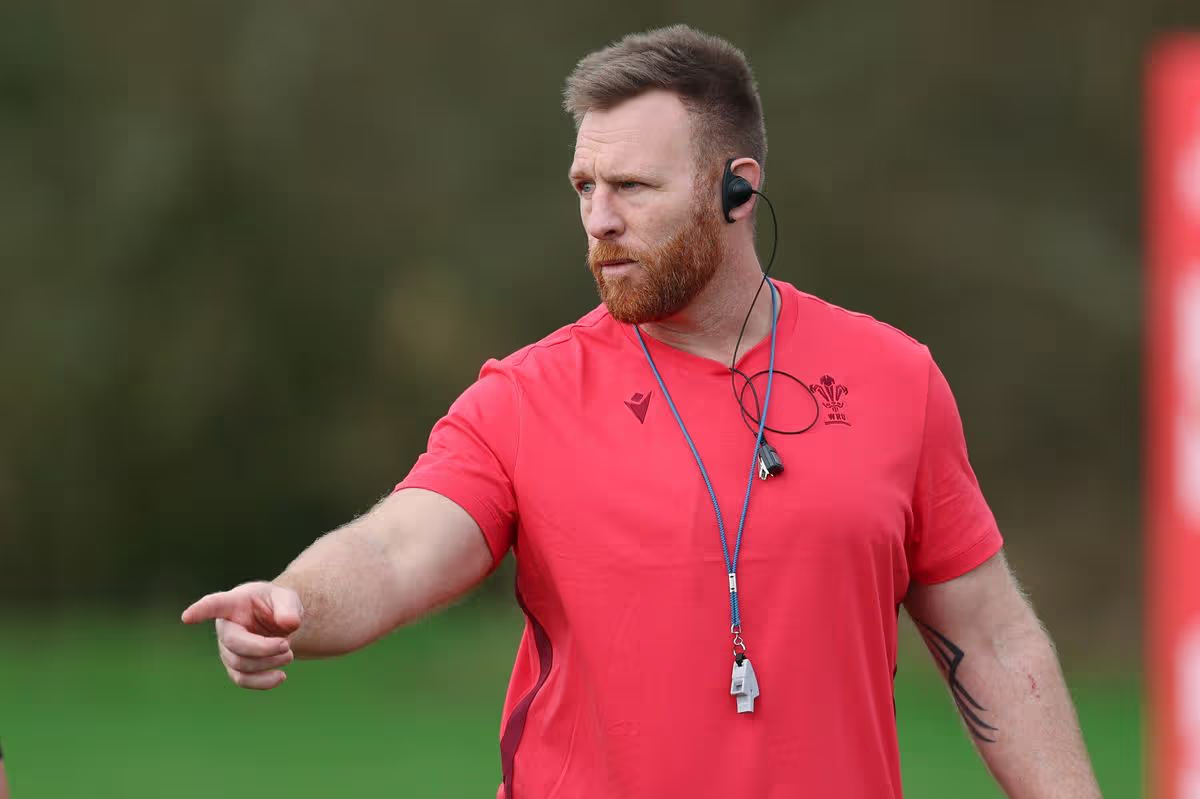
The Wales women’s rugby progress under the current coaching setup remains a key focus for the national team despite another challenging Women’s Six Nations campaign. Defence coach Tyrone Holmes believes encouraging developments are taking place behind the scenes as Wales continue their long-term rebuilding process.
Although Wales finished at the bottom of the Women’s Six Nations table for a third consecutive year, the coaching staff remain confident that improvements are being made. Holmes has pointed to positive changes in player development, team structures, and overall performance standards as signs that the team is moving in the right direction.
Difficult Six Nations Campaign for Wales
The recent championship proved challenging for Wales as they struggled to compete consistently against some of the strongest teams in women’s rugby.
Five Consecutive Defeats
Wales ended the tournament without recording a victory.
The team lost all five matches during the competition and conceded 31 tries, highlighting the scale of the challenge facing the coaching group and players.
While the results were disappointing, the coaching staff have emphasized that long-term development remains the primary objective.
New Coaching Team Faces Early Challenges
One factor influencing the campaign was the arrival of a new coaching structure.
The current setup is led by Sean Lynn, who has been working alongside recently appointed staff members, including Tyrone Holmes as defence coach.
Introducing new systems often requires time, especially at international level where preparation periods can be limited.
Transition Period Continues
The Wales women’s rugby progress is taking place during a period of transition.
The team is adapting to:
- New tactical approaches
- Different training methods
- Updated defensive structures
- Fresh leadership within the squad
These adjustments can take several months before they consistently translate into improved results.
Tyrone Holmes Highlights Positive Signs
Despite the difficult Six Nations campaign, Holmes believes there are reasons for optimism.
New Systems Being Implemented
According to the defence coach, many of the new ideas introduced by the coaching staff are beginning to take shape.
The focus has been on creating a stronger framework that can support long-term success rather than pursuing short-term fixes.
Holmes noted that progress was visible during internal reviews even if it was not always reflected in match outcomes.
Importance of Patience
Building a competitive international team often requires patience.
Holmes acknowledged that supporters naturally focus on results but stressed that development can occur even during losing campaigns.
Key areas of improvement reportedly include:
- Defensive organization
- Team communication
- Tactical understanding
- Player adaptability

Learning Through Adversity
International rugby presents significant challenges, particularly when teams are undergoing major changes.
The coaching group believes the difficult experiences of the Six Nations could ultimately contribute to future growth and resilience within the squad.
Focus Shifts to Barbarians Fixture
Attention has now turned to Wales’ upcoming uncapped match against the Barbarians.
Match Scheduled at Twickenham
The fixture will take place at Allianz Stadium, Twickenham, on June 27.
The game offers an important opportunity for coaches to assess players in a competitive environment outside the pressures of championship rugby.
Valuable Development Opportunity
Matches against the Barbarians are often viewed as opportunities to experiment with combinations and evaluate emerging talent.
For Wales, the fixture serves as a key part of preparations for future international competitions.
Testing New Players
The Wales women’s rugby progress strategy includes giving opportunities to less experienced players who may become important members of the national team in the years ahead.
Alex Callender Returns from Injury
One of the biggest boosts for Wales is the return of experienced back-row player Alex Callender.
Important Figure in the Squad
Callender has established herself as one of Wales’ most influential forwards.
Her leadership, work rate, and physical presence have made her an important contributor whenever available for selection.
Missed Six Nations Campaign
The forward was unavailable during the recent championship because of injury.
Her absence was felt throughout the tournament as Wales struggled against stronger opposition.
Timely Return
Her return ahead of the Barbarians fixture provides:
- Additional experience
- Leadership qualities
- Greater squad depth
- Increased competition for places
The coaching staff will hope her presence helps strengthen the team moving forward.
Next Generation Receives Opportunity
A major feature of the current Wales setup is the emphasis on developing younger players.
Fourteen Uncapped Players Included
Sean Lynn has named 14 uncapped players in a 33-player training squad.
This demonstrates the commitment to building for the future and identifying potential international talent.
Building Long-Term Success
Developing emerging players is essential for sustained competitiveness in international rugby.
Benefits include:
- Expanding the player pool
- Increasing competition for positions
- Creating succession plans
- Enhancing squad depth
Future International Prospects
The upcoming training camp and Barbarians fixture could help several players move closer to full international recognition.
For many, it represents a significant opportunity to impress the coaching staff.
Building Foundations for the Future
The Wales women’s rugby progress remains focused on creating sustainable improvement rather than seeking immediate results.
Long-Term Development Strategy
The coaching team continues to prioritize:
- Player development
- Tactical consistency
- Team culture
- Defensive improvements
These areas are viewed as essential building blocks for future success.
Importance of Squad Evolution
International teams often experience cycles of rebuilding and renewal.
Wales are currently investing in younger talent while integrating new coaching methods, a process that may take time before producing consistent victories.
Optimism Within the Camp
Although results have been difficult, there remains confidence that the foundations currently being established can lead to stronger performances in future tournaments.

FAQ
Why did Wales finish bottom of the Women’s Six Nations?
Wales lost all five matches during the tournament while adapting to a new coaching structure and tactical system.
What did Tyrone Holmes say about Wales’ progress?
Holmes stated that positive developments are being made behind the scenes even though results have not yet reflected those improvements.
Who is returning to the Wales squad?
Alex Callender is returning after missing the Women’s Six Nations due to injury.
How many uncapped players are in the Wales training squad?
Sean Lynn has included 14 uncapped players in the 33-player training squad ahead of the Barbarians match.
Conclusion
The Wales women’s rugby progress remains a work in progress under Sean Lynn and his coaching team. While recent results have been disappointing, the return of key players, the inclusion of emerging talent, and the implementation of new systems suggest the focus is firmly on long-term development. The upcoming Barbarians fixture will provide another important opportunity to assess growth and prepare for the future.
Click here for more news