 0
0
 0
0
South Korea ex president prison sentence has drawn widespread attention after a court handed a former national leader an additional seven-year jail term over charges including resisting arrest and obstruction of justice.
Court Delivers New Sentence in High-Profile Case
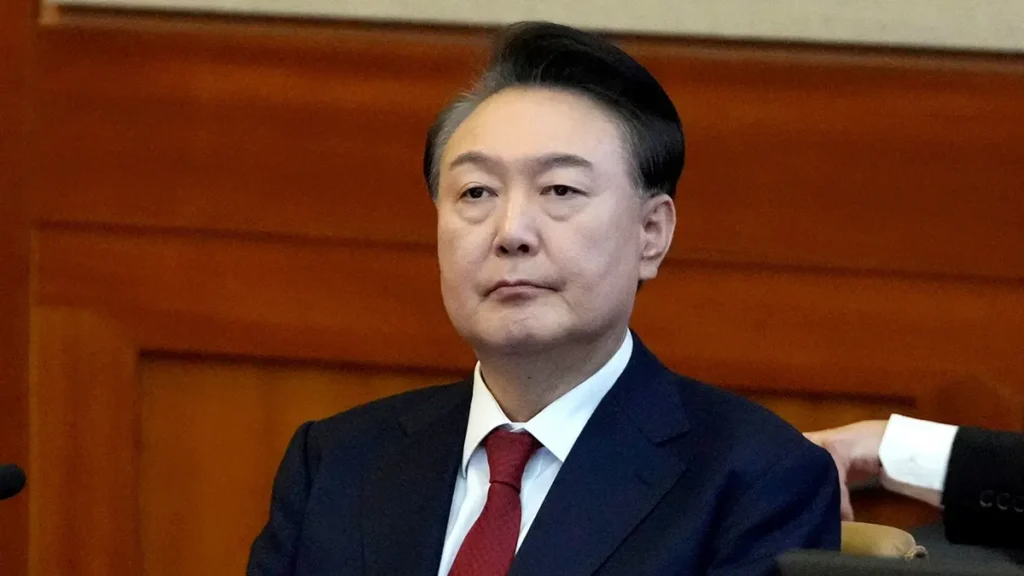
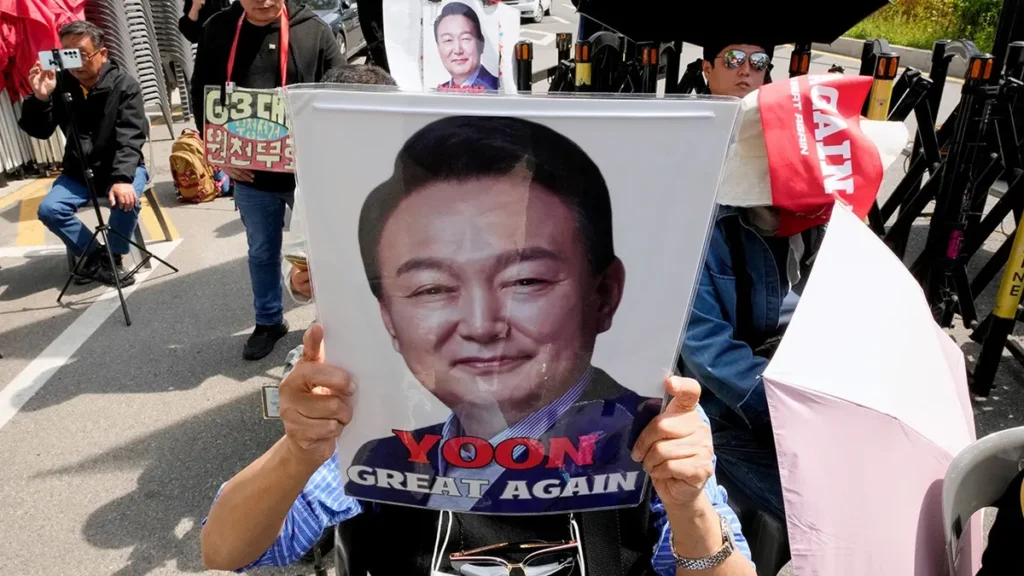
A South Korean appeals court has sentenced former President Yoon Suk Yeol to seven years in prison following a ruling that found him guilty of multiple charges linked to his actions during a political crisis.
The latest judgment adds to an existing life sentence connected to rebellion charges stemming from events that shook the country’s democratic system.
Key Findings from the Court
The court determined that the former leader:
- Failed to follow proper legal procedures before declaring martial law
- Bypassed a required full Cabinet meeting
- Attempted to conceal actions through falsified documents
- Used security personnel to block law enforcement efforts
Judges described these actions as serious violations that undermined governance and legal accountability.
Background: Political Crisis and Martial Law Decision
The South Korea ex president prison sentence case is closely tied to the controversial decision to impose martial law in December 2024.
What Triggered the Crisis
The declaration of martial law:
- Sparked a nationwide political crisis
- Disrupted government operations
- Affected diplomatic relations
- Shook financial markets
The situation marked one of the most challenging periods for the country’s democracy in recent decades.
Impeachment and Removal from Office
Following the crisis:
- The president was impeached in December 2024
- He was formally removed from office in April 2025
- A new presidential election was held shortly after
The transition helped stabilize the political environment.
Legal Battles and Arrest Standoff
The South Korea ex president prison sentence follows a series of legal confrontations between authorities and the former leader.
Resistance to Arrest
After leaving office, he:
- Refused to comply with a court-issued detention order
- Remained inside the presidential residence
- Was protected by security personnel and barricades
This led to a tense standoff with investigators attempting to carry out the arrest.
Timeline of Detention
- January 2025: Authorities attempted arrest
- Later in January: He was detained
- March 2025: Temporarily released by court order
- July 2025: Re-arrested and kept in custody
Legal proceedings have continued since then.
Appeal Court Reverses Earlier Decision
The South Korea ex president prison sentence increased after the appeals court overturned parts of a previous ruling.
Changes from Lower Court Verdict
Earlier decisions had:
- Sentenced him to five years in prison
- Cleared him of some abuse-of-power charges
However, the appeals court ruled that:
- Cabinet procedures were deliberately violated
- Multiple officials were excluded from decision-making
- Rights of government members were breached
This resulted in a harsher sentence.
Additional Legal Pressure on Family and Allies
The legal challenges surrounding the case extend beyond the former president.
Developments Involving His Wife
The court recently:
- Increased the sentence of his wife to four years
- Found her guilty of accepting luxury gifts
- Linked the case to alleged political influence attempts
Ongoing Prosecution Efforts
In a separate trial, prosecutors have:
- Requested a 30-year prison sentence
- Accused the former leader of escalating tensions with North Korea
- Alleged actions aimed at justifying martial law
These cases remain ongoing.
National and Global Implications
The South Korea ex president prison sentence has implications beyond domestic politics.
Impact on Democracy
The case highlights:
- Strength of judicial institutions
- Accountability for high-ranking officials
- Challenges in maintaining democratic stability
International Attention
Global observers are closely watching:
- Legal developments
- Political stability in South Korea
- Broader regional implications
FAQ
Why was the former South Korean president sentenced to prison?
He was found guilty of resisting arrest, obstruction of justice, and violating legal procedures during a political crisis.
How long is the prison sentence?
He received an additional seven-year sentence, which adds to a previous life sentence.
What role did martial law play in the case?
The charges are linked to his decision to impose martial law without proper legal procedures.
Are there ongoing legal cases?
Yes, additional trials and appeals are still ongoing.
Conclusion
The South Korea ex president prison sentence marks a significant moment in the country’s political and legal history. It reflects the consequences of actions taken during a period of crisis and underscores the role of the judiciary in addressing high-level misconduct.
PLEASE CLICK HERE FOR MORE NEWS