 0
0
 0
0
The Donald Trump administration’s National Defense Strategy (NDS) signals significant changes for the US-South Korea alliance. The Department of Defense document outlines a shift toward a more asymmetric partnership, where South Korea assumes greater responsibility for defending the peninsula while the US narrows its regional military role.
The NDS builds on the National Security Strategy and the State Department’s Agency Strategic Plan, clarifying America’s approach to national security and alliance responsibilities.
Key Themes of the NDS
-
American Primacy and Military Strength – The strategy emphasizes maintaining US warfighting capabilities to “fight and win necessary wars,” reinforcing the concept of “peace through strength.”
-
Geostrategic Reordering – The NDS prioritizes homeland security and the Western Hemisphere. While Europe and Transatlantic relations receive less emphasis, the Indo-Pacific is still considered important, primarily for deterring Chinese aggression.
-
Revitalizing the Domestic Defense Industry – The strategy highlights the need to strengthen US defense industrial capacity, which remains a critical objective for national security.
Implications for the Korean Peninsula
The NDS explicitly states that South Korea is expected to take the lead in deterring North Korea, with the US providing limited but critical support. This reflects a broader update to the US force posture on the peninsula, signaling that both nations must adjust current defense arrangements.
South Korea Assumes Greater Responsibility
South Korea has already responded to this shift. At the 57th Security Consultative Meeting in November 2025, Seoul committed to raising defense spending to 3.5% of GDP. The country also agreed to take a leading role in defense operations and move forward with transferring wartime operational control (OPCON) from the US-led Combined Forces Command to South Korean leadership.
OPCON transfer allows South Korea to command military forces during wartime while maintaining the combined US–ROK military structure and US commitment to defense.
Strengthening South Korea’s Defense Industry
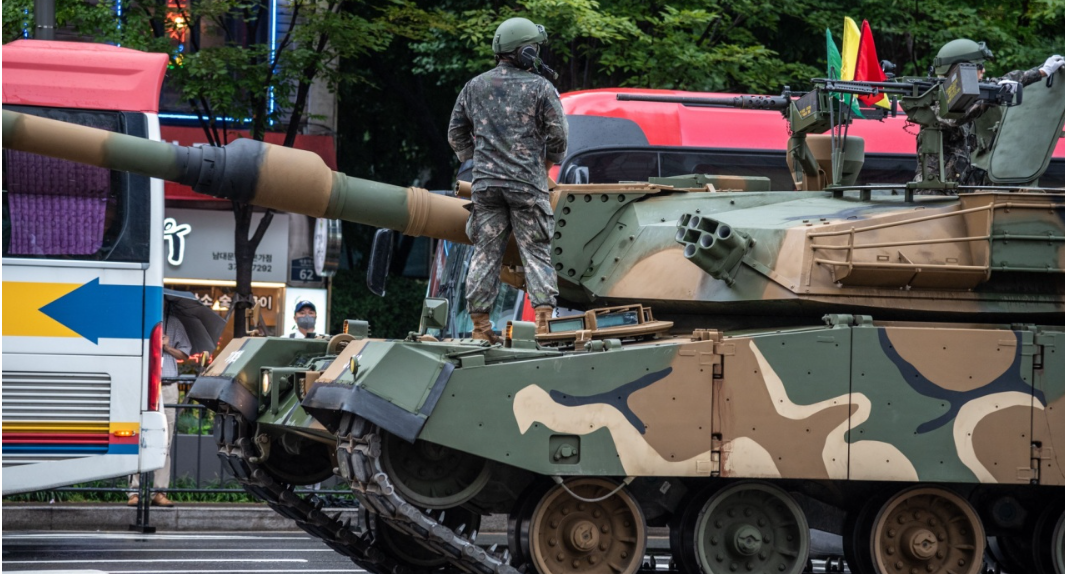
The NDS also encourages South Korea to expand its domestic defense industrial capacity. In 2024, the country’s four largest defense companies—Hanwha Group, LIG Nex1, Korean Aerospace Industries, and Hyundai Rotem—generated over $14 billion in revenue.
South Korea is currently the world’s 10th-largest arms exporter and aims to become the fourth-largest by 2030, reflecting its growing role in regional and global defense markets.