
 0
0
 0
0
Pétion-Ville Carnival 2026 ended abruptly on Sunday after violence during the opening day left two people seriously injured, prompting municipal authorities to immediately shut down festivities.
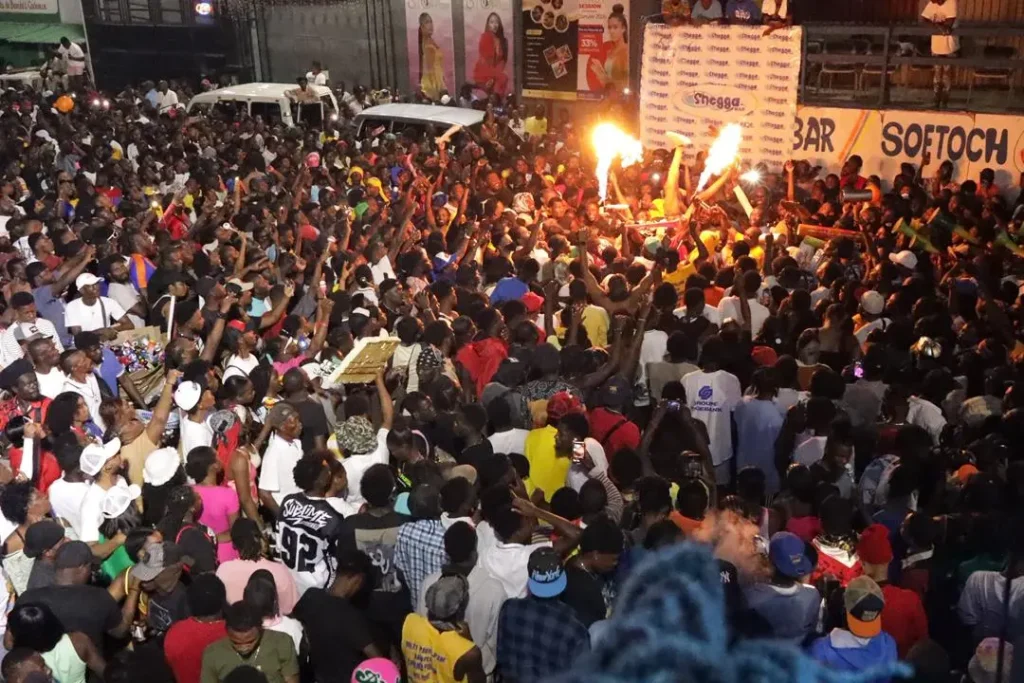
The annual celebration began on February 15 in the upscale suburb of Pétion-Ville, drawing crowds from across the Port-au-Prince metropolitan region. However, what started as a vibrant cultural event quickly turned into chaos following separate violent incidents.
Violence Forces Early End to Pétion-Ville Carnival 2026
According to local media reports, one person was shot in the head and another was stabbed near the former Muncheez restaurant, close to the Royal Oasis Hotel. Both victims were transported to nearby hospitals for emergency treatment.
Authorities have not released updates on their conditions, and no arrests have been publicly announced.
Following the incidents, city officials halted the celebration and prohibited any attempt to continue carnival activities without authorization.
In an official statement signed by Communications Director Wendy Henry, the city confirmed the immediate end of Pétion-Ville Carnival 2026.
“The City Hall informs the public that the 2026 Pétion-Ville Carnival officially ended yesterday,” the statement read, adding that municipal services were mobilized to ensure street cleaning and a gradual return to normalcy.
Officials also ordered the removal of temporary installations related to the festivities.
Cultural Tradition Disrupted by Insecurity
Carnival in Haiti is traditionally one of the country’s most significant cultural events, marked by music, artistic expression, satire, and civic commentary. Through rara bands, elaborate costumes, and handcrafted masks, communities celebrate heritage while addressing social realities.
In cities such as Jacmel, Cap-Haïtien, and Gonaïves, carnival celebrations are known for decorative floats, carnival queens, and iconic papier-mâché artistry.
This year, however, Pétion-Ville Carnival 2026 unfolded under the shadow of ongoing gang violence affecting the capital region.
With no official activities held at Champs-de-Mars in downtown Port-au-Prince, Pétion-Ville had become the primary gathering point for carnival-goers. The sudden shutdown underscored the fragile security environment surrounding Haiti’s most emblematic cultural tradition.
Festive Start Turns to Panic
Earlier in the day, the atmosphere in Pétion-Ville was festive. Marching bands animated the main route, and residents gathered along Delmas Road toward Pétion-Ville and Canapé-Vert.
Unlike larger national carnivals featuring massive floats and official parades, Pétion-Ville Carnival 2026 centered largely on street bands and crowds of revelers. Participation remained high despite ongoing security concerns.
However, gunshots later triggered panic among attendees, prompting law enforcement to intervene and halt the event.
Decentralized Carnival Amid Security Crisis
This year, the Haitian government did not designate a single city to host a national carnival. Instead, municipalities organized their own events under the theme “Haïti Devant! Ayiti Devan!” meaning Haiti Forward.
In a statement issued before the celebrations, the Ministry of Culture and Communication described Carnival as a major expression of national heritage and collective creativity.
Pre-carnival events held in various cities since January 18 had proceeded without major incidents. However, the violence that ended Pétion-Ville Carnival 2026 highlighted persistent instability across the capital region.
Recent attacks have also been reported in Kenscoff and the Carrefour-Feuilles neighborhood, reflecting ongoing gang activity.
Police Reinforcements and International Support
As security concerns intensify, the Haitian National Police has expanded operations targeting armed groups, including the Viv Ansanm gang coalition.
On February 5, police received three tracked armored vehicles donated by South Korea. On February 16, Canada delivered 10 additional armored vehicles through coordination with the United Nations Office for Project Services.
Prime Minister Alix Didier Fils-Aimé thanked international partners, including Canada, the European Union, and the United States, reiterating that restoring security remains the government’s top priority.
“This is a battle for security, and we will achieve this goal,” the prime minister stated.

Symbol of Resilience Overshadowed
For many Haitians, Carnival remains a symbol of resilience, creativity, and national pride. Despite security challenges, communities continue to embrace the tradition as a vital cultural expression.
Yet the abrupt end of Pétion-Ville Carnival 2026 serves as a stark reminder of the deep security issues affecting daily life in Haiti.
While other cities may continue their celebrations, the early closure in Pétion-Ville highlights the urgent need for improved stability to protect both cultural traditions and public safety.
As authorities work to restore calm, the events of February 15 underscore how insecurity continues to shape even Haiti’s most cherished national celebrations.
For more news, please visit our Homepage