 0
0
 0
0
The Hamburg wolf attack woman 2026 incident has sparked widespread concern after a rare encounter left a woman injured in a busy shopping district in Germany, raising questions about wildlife behavior and urban safety.
Rare Wolf Attack Shocks Hamburg Residents
The incident occurred on Monday evening in a retail area near Altona station in Hamburg, one of Germany’s busiest urban centers. According to authorities, a woman was bitten by a wolf in what experts believe is the first recorded attack of its kind since wolves returned to Germany in 1998.
Emergency responders quickly transported the victim to a hospital for treatment. While officials have not disclosed the full extent of her injuries, the unusual nature of the attack has drawn national attention.
Witnesses described scenes of confusion and panic as the animal appeared in a crowded commercial area, an environment where wolves are rarely seen.

Authorities Capture Wolf After City-Wide Alert
Wolf Retrieved from City Lake
Following multiple reports of the animal’s presence, police tracked the wolf to the Binnenalster lake in central Hamburg. Officers later retrieved the animal safely from the water.
Animal Moved to Secure Enclosure
After being captured, the wolf was transported to a controlled facility on the outskirts of the city. Authorities are now monitoring its condition and behavior to determine the next steps.
Investigation Underway
Officials have launched an investigation into how the wolf entered the city and what led to the attack. Early findings suggest the animal may have wandered into urban areas unintentionally.
Experts Explain Why the Attack Happened
Wildlife experts believe the wolf involved in the Hamburg wolf attack woman 2026 case was likely a young animal searching for territory.
Territorial Movement Among Young Wolves
Young wolves often leave their birth packs to establish their own territory. During this phase, they can travel long distances, sometimes entering unfamiliar environments like cities.
Urban Stress Factors
Experts note that wolves typically avoid humans. However, the stress of navigating a noisy and crowded urban setting may have contributed to unpredictable behavior.
Rare Human Encounters
Encounters between wolves and humans in Germany are extremely rare. Most wolves avoid populated areas altogether, making this case particularly unusual.
Return of Wolves to Germany: Background Context
Wolves were once extinct in Germany for over a century before returning in the late 1990s. Their reappearance has been viewed as a conservation success, with populations gradually increasing across the country.
However, their return has also led to challenges, especially in balancing wildlife protection with public safety and agricultural concerns.
Growing Population
Germany now hosts a growing number of wolf packs, primarily in rural and forested regions.
Livestock Concerns
Farmers have reported increasing attacks on livestock, which has fueled debate about how wolves should be managed.
Policy Changes
In recent years, authorities have introduced measures allowing controlled culling of wolves that pose threats to livestock or public safety.
Public Safety Concerns After Hamburg Incident
The Hamburg wolf attack woman 2026 case has reignited discussions about safety measures in areas where wildlife may intersect with human populations.
Calls for Stronger Monitoring
Authorities are being urged to improve tracking systems to detect wildlife movement near urban areas.
Emergency Preparedness
Local governments may need to enhance emergency response protocols for rare but high-risk wildlife encounters.
Public Awareness Campaigns
Experts emphasize the importance of educating residents on how to respond if they encounter wild animals.
Key safety tips include:
- Avoid approaching or feeding wild animals
- Maintain distance and remain calm
- Report sightings immediately to authorities

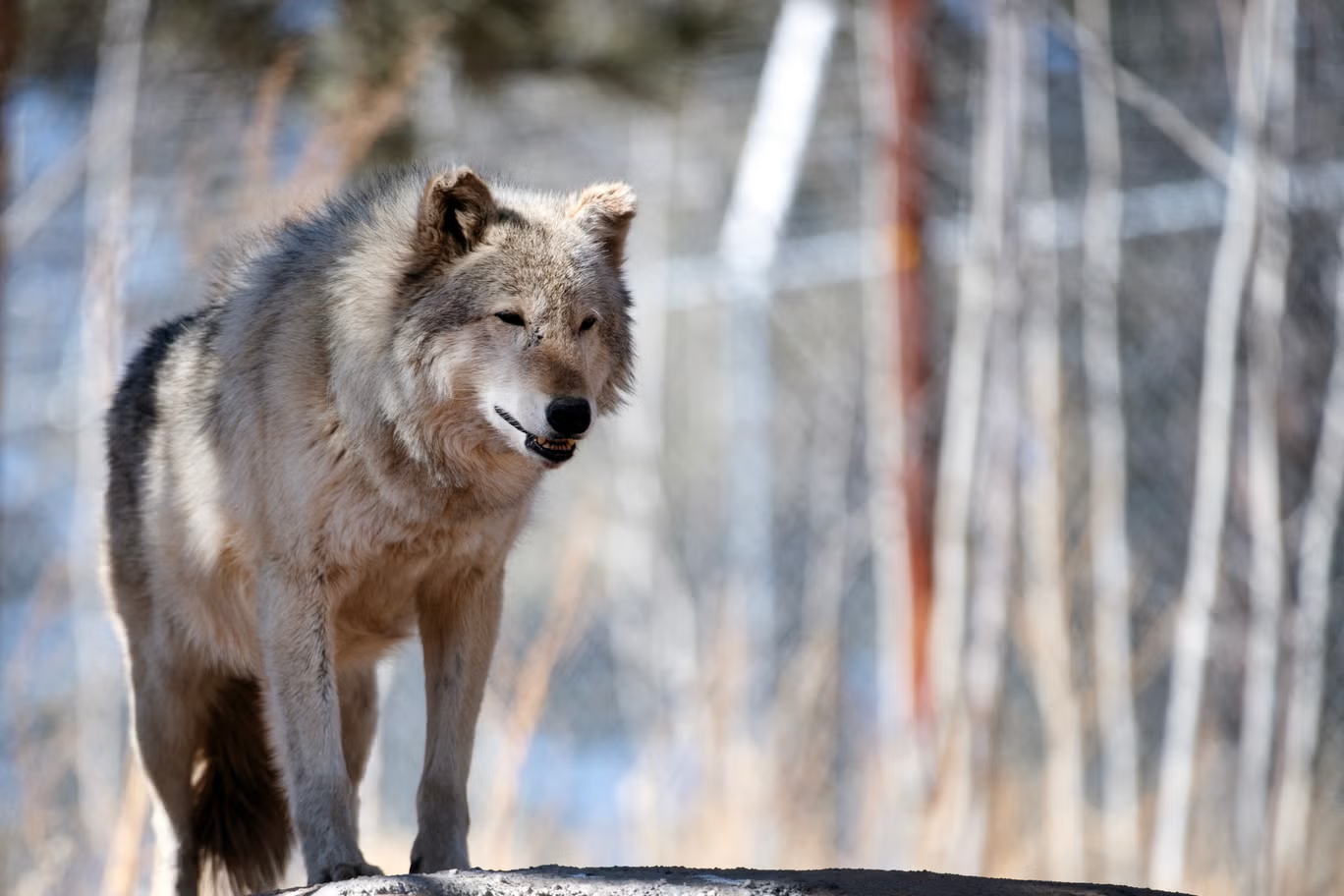
the Hamburg police caught a wolf swimming in the Inner Alster, which had previously bitten and injured a woman.
European Debate on Predator Management
The incident comes amid broader debates across Europe about the role of large predators such as wolves and lynx.
In 2025, the European Parliament adjusted the protection status of wolves, allowing more flexibility in managing populations. This decision followed increasing pressure from farmers and rural communities.
Meanwhile, discussions about reintroducing predators in parts of the United Kingdom and Ireland have sparked controversy, with critics pointing to risks similar to the Hamburg wolf attack woman 2026 incident.
What Happens Next in the Investigation
Authorities in Hamburg are continuing to assess the situation, focusing on:
- The wolf’s health and behavioral condition
- Possible triggers for the attack
- Measures to prevent similar incidents
Officials have reassured the public that such events remain extremely rare and that wolves generally do not pose a threat to humans.
FAQ Section
What caused the Hamburg wolf attack in 2026?
Experts believe the attack was likely caused by a young wolf entering urban territory while searching for its own habitat, combined with stress from the unfamiliar environment.
How common are wolf attacks in Germany?
Wolf attacks on humans in Germany are extremely rare, with this incident considered the first of its kind since wolves returned in 1998.
Was the wolf captured after the attack?
Yes, authorities successfully captured the wolf after locating it in Hamburg’s Binnenalster lake and moved it to a secure enclosure.
Are wolves dangerous to people in cities?
Wolves generally avoid humans and urban areas. However, rare incidents can occur when animals become disoriented or stressed.
Conclusion
The Hamburg wolf attack woman 2026 incident highlights the complex relationship between wildlife conservation and public safety. While the return of wolves to Germany marks an ecological success, it also underscores the need for careful monitoring and balanced policies. As investigations continue, authorities aim to ensure both human safety and responsible wildlife management moving forward.
PLEASE CLICK HERE FOR MORE NEWS