The World Cup 2026 red card rules explained topic has become one of the biggest talking points of the tournament after the opening match between Mexico and South Africa was overshadowed by three dismissals. While Mexico secured a 2-0 victory, attention quickly shifted to the disciplinary chaos that unfolded in the second half.
The game made history for the wrong reasons, becoming the first World Cup opener ever to feature three red cards, highlighting how strictly FIFA applies its disciplinary system at the tournament.
World Cup 2026 Red Card Rules Explained After Mexico vs South Africa Chaos
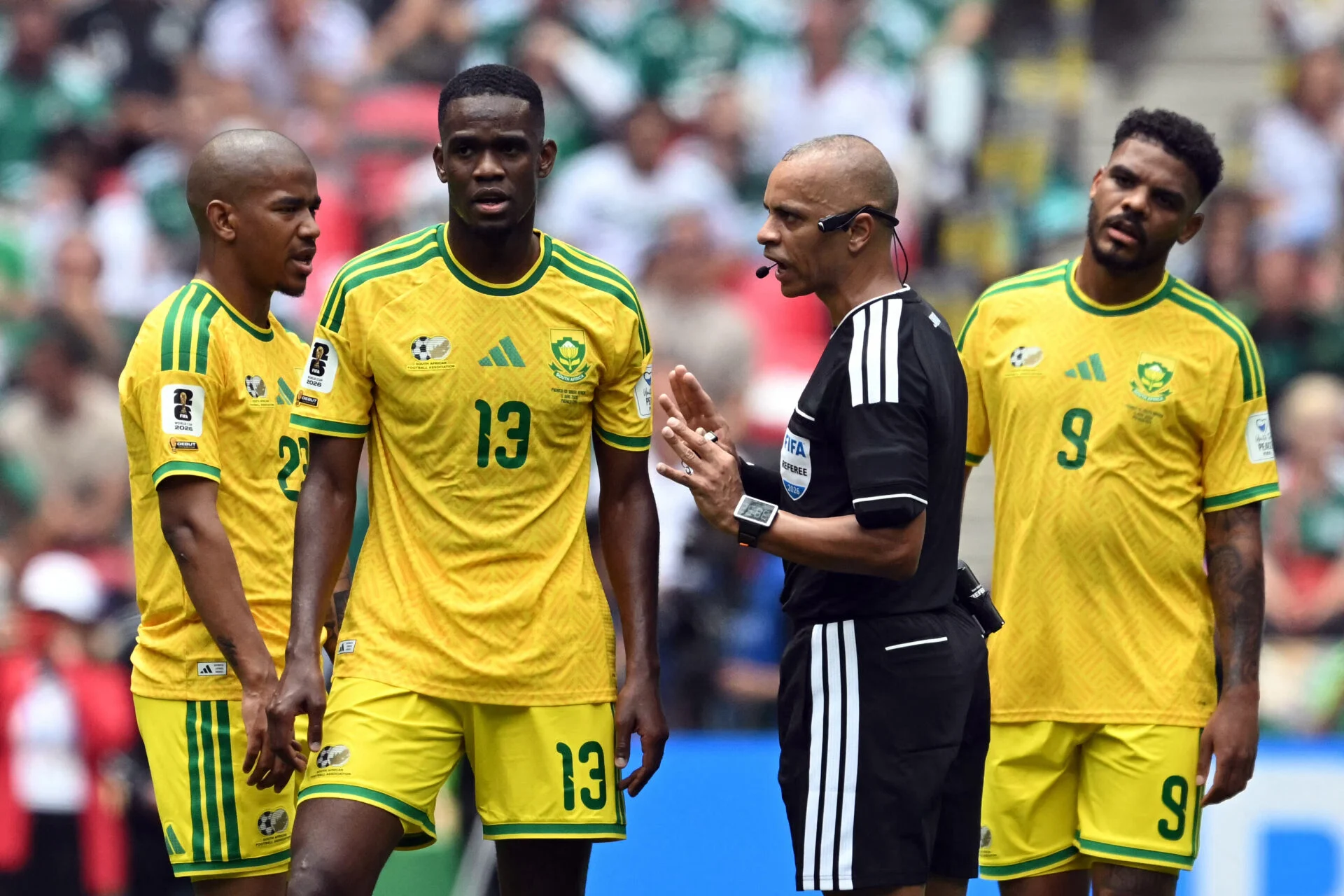
The opening fixture of the 2026 World Cup saw Mexico defeat South Africa 2-0, but the match was defined by controversy rather than goals.
The World Cup 2026 red card rules explained situation began in the second half when tempers flared and discipline broke down on both sides.

Early Disciplinary Flashpoint Changes the Game
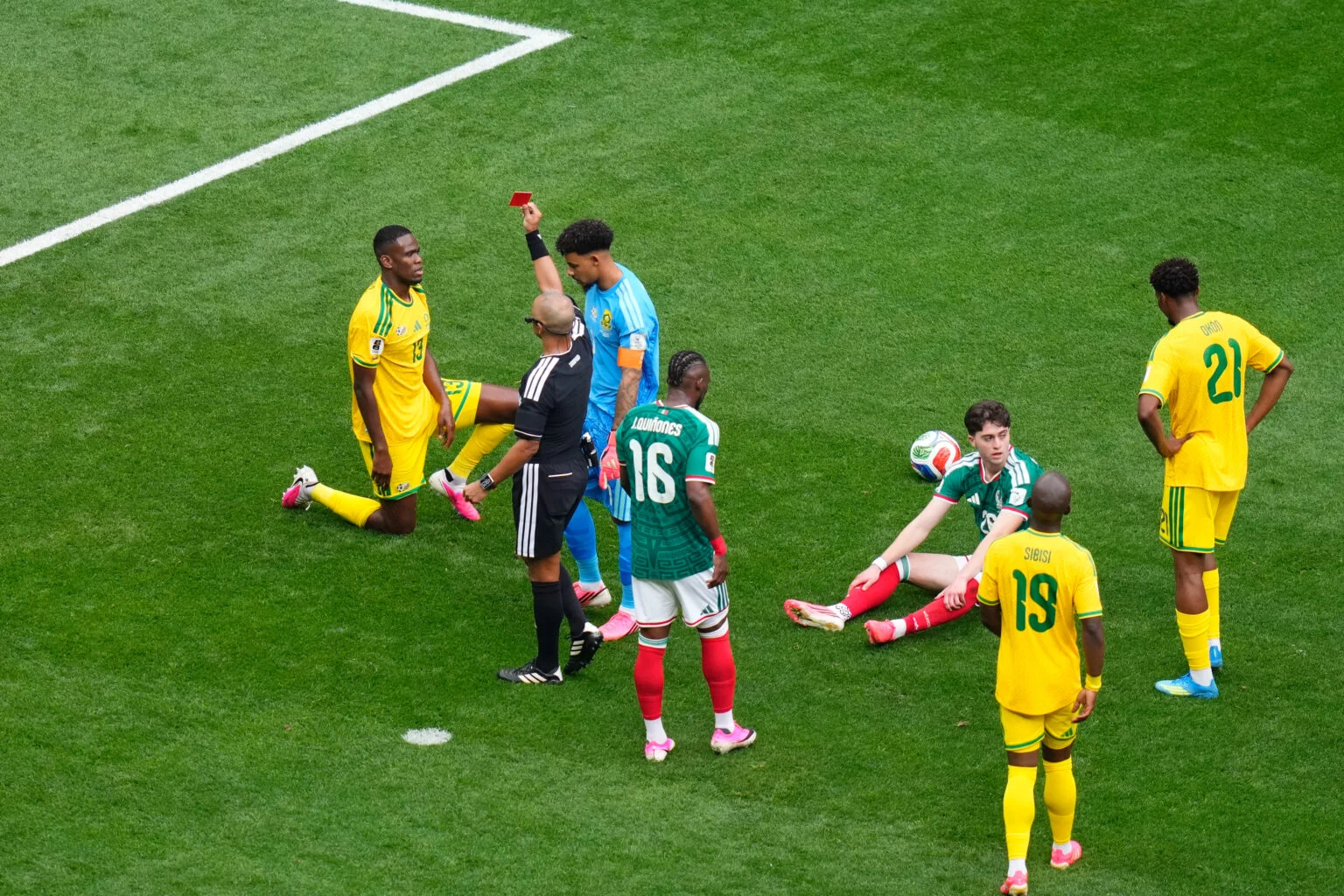
The first major incident came when South Africa’s Sphephelo Sithole was sent off.
He received a straight red card after bringing down Brian Gutiérrez on the edge of the penalty area. The referee ruled it as denying a clear goalscoring opportunity.
This early dismissal shifted momentum heavily in favor of the host nation.
VAR Review Leads to Second Red Card
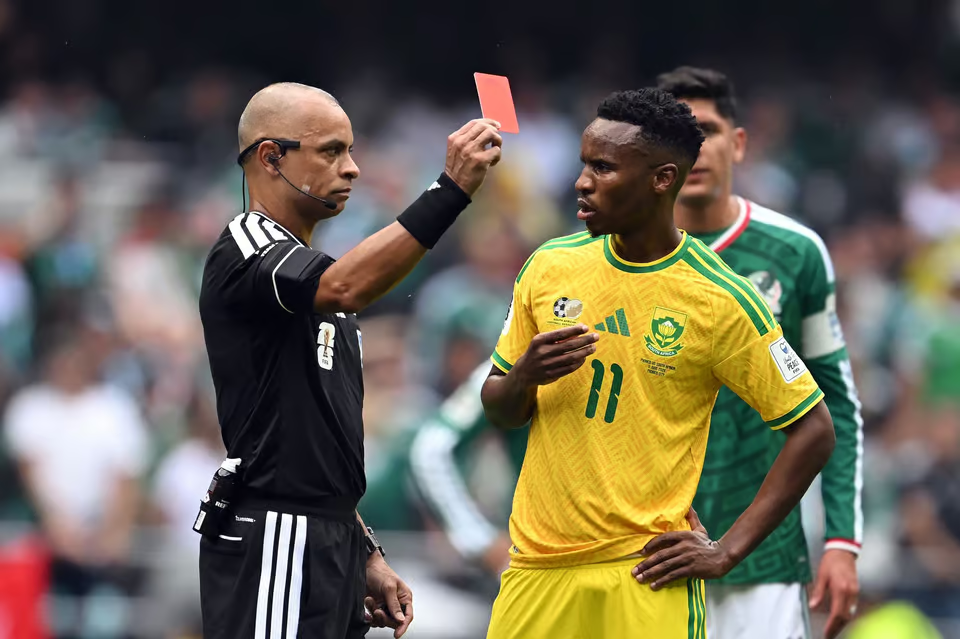
The second red card came in the 84th minute after a VAR intervention.
Themba Zwane was judged to have swung his arm into Roberto Alvarado’s face, which resulted in a violent conduct ruling after the referee reviewed the pitchside monitor.
The decision left South Africa further reduced and struggling to compete.
Third Red Card Highlights Strict World Cup 2026 Red Card Rules Explained
The third dismissal occurred deep into stoppage time.
Mexico defender César Montes was shown a straight red card for bringing down Khuliso Mudau and denying a clear goalscoring opportunity.
Although the match result was already settled, the incident completed a rare disciplinary record.
Historic Opening Match Record
This fixture became only the seventh World Cup match in history to feature three or more red cards.
It also marked the first time such a disciplinary record has occurred in an opening match of the tournament.
FIFA World Cup 2026 Red Card Rules Explained and Suspension System
The World Cup 2026 red card rules explained system is governed by FIFA’s disciplinary regulations, which apply uniformly across all matches.
Players who receive a red card are automatically suspended for at least one match.
Standard One-Match Ban Rule
Under FIFA regulations:
- A straight red card results in a minimum one-match suspension
- The suspension applies immediately in the next group match
- Further punishment may be added depending on severity
This ensures consistent discipline across the tournament.
When FIFA Can Increase Punishment
FIFA holds the authority to extend bans in cases involving:
- Violent conduct
- Serious foul play
- Dangerous or intentional aggression
This means players involved in severe incidents may miss multiple matches.
Impact of World Cup 2026 Red Card Rules Explained on Teams
The consequences of the opening match red cards are significant for both teams involved.
South Africa Face Key Suspensions
Sphephelo Sithole and Themba Zwane will both miss South Africa’s next group match against Czechia.
This creates a major challenge for the squad as they attempt to recover from their opening defeat.
Mexico Also Lose a Key Defender
César Montes will be unavailable for Mexico’s next match against South Korea.
While Mexico won the match, his absence could affect their defensive stability going forward.
VAR and Strict Officiating Shape World Cup 2026 Red Card Rules Explained
The introduction of VAR continues to play a major role in modern World Cup officiating.
Technology Ensures Correct Decisions
The VAR system allowed referees to:
- Review violent conduct incidents
- Correct on-field decisions
- Maintain consistency in disciplinary rulings
The Zwane incident in particular showed how VAR influences match outcomes in real time.
Referee Intervention Remains Key
Despite technology, the final decision always rests with the referee after pitchside review.
This combination of human judgment and video assistance defines modern World Cup officiating.

World Cup 2026 Red Card Rules Explained and Historical Context
Red cards have always played a major role in World Cup history, but this match added a new chapter.
Rare Disciplinary Occurrence
Having three red cards in a single match is uncommon at World Cup level.
The fact that it happened in the opening game makes it even more unusual and historically significant.
Discipline as a Key Tournament Factor
Teams often struggle when reduced to 10 or 9 men in high-stakes matches.
Discipline is therefore considered one of the most important factors in tournament success.
What Happens Next in the Tournament
The focus now shifts to how both teams respond after a dramatic opening fixture.
South Africa Must Recover Quickly
South Africa will need to reorganize and adjust their lineup due to suspensions.
Their next match against Czechia becomes crucial for survival in the group stage.
Mexico Look to Build Momentum
Despite the red card to Montes, Mexico will take confidence from their opening win.
They now prepare for a key clash against South Korea.
FAQ
What are the World Cup 2026 red card rules?
A red card results in a minimum one-match suspension, with FIFA having the authority to extend the ban depending on the severity of the offense.
How many red cards were shown in Mexico vs South Africa?
Three red cards were shown in the match, including two for South Africa and one for Mexico.
Can red card suspensions be extended at the World Cup?
Yes, FIFA can increase suspensions if the incident involves serious foul play or violent conduct.
Who missed the next matches after the opening game?
Sphephelo Sithole, Themba Zwane, and César Montes will all miss their respective next group matches due to suspension.
The opening match of the 2026 World Cup highlighted how strict disciplinary rules can shape the tournament early on. With three red cards and immediate suspensions, both teams now face added pressure as they continue their group stage campaigns.