 0
0
 0
0
Serbia Hungary gas pipeline explosives 2026 have triggered urgent security alerts in Southeast Europe, with Serbian President Aleksandar Vucic warning of potential geopolitical risks to critical energy infrastructure. The discovery underscores the strategic importance of cross-border gas networks and has prompted immediate cooperation between Serbia and Hungary.
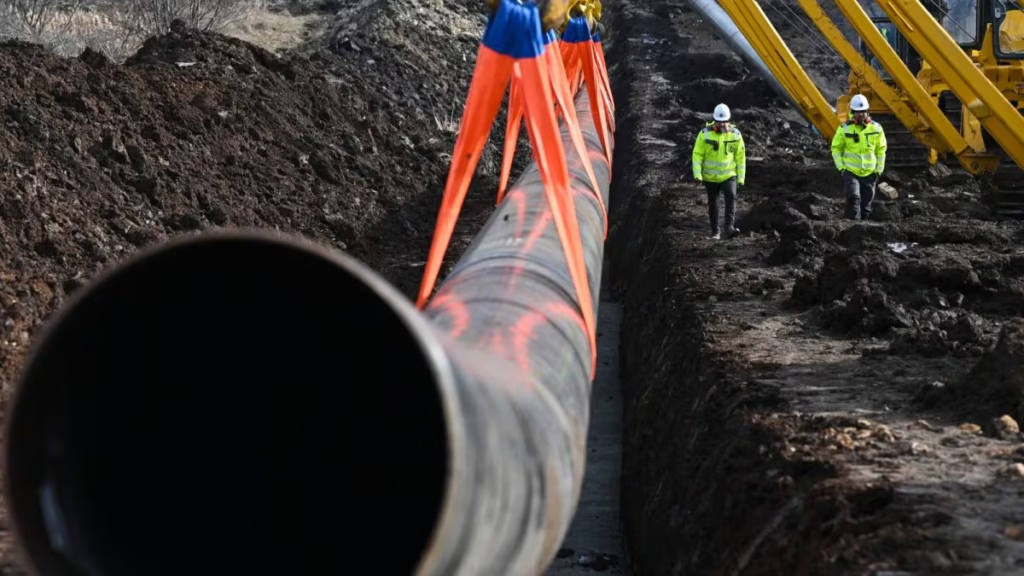
Explosive Threats Along Serbia Hungary Gas Pipeline Explosives 2026
Serbian authorities discovered two large explosive devices near a vital gas infrastructure site in the municipality of Kanjiza, close to the Hungarian border. Both packages were equipped with detonators, highlighting a serious threat to energy security in the region.
Security Operation Details
- Helicopters and ground units conducted a thorough search near a local lake.
- Officials noted that a shutdown at the site could have cut gas supplies to northern Serbia and Hungary.
- President Vucic emphasized that Serbia will act decisively against anyone threatening critical infrastructure.
Emergency Coordination Between Serbia and Hungary
After the discovery, Vucic briefed Hungarian Prime Minister Viktor Orbán. In response, Orbán convened an emergency session of Hungary’s Defense Council to discuss security measures and energy supply protection.
Geopolitical Context
Vucic described the incident as part of ongoing “geopolitical games,” calling for maximum readiness. Key factors in the regional context include:
- Alleged attacks on the TurkStream pipeline by Ukraine on March 11
- Disruptions in energy routes due to the ongoing war in Ukraine
- Sanctions affecting the flow of Russian natural gas to Southeast Europe
These dynamics make the pipeline near Kanjiza a highly sensitive asset.

Strategic Importance of the Pipeline
The Kanjiza facility connects Serbia’s gas network directly to Hungary and is crucial for regional energy stability.
Potential Impact of a Shutdown
- Northern Serbia could face gas shortages
- Hungary’s supply could be disrupted
- Local industries and households may experience economic and energy impacts
This incident demonstrates how a single disruption can have cross-border consequences.
Connection to TurkStream
The TurkStream pipeline, which transports Russian gas across the Black Sea to Turkey and Europe, is central to regional energy security:
- It has recently been a target of alleged Ukrainian drone attacks
- Supplies key Southeast European regions, including Serbia and Hungary
- Vulnerability of the pipeline increases urgency for heightened security
Previous Energy Security Considerations
Earlier in 2026, Serbia explored alternatives to navigate US sanctions, including the potential sale of the NIS oil company to MOL. These efforts illustrate ongoing strategic maneuvers to maintain stable energy flows despite geopolitical pressures.
Regional Energy Vulnerabilities
- Pipelines are sensitive to sabotage and geopolitical tension
- Dependence on Russian gas highlights the fragility of supply chains
- Energy disruptions could trigger economic and political consequences
Strengthening Security Measures
In response to the discovery, Serbia and Hungary implemented emergency security protocols.
Actions Taken
- Emergency Defense Council meetings convened
- Heightened surveillance around sensitive gas facilities
- National security and energy agencies coordinating closely
These measures aim to prevent sabotage and maintain uninterrupted gas flow.

Future Implications
The Serbia Hungary gas pipeline explosives 2026 incident highlights the continuing risk to critical infrastructure in geopolitically tense regions.
Key Takeaways
- Protecting pipelines is essential for national and regional security
- Cross-border cooperation ensures rapid response to threats
- Energy disruptions can have far-reaching economic and social impacts
Frequently Asked Questions
Where were explosives found near the Serbia-Hungary pipeline?
Authorities discovered two explosive devices near a gas facility in Kanjiza, northern Serbia, close to the Hungarian border.
What triggered emergency coordination between Serbia and Hungary?
President Vucic briefed Hungarian Prime Minister Viktor Orbán after the discovery, prompting Hungary to convene its Defense Council.
How might this incident affect gas supply in the region?
A disruption could cut gas flow to northern Serbia and Hungary, impacting households, businesses, and local economies.
Why is the TurkStream pipeline relevant?
TurkStream is a critical route for Russian gas to Southeast Europe; any threat to it can affect multiple countries’ energy security.
Conclusion
The Serbia Hungary gas pipeline explosives 2026 incident underscores the critical need for vigilant protection of energy infrastructure amid heightened regional tensions. With geopolitical stakes high and cross-border gas flow at risk, both Serbia and Hungary are taking decisive measures to secure vital energy assets and maintain regional stability.
PLEASE CLICK HERE FOR MORE NEWS