 0
0
 0
0
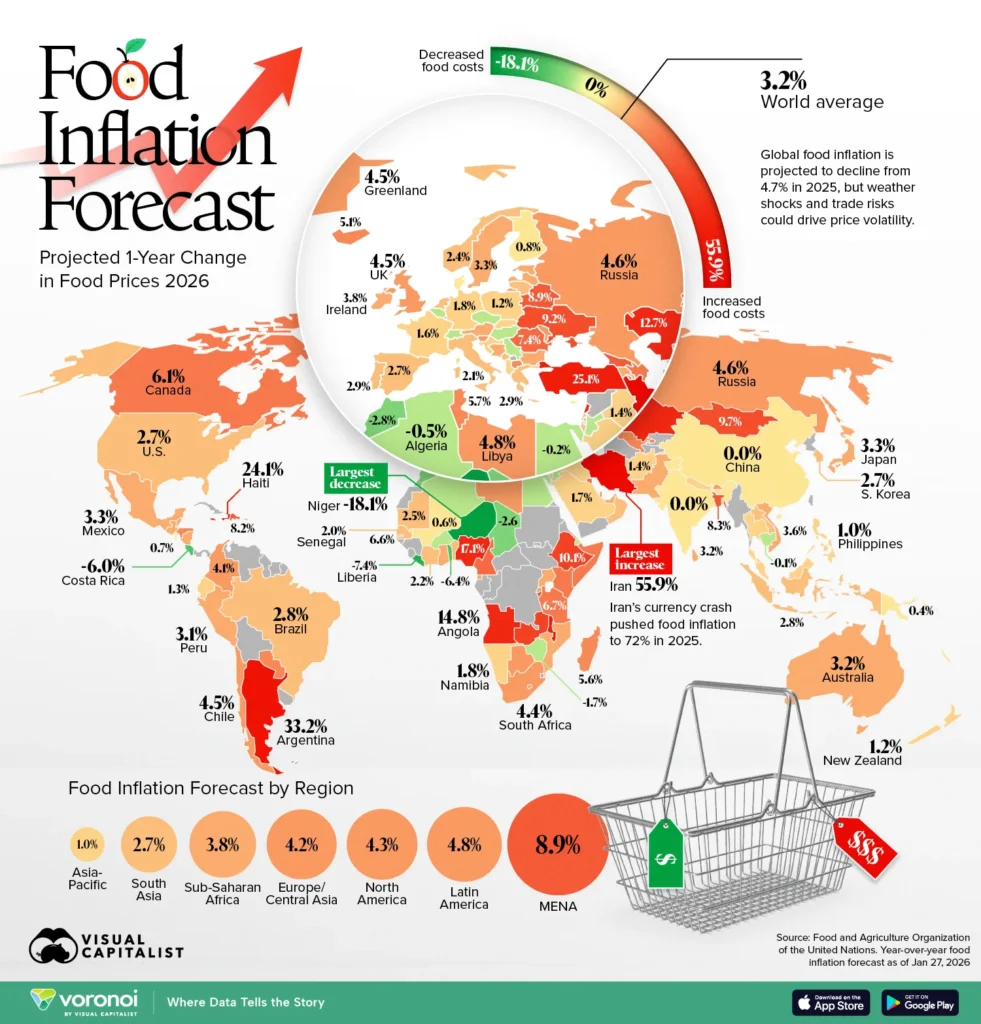
Global food prices 2026 have become a major concern for governments, economists, and consumers as the cost of staple foods continues to increase in many parts of the world. From grains and vegetables to cooking oil and dairy products, households in numerous countries are experiencing higher grocery bills.
International organizations monitoring food markets say a combination of climate events, supply chain disruptions, and energy costs are contributing to the trend.
Recent Trends In Global Food Prices 2026
Data from the Food and Agriculture Organization indicates that international food price indices have shown significant fluctuations in recent years. Although prices stabilized in some months, several food commodities remain higher than historical averages.
Key agricultural products experiencing price pressure include:
Wheat
Rice
Corn
Vegetable oils
Sugar
These commodities are essential ingredients in many food systems, meaning price changes can affect both consumers and food producers.
Climate Events Affecting Agricultural Production
One of the major factors behind rising global food prices 2026 is extreme weather affecting agricultural regions.
Droughts, floods, and heatwaves have disrupted farming in several countries that produce large quantities of staple crops. Climate scientists say these events are becoming more frequent due to long term environmental changes.
For example, severe drought conditions have affected crop production in some grain exporting regions. Reduced harvest yields can lead to tighter supply in international markets, which may push prices higher.
Agricultural experts note that climate related disruptions can have ripple effects across global supply chains.
Energy Costs And Transportation
Another important factor influencing food prices is the cost of energy. Fuel prices directly affect agricultural production and transportation.
Farm equipment, fertilizer manufacturing, and global shipping all depend heavily on energy. When fuel costs increase, the price of moving food from farms to markets also rises.
Economists say this relationship between energy and food prices has become more visible during periods of economic uncertainty and geopolitical tension.
Impact On Consumers And Households
Rising food costs affect consumers differently depending on income levels and regional economic conditions.
In developing countries, food often represents a large portion of household spending. Even small price increases can place pressure on family budgets.
Humanitarian organizations warn that higher food prices may increase the risk of food insecurity in vulnerable regions. Governments and international agencies frequently monitor price trends to anticipate potential shortages.
Government Responses And Policy Measures
Several governments have introduced policies aimed at stabilizing domestic food markets.
Common measures include:
Export restrictions on key agricultural products
Subsidies for farmers and food producers
Price controls on essential goods
Strategic food reserve programs
These policies are designed to protect domestic food supplies and limit the impact of global price volatility.
However, economists note that export restrictions can sometimes increase pressure on global markets by reducing available supply.
Global Trade And Food Supply Chains
International trade plays a major role in balancing food availability across regions. Countries that produce surplus crops often export them to areas facing shortages.
Organizations such as the World Trade Organization and the World Bank regularly analyze global trade patterns to understand how supply chains affect food prices.
Efficient logistics systems and stable trade relationships are considered important for maintaining reliable food distribution.
Long Term Outlook For Food Markets
Experts believe global food prices 2026 will continue to depend on several key factors.
These include agricultural productivity, climate conditions, energy costs, and global trade policies. Advances in farming technology and improved crop resilience may help stabilize production in the long term.
Researchers are also exploring new agricultural techniques such as climate resilient crops and precision farming to improve food security.
While short term price fluctuations are common in agricultural markets, policymakers and economists emphasize the importance of building resilient food systems capable of adapting to future challenges.
Visit Blaqloaded For More News