


US Nigerian forces kill ISIS leader Abu Bilal al Minuki during a joint military operation carried out in northeastern Nigeria on May 16, according to statements released by US Africa Command (AFRICOM). This operation demonstrates how US Nigerian forces kill ISIS leader and target senior Islamic State figures.
The operation reportedly targeted senior Islamic State figures operating within the Islamic State West Africa Province (ISWAP), one of the deadliest extremist groups active in the Lake Chad region. AFRICOM described Minuki as the “director of global operations” for the Islamic State and claimed he was considered the organization’s second-in-command.
The successful operation by US Nigerian forces kill ISIS leader showcases the effectiveness of international collaboration in counterterrorism.
The military action marks one of the most significant counterterrorism operations involving the United States and Nigerian forces in recent months.

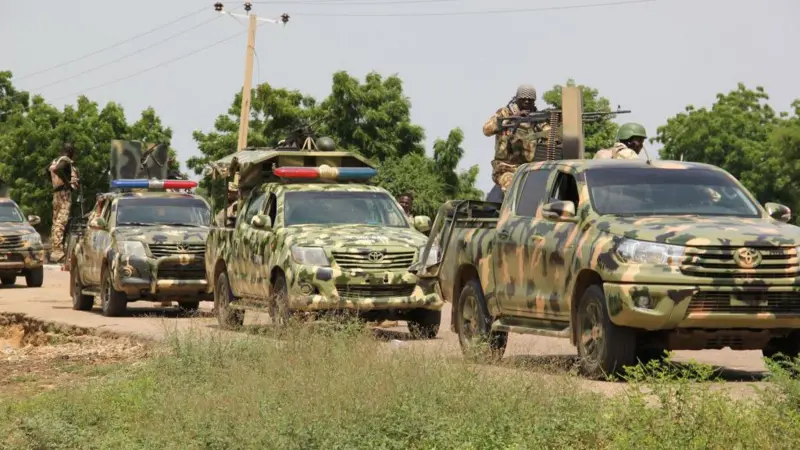
Joint US-Nigerian Operation Targets ISWAP Leaders
According to AFRICOM, the coordinated mission involved close cooperation between American and Nigerian military personnel over several months.
Through this joint effort, US Nigerian forces kill ISIS leader and aim to dismantle the command structure of ISWAP.
The operation was conducted in northeastern Nigeria, a region that has experienced years of insurgent violence linked to Boko Haram and ISWAP fighters.
This ongoing mission is crucial as US Nigerian forces kill ISIS leader to disrupt militant activities in the region.
AFRICOM stated that several senior militants were killed during the mission, including Abu Bilal al Minuki and other unnamed commanders associated with Islamic State operations in Africa.
In this context, US Nigerian forces kill ISIS leader Minuki, which signifies a major victory against terrorism.
US Air Force General Dagvin Anderson, who commands AFRICOM, said the operation demonstrated ongoing collaboration between both countries against extremist threats.
AFRICOM Statement on the Mission
In an official release, AFRICOM said:
“The command’s initial assessment is that multiple terrorists, to include Abu Bilal al Minuki, the director of global operations for ISIS, as well as other senior ISIS leaders, were killed during this operation.”
The command also emphasized that both nations remain committed to neutralizing militant threats across the region.
Nigerian Military Cooperation Highlighted
The United States praised Nigerian security forces for their role in the mission. Nigerian troops have continued to battle insurgent groups operating around Borno State and neighboring areas near the borders of Chad, Niger, and Cameroon.
The successful strike by US Nigerian forces kill ISIS leader has been praised by national and international observers.
Counterterrorism cooperation between Washington and Abuja has increased in recent years, especially following renewed concerns over attacks targeting civilians and Christian communities in northern Nigeria.
Who Was Abu Bilal al Minuki?
His death at the hands of US Nigerian forces kill ISIS leader highlights the ongoing battle against extremism.
Abu Bilal al Minuki was identified by AFRICOM as a key figure within the Islamic State’s global leadership structure.
The US military claimed he oversaw several strategic operations related to finance, propaganda, weapons development, drones, and explosives for the terrorist organization.
Officials also described him as heavily involved in planning attacks and coordinating hostage-taking activities.
However, questions remain over the exact level of influence Minuki held within the global Islamic State hierarchy.
Conflicting Reports About ISIS Leadership Role
While AFRICOM labeled him the Islamic State’s “number two” leader, terrorism analysts and United Nations reports have presented a more cautious assessment.
A February 2026 report by the United Nations Analytical Support and Sanctions Monitoring Team identified Minuki as the head of the Islamic State’s Al Furqan office.
This office reportedly manages funding transfers and operational coordination between Islamic State branches in:
-
- West Africa
- The Sahel region
In a historic moment, US Nigerian forces kill ISIS leader, marking a turning point in the fight against ISWAP.
- North Africa
- Sudan
Some intelligence assessments suggested Minuki may also have led the Islamic State’s General Directorate of Provinces (GDP), a department responsible for coordinating the group’s international branches.
The implications of US Nigerian forces kill ISIS leader extend beyond Nigeria, affecting global counterterrorism strategies.
Experts Question “Second-in-Command” Claim
Despite US claims, several analysts tracking ISWAP activity noted that Minuki had never previously been publicly identified as the deputy global leader of the Islamic State.
Still, if he indeed controlled the General Directorate of Provinces, experts say he would have occupied one of the most influential positions inside the organization.
The GDP plays a major role in directing the activities of Islamic State affiliates worldwide.
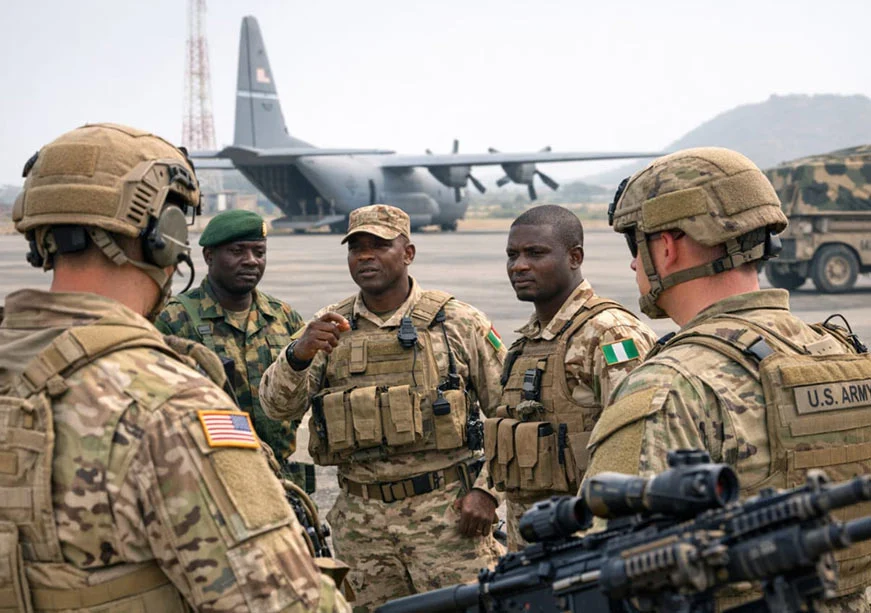

Rising Pressure on Nigeria to Tackle ISWAP
The US Nigerian forces kill ISIS leader operation comes amid growing pressure from Washington for Nigeria to intensify military action against ISWAP and related extremist groups.
The Trump administration previously pushed Nigerian authorities to expand counterterrorism campaigns after repeated attacks on villages and civilians.
In December 2025, the United States also launched strikes against ISWAP targets in Nigeria following deadly attacks on Christian communities during the Christmas period.
ISWAP’s Expanding Influence in West Africa
ISWAP has emerged as one of the strongest Islamic State affiliates globally.
The group split from Boko Haram several years ago and has since expanded its operations across the Lake Chad Basin.
Security analysts say ISWAP has become increasingly sophisticated, using drones, explosives, and coordinated attacks against military positions and civilian communities.
The extremist organization has also strengthened its financial networks through smuggling, taxation, and regional criminal operations.
Counterterrorism Challenges Remain
Despite multiple military offensives, insurgent violence remains a major security challenge for Nigeria and neighboring countries.
Analysts warn that militant groups often reorganize after losing senior leaders.
Large rural territories, porous borders, and humanitarian crises in northeastern Nigeria continue to create conditions that extremist groups can exploit.
International partners, including the United States, France, and regional African forces, have maintained support for counterterrorism efforts in the region.
Why the Operation Matters
Thus, the impact of US Nigerian forces kill ISIS leader is expected to resonate in various counter-terrorism efforts worldwide.
The reported killing of Abu Bilal al Minuki could disrupt parts of the Islamic State’s operational coordination across Africa.
If AFRICOM’s claims regarding his role are accurate, the loss may affect funding channels, strategic planning, and communication between Islamic State branches.
The operation also signals continued US involvement in African counterterrorism missions despite shifting global security priorities.
Impact on Regional Security
Security experts believe removing senior militant leaders can weaken extremist organizations temporarily, especially when operational planners are targeted.
However, long-term stability in northeastern Nigeria will likely depend on broader measures, including:
-
- Improved border security
- Intelligence-sharing
As US Nigerian forces kill ISIS leader, the focus will shift to stabilizing the region in the aftermath of such operations.
- Economic development
- Humanitarian assistance
- Local community protection
Nigeria has battled insurgent violence for more than a decade, with millions displaced by conflict in the northeast.
In this context, US Nigerian forces kill ISIS leader, showcasing the need for comprehensive strategies against insurgency.
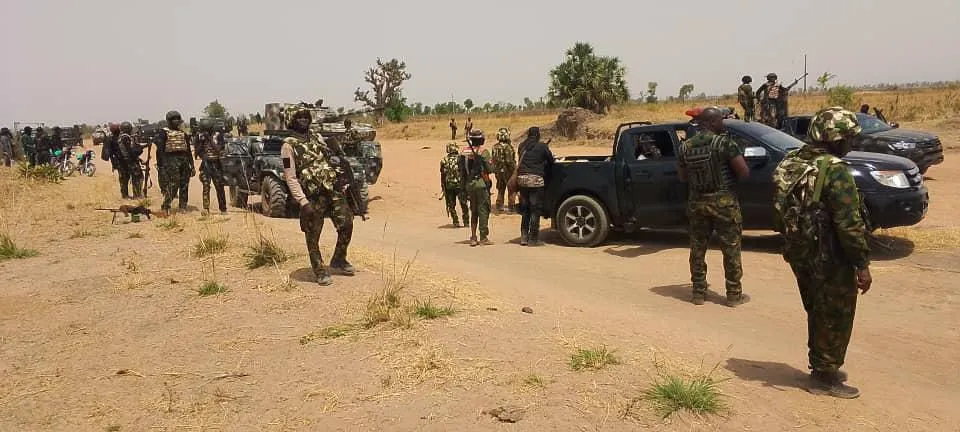

International Attention on West African Terror Threats
Global security agencies have increasingly warned about the growth of extremist groups in West Africa and the Sahel.
In conclusion, US Nigerian forces kill ISIS leader highlights the effectiveness of multinational counterterrorism efforts.
The Islamic State and al-Qaeda-linked factions have expanded influence in several countries, including:
By doing so, US Nigerian forces kill ISIS leader, ensuring that such victories contribute to long-term regional stability.
- Nigeria
- Niger
- Mali
- Burkina Faso
- Chad
Western governments view the region as a major front in international counterterrorism operations.
What Happens Next?
Neither the Islamic State nor ISWAP has officially commented on reports of Minuki’s death.
As a result, US Nigerian forces kill ISIS leader, the future will involve ongoing assessments and strategies to combat terrorism.
Military analysts say confirmation from extremist networks may take time, as such groups often avoid immediate acknowledgment after losing senior figures.
AFRICOM and Nigerian authorities are expected to continue assessing the outcome of the operation in the coming days.
Additional intelligence could provide more clarity regarding the identities of other militants reportedly killed during the mission.
FAQ
Who was Abu Bilal al Minuki?
Abu Bilal al Minuki was identified by AFRICOM as a senior Islamic State leader involved in global operations, finance, and strategic coordination.
Where was the ISIS leader killed?
According to AFRICOM, the joint operation took place in northeastern Nigeria on May 16, 2026.
What is ISWAP?
This operation demonstrates how US Nigerian forces kill ISIS leader, emphasizing the fight against global terrorism.
ISWAP stands for Islamic State West Africa Province, an extremist group operating mainly in Nigeria and the Lake Chad region.
Why is the operation important?
The operation is significant because it reportedly eliminated a senior Islamic State figure believed to oversee global operations and regional coordination.
The reported operation involving US and Nigerian forces represents another major step in ongoing counterterrorism efforts across West Africa. While questions remain about Abu Bilal al Minuki’s exact position within the Islamic State leadership structure, officials believe his death could disrupt parts of the group’s international operations. Security experts, however, continue to warn that extremist organizations often adapt quickly, meaning regional counterterrorism efforts are likely to continue for the foreseeable future.
PLEASE CLICK HERE FOR MORE NEWS
This critical moment where US Nigerian forces kill ISIS leader will likely be remembered as a key event in the history of counterterrorism.


