 0
0
 0
0
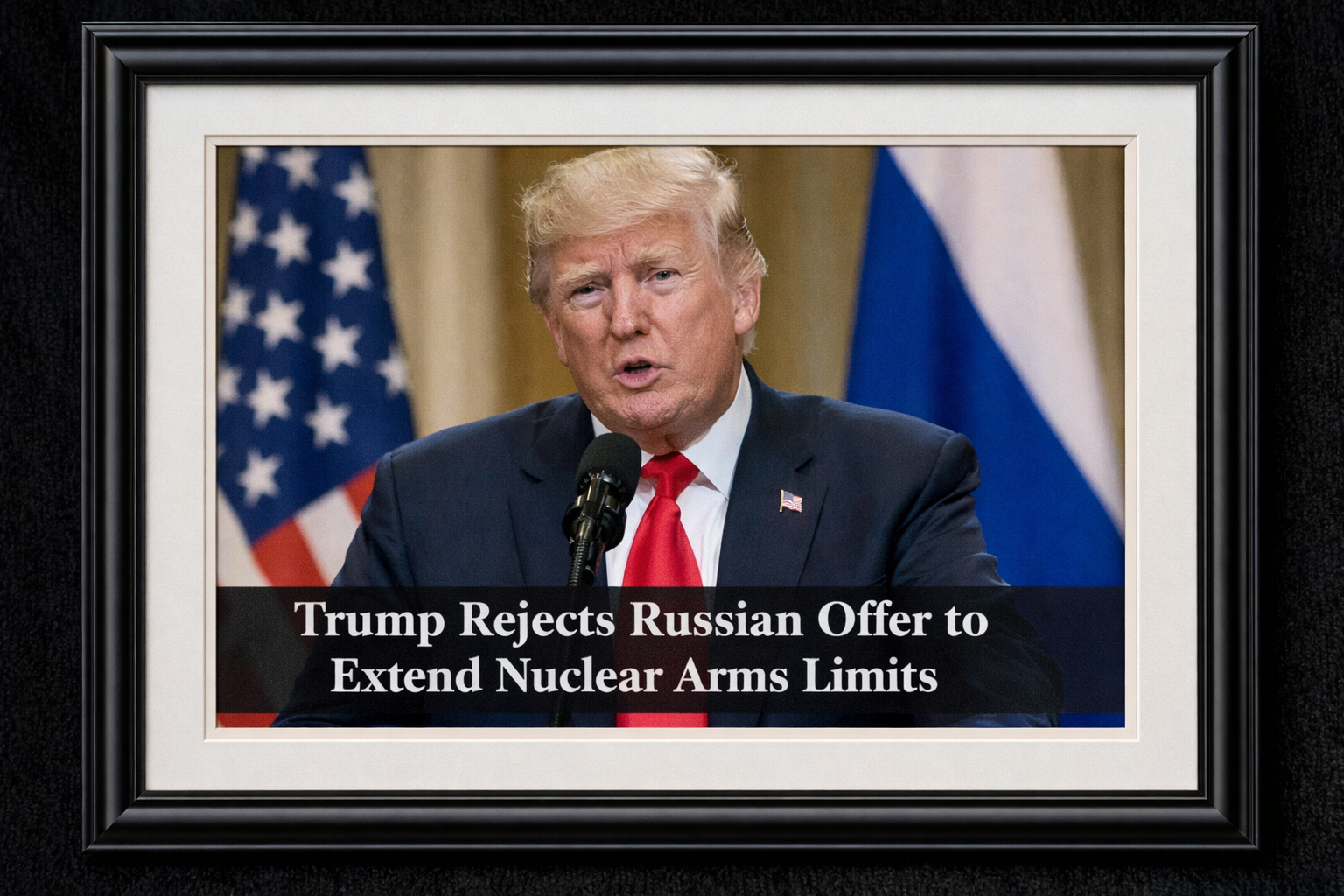
United States President Donald Trump has declined a proposal from Russia to voluntarily extend limits on strategic nuclear weapons following the expiration of the New START treaty. The decision has renewed global concerns about the possibility of a new nuclear arms race, as the agreement had served as the final legal constraint on the world’s two largest nuclear arsenals for more than five decades.
The New START treaty officially expired this week, ending caps on deployed strategic nuclear warheads and delivery systems held by the United States and Russia. Its expiration marks the first time since the early 1970s that no binding agreement limits the size of their nuclear stockpiles.
Trump Calls for a New and Modernized Treaty

In a public statement, Trump dismissed the idea of extending New START, describing it as a flawed agreement that he claimed had been violated. He argued that the United States should instead pursue a new, updated arms control framework designed for long term relevance and modern security challenges.
Trump said the focus should be on developing a stronger treaty rather than prolonging an outdated one. He also emphasized the need for any future agreement to reflect current geopolitical realities, particularly the rise of China as a nuclear power.
According to Trump, the United States has significantly strengthened its military capabilities in recent years. He pointed to expanded nuclear modernization efforts, naval upgrades, and the creation of the Space Force as evidence of renewed American military dominance.
End of the Last Major Nuclear Arms Agreement
The expiration of New START removes the last remaining limits on US and Russian nuclear forces. Signed in 2010, the treaty restricted both nations to a fixed number of deployed warheads and delivery systems, while also allowing on site inspections to promote transparency and reduce the risk of miscalculation.
Russia suspended its participation in the treaty in 2023, citing concerns over inspections and broader tensions linked to the conflict in Ukraine. Despite this, Russian officials had previously indicated a willingness to continue observing the treaty’s limits temporarily if the United States agreed to do the same.
With Washington declining to extend the agreement, those limits are no longer legally binding, raising alarms among arms control experts and security analysts.
Russia Reacts to Treaty Expiration
Russian officials have expressed regret over the treaty’s expiration, describing it as a negative development for global strategic stability. Moscow has stated that it will continue to act responsibly regarding its nuclear forces while prioritizing national security interests.
Russian leadership has also held discussions with China about the future of global arms control, highlighting the lack of response from Washington to proposals aimed at maintaining limits on nuclear weapons.
Trump Pushes for China’s Inclusion
Trump has consistently argued that any new nuclear arms agreement must include China. He maintains that modern arms control efforts cannot succeed without addressing Beijing’s rapidly expanding nuclear capabilities.
Senior US officials have echoed this position, stating that China’s growing arsenal makes it impossible to achieve meaningful arms control without its participation. However, China has rejected calls to join a three way nuclear pact, asserting that its nuclear forces remain far smaller than those of the United States and Russia.
Chinese officials have instead urged Washington and Moscow to resume bilateral negotiations, emphasizing that existing nuclear disparities make multilateral disarmament talks unrealistic at this stage.
Global Security Concerns Grow
The collapse of New START has intensified fears of an unconstrained nuclear arms race. Without inspection regimes, transparency measures, or numerical limits, analysts warn that mistrust and miscalculation could increase between nuclear powers.
Arms control agreements between the United States and Russia date back to the early 1970s and have long been viewed as a cornerstone of global security. The absence of such frameworks creates uncertainty at a time of heightened geopolitical tension and rapid military modernization.
What Comes Next
While Trump has signaled openness to future arms control negotiations, no clear roadmap has been outlined. The administration’s insistence on including China remains a major obstacle, given Beijing’s firm opposition.
For now, the expiration of New START leaves the global nuclear order in uncharted territory, with strategic stability increasingly dependent on unilateral restraint rather than legally binding agreements.