 0
0
 0
0
The Trump Corollary and the Fracturing of Latin America
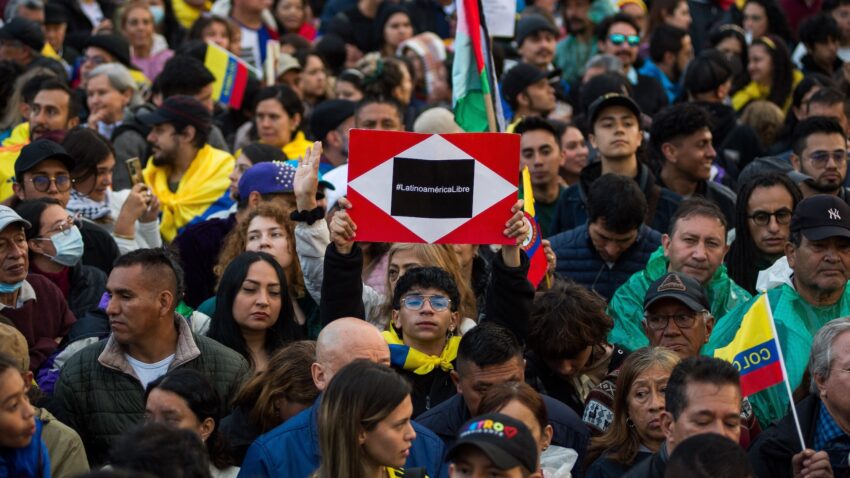
Recent United States actions in Venezuela have reshaped political dynamics across Latin America, accelerating divisions in an already polarized region. The January 3 operation in Caracas that removed President Nicolas Maduro did not only upend Venezuela political system. It also altered how governments across the region view Washington and each other.
Analysts say this shift complicates efforts to build regional cooperation on shared challenges such as organized crime, irregular migration, and economic instability. As consensus weakens, countries that once balanced relations with Washington may increasingly look toward other global powers, including China.
A Region Already Divided
Latin America entered this period far from united. Longstanding diplomatic disputes and ideological rivalries continue to shape regional politics.
Mexico remains without diplomatic relations with Ecuador following a 2024 security operation at the Mexican embassy in Quito. That dispute later contributed to a trade confrontation between Ecuador and Colombia. In South America largest economies, political differences have strained relations between Brazil and Argentina, while leaders in Colombia and El Salvador frequently clash in public exchanges.
These tensions have made regional coordination difficult even before recent US actions intensified existing fractures.
Impact of the Trump Approach
During the first year of President Donald Trump second term, Washington adopted a more confrontational and ideological posture toward Latin America. Policies on tariffs, deportations, maritime security operations, and involvement in regional elections have sparked sharp disagreements among governments.
As a result, Latin American countries have struggled to present unified responses to US initiatives. Diverging national interests and political ideologies have prevented collective action, reinforcing fragmentation across the region.
Strategic Consequences for the United States
Foreign policy observers warn that this growing disunity may undermine US strategic interests. Without broad regional partnerships, addressing cross border crime networks and migration pressures becomes more difficult. At the same time, weakened alignment with Washington could open space for expanded influence from rival global actors.
The evolving landscape suggests that US relations with Latin America are entering a more complex and competitive phase, shaped by internal regional divisions as much as by external pressure.