


Sweden French FDI frigate Luleå class selection marks a major shift in the country’s naval strategy as Sweden moves to strengthen its surface fleet with a modern, combat-ready warship design.
The decision confirms that Sweden will adopt the French-built FDI frigate as the basis for its new Luleå-class ships, signaling one of the most significant naval procurement choices in decades.
Sweden Chooses French Design for Luleå-Class Frigates
Sweden has officially selected the French FDI frigate design as the foundation for its future surface combatant program known as the Luleå class.
The decision came after evaluation of competing proposals from the United Kingdom and Spain, with France’s design ultimately chosen for its maturity and advanced combat systems.


Why the French FDI Design Was Selected
The Swedish Defence Materiel Administration prioritized several factors:
- Mature in-production warship design
- Advanced integrated combat systems
- Faster delivery timeline compared to alternatives
- Strong anti-air warfare capability
These factors aligned with Sweden’s urgent need to modernize its naval forces in response to evolving regional security concerns.
Security Pressure Drives Sweden Naval Expansion
The Sweden French FDI frigate Luleå class program reflects a broader shift in European defense priorities following increased regional tensions.
Sweden’s decision is strongly influenced by:
- The security situation in Europe
- Rising maritime threats in the Baltic region
- NATO membership requirements
- The need for rapid fleet modernization
NATO Integration and Regional Threats
Sweden’s entry into NATO has increased its responsibility to contribute to collective maritime security.
The Baltic Sea region remains a strategically sensitive area, with growing concerns about potential military escalation and hybrid threats.
Luleå-Class Frigates Will Be Sweden’s Largest Warships
The new Luleå-class frigates will be significantly larger and more capable than Sweden’s current surface fleet.
Size and Capability Comparison
- Displacement: around 4,390 tons
- Length: approximately 400 feet
- Compared to Visby-class corvettes: 705 tons
This makes the new vessels the largest surface combatants in the Swedish Navy in decades.


Replacement of Visby-Class Dominance
The Visby-class corvettes have long formed the backbone of Sweden’s navy, but the Luleå-class will dramatically expand operational reach and combat capability.
The new ships will enhance:
- Air defense coverage
- Surface warfare capability
- Anti-submarine operations
- Long-range maritime presence
Advanced Weapons and Combat Systems
A key feature of the Sweden French FDI frigate Luleå class program is the integration of advanced weapon systems from multiple European suppliers.
Air Defense Capabilities
The frigates will be equipped with layered air defense systems including:
- Aster 30 long-range missiles
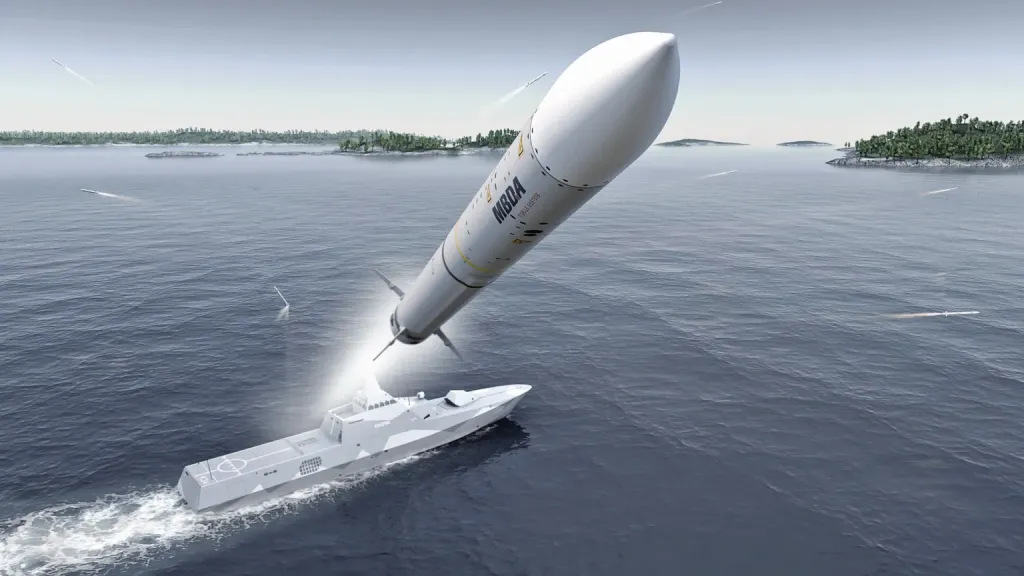
- CAMM-ER medium-range missiles
The Aster 30 provides extended interception capability against aircraft and missile threats, while CAMM-ER enhances short-to-medium range defense.
Anti-Ship and Anti-Submarine Weapons
Sweden will replace several French systems with domestically developed alternatives:
- RBS 15 anti-ship missiles
- Torped 47 lightweight torpedoes
These systems are designed to strengthen Sweden’s maritime strike and submarine warfare capabilities.
Naval Guns and Close Defense Systems
The ships will also include:
- Bofors 57mm naval gun
- Bofors 40 Mk 4 close-in weapon system
- Saab Trackfire 12.7mm remote weapon stations
These provide layered protection against aerial and surface threats, including drones and fast attack craft.
Industrial and Strategic Cooperation
The Sweden French FDI frigate Luleå class deal is not only a military acquisition but also an industrial collaboration.
Swedish defense companies, including Saab, are expected to contribute to system integration and onboard equipment.
Shared European Naval Development
The adoption of the French FDI platform strengthens cooperation between Sweden and France, alongside other operators such as Greece.
It also improves interoperability among allied navies operating similar systems.
Strategic Impact for Sweden’s Navy
The new frigates will significantly enhance Sweden’s naval reach and defensive capabilities.
Key Strategic Benefits
- Improved air defense in Baltic and North Atlantic regions
- Greater deterrence against regional threats
- Enhanced NATO operational integration
- Stronger maritime patrol and protection capabilities
European Defense Cooperation Context
The agreement reflects growing defense alignment across Europe, with increased collaboration on air, land, and sea systems.
France and Sweden have strengthened ties through joint defense programs, reinforcing broader European security cooperation.
Future Deployment Timeline
Sweden expects delivery of the new Luleå-class frigates starting around 2030.
One vessel is expected to be delivered annually once production begins, gradually transforming Sweden’s naval capabilities over the following decade.
Frequently Asked Questions
Why did Sweden choose the French FDI frigate design?
Sweden selected the French design due to its maturity, advanced combat systems, and faster delivery timeline compared to competitors.
What will the Luleå-class frigates be used for?
They will primarily handle air defense, anti-submarine warfare, and surface combat missions in the Baltic and North Atlantic.
How large are Sweden’s new frigates compared to current ships?
The Luleå-class frigates are significantly larger, at around 4,390 tons, compared to the 705-ton Visby-class corvettes.
When will Sweden receive the new frigates?
Deliveries are expected to begin around 2030, with one ship delivered each year after production starts.
Conclusion
The Sweden French FDI frigate Luleå class program represents a major modernization of Sweden’s naval forces. By adopting an advanced French design and integrating Swedish weapon systems, the country is strengthening its maritime defense posture and expanding its role within NATO operations.
PLEASE CLICK HERE FOR MORE NEWS


