 0
0
 0
0
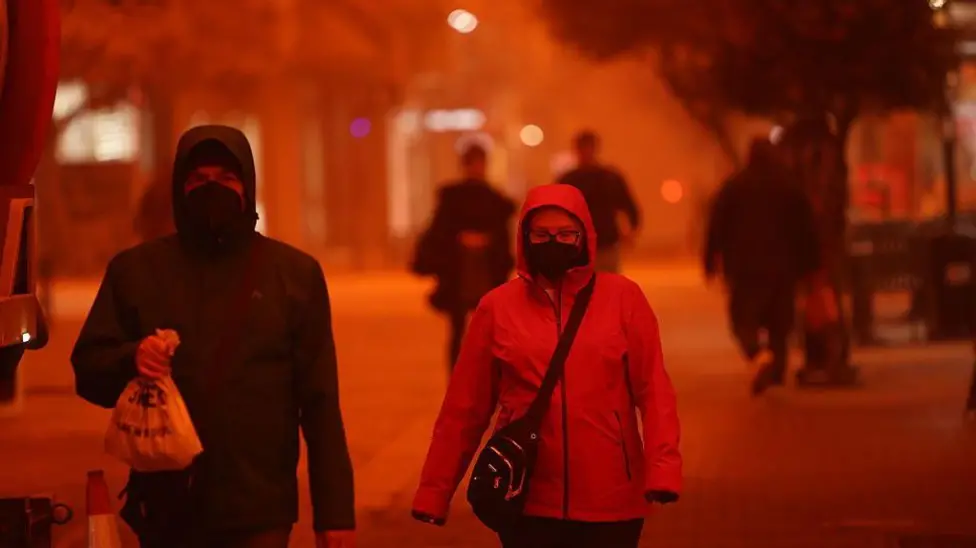
Saharan dust storm Crete red sky 2026 has created dramatic atmospheric conditions across parts of Greece, as strong winds carried dust from North Africa, turning the skies deep red and orange.
Saharan dust storm Crete red sky 2026 blankets island
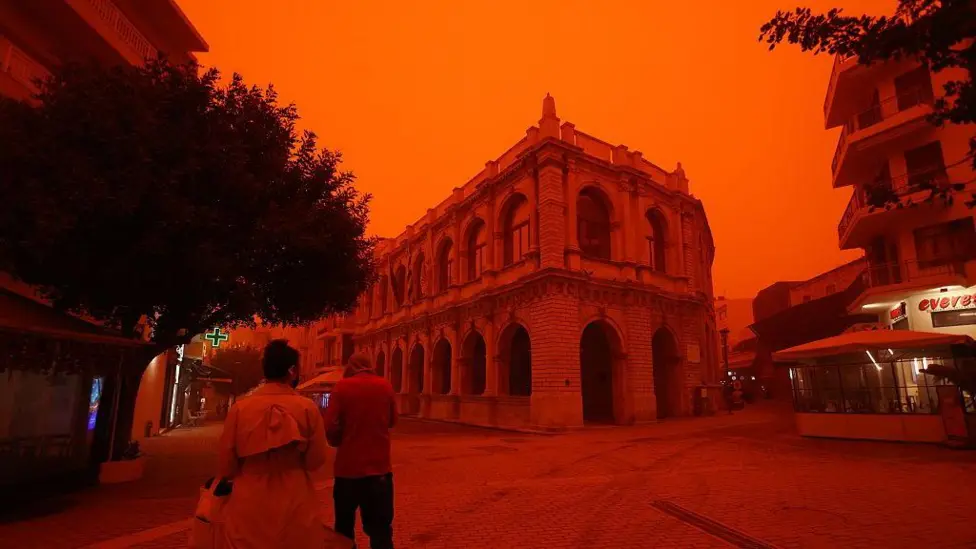
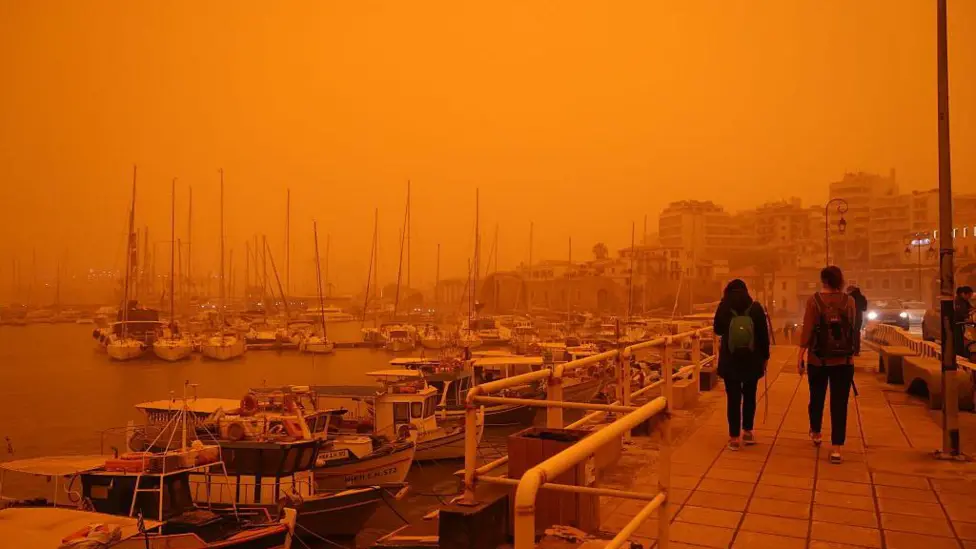
The Saharan dust storm Crete red sky 2026 event has significantly impacted the Greek island of Crete, where thick layers of dust reduced visibility and altered the sky’s color.
Authorities issued weather warnings as the phenomenon intensified, affecting major cities including Heraklion.
How the Saharan dust storm Crete red sky 2026 formed
The event is linked to strong southern winds transporting fine dust particles from the Sahara Desert across the Mediterranean into southern Europe.
These particles scatter sunlight in a way that creates the red and orange hues seen across the sky.
Visual impact across Crete
Residents reported:
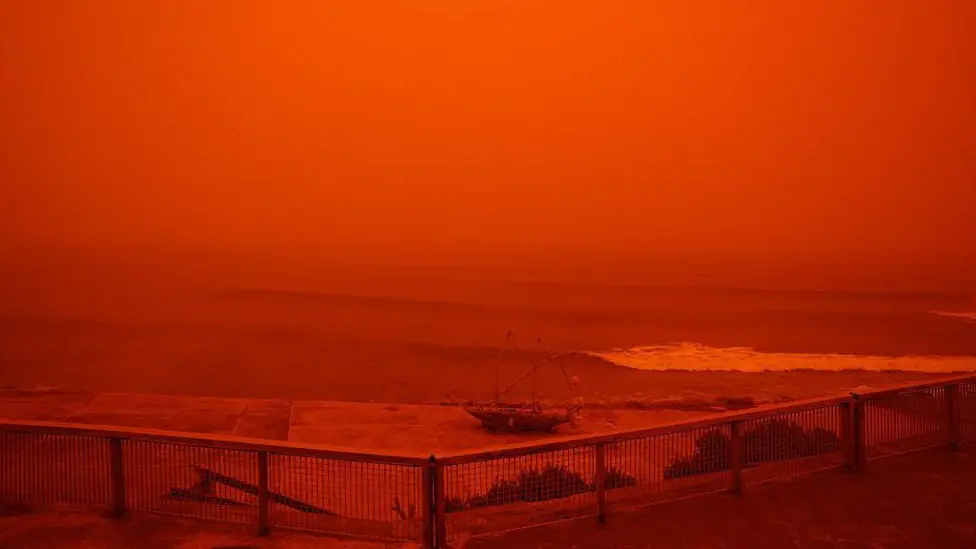
- Deep red and orange skies throughout the day
- Reduced visibility in urban and coastal areas
- Dust settling on buildings, roads, and vehicles
The unusual sky color has drawn global attention due to its intensity.
Storm Erminio intensifies Saharan dust storm Crete red sky 2026
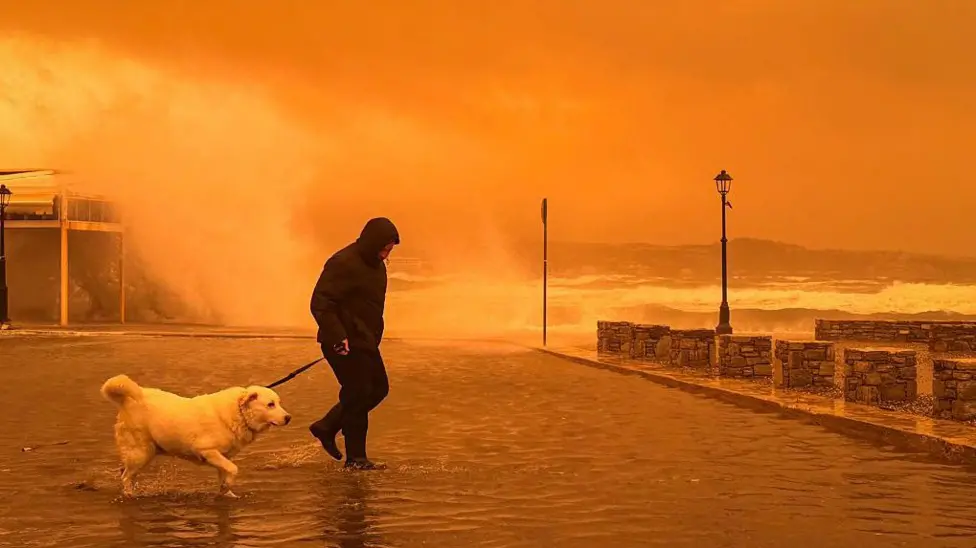
The Saharan dust storm Crete red sky 2026 coincided with Storm Erminio, which brought additional severe weather conditions.
Heavy rain and strong winds contributed to disruptions across the region.
Flooding and infrastructure impact
Storm Erminio caused localized flooding in several areas, affecting transportation and daily activities.
Authorities temporarily closed some schools as a precaution.
Maritime disruptions
The storm also forced:
- Suspension of ferry services
- Delays in maritime transportation
- Restrictions on boat movements
Rough sea conditions made travel unsafe in affected coastal regions.
Flight disruptions during Saharan dust storm Crete red sky 2026
Air travel was also impacted as the Saharan dust storm Crete red sky 2026 reduced visibility and affected air quality.
Aviation challenges
Dust particles in the atmosphere can interfere with aircraft operations, including:
- Reduced runway visibility
- Engine performance concerns
- Safety precautions for takeoff and landing
Some flights experienced delays or cancellations due to these conditions.
Weather alerts issued
A red weather warning was issued in parts of Crete, indicating a high level of risk due to the combined effects of dust and storm activity.
Health concerns linked to Saharan dust storm Crete red sky 2026
The Saharan dust storm Crete red sky 2026 has also raised public health concerns, particularly for vulnerable individuals.
Air quality and respiratory risks
Fine dust particles can affect breathing, especially for:
- People with asthma
- Elderly individuals
- Children
Authorities advised residents to limit outdoor exposure during peak dust conditions.
Preventive measures by residents
Many people in Crete took precautions such as:
- Wearing face masks outdoors
- Keeping windows closed
- Reducing physical activity outside
These measures help reduce inhalation of harmful particles.
Scientific explanation of Saharan dust events
Saharan dust storms are a recurring natural phenomenon that affects Europe, particularly southern regions like Greece.
Why the sky turns red
The red coloration occurs because dust particles scatter shorter wavelengths of light, allowing red and orange tones to dominate.
This effect becomes more intense when dust concentration is high.
Frequency of Saharan dust storms
Such events occur multiple times each year, but their intensity can vary depending on:
- Wind strength
- Atmospheric pressure systems
- Seasonal weather patterns
Recent years have seen increased frequency due to changing climate conditions.
Environmental and economic effects
The Saharan dust storm Crete red sky 2026 may have broader implications beyond immediate disruptions.
Environmental impact
Dust deposits can affect:
- Soil composition
- Marine ecosystems
- Air quality over large regions
While some minerals in the dust can benefit ecosystems, excessive amounts may cause short-term harm.
Economic implications
Disruptions to transport and tourism may impact local economies, particularly in regions dependent on travel and hospitality.
Future outlook after Saharan dust storm Crete red sky 2026
Weather experts expect conditions to gradually improve as wind patterns shift and dust disperses.
Monitoring and preparedness
Authorities continue to monitor air quality and weather conditions to ensure public safety.
Long-term considerations
With climate variability influencing weather patterns, similar events may become more frequent or intense in the future.
FAQ Section
What caused the Saharan dust storm Crete red sky 2026?
It was caused by strong winds carrying dust from the Sahara Desert across the Mediterranean into Greece.
Is the Saharan dust storm Crete red sky 2026 dangerous?
It can pose health risks, especially for people with respiratory conditions, due to poor air quality.
Why did the sky turn red during the storm?
Dust particles scatter sunlight, allowing red and orange wavelengths to dominate the sky.
Did the storm affect travel in Crete?
Yes, flights, ferries, and boats were disrupted due to low visibility and rough weather conditions.
Conclusion
The Saharan dust storm Crete red sky 2026 highlights the powerful impact of natural weather systems on daily life and the environment. While visually striking, the event underscores the importance of preparedness and monitoring as such phenomena continue to affect regions across southern Europe.