 0
0
 0
0
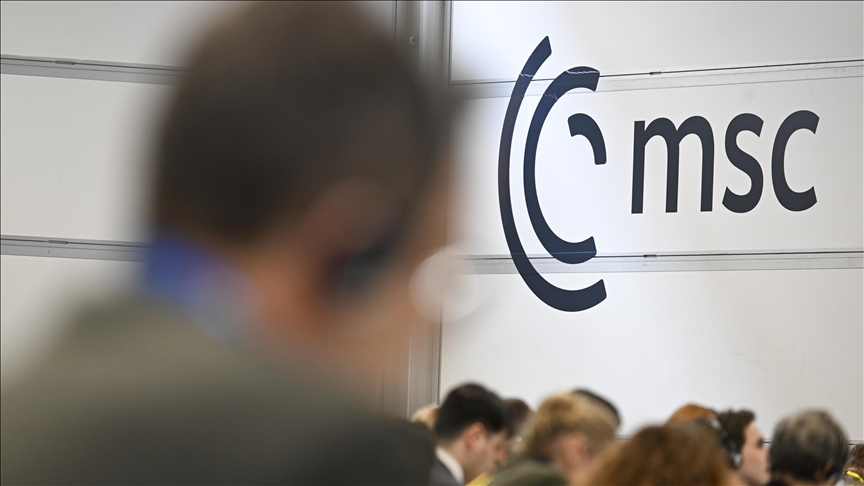
Sahel Strategy Rethink dominated discussions at the Munich Security Conference as United States, European Union, and West African leaders called for a decisive shift away from military-focused counterterrorism strategies toward governance reform and economic engagement.
For more than two decades, Western governments have prioritized security operations in the Sahel region to combat extremist groups. However, speakers at the conference argued that the results have been limited and, in some cases, counterproductive.
Sahel Strategy Rethink Signals Policy Shift from Security to Governance
US Representative Sara Jacobs stated that a security-first model has not delivered lasting peace in the region. She said the emphasis on counterterrorism operations over the past 25 years has failed to address the root causes of instability.
According to Jacobs, narrow military engagement often overlooked governance gaps, economic marginalization, and lack of public services. These weaknesses, she argued, created fertile ground for extremist recruitment and political unrest.
The Sahel region, which includes Mali, Burkina Faso, Niger, Mauritania, and Chad, has experienced repeated coups, insurgencies, and humanitarian crises despite significant international military involvement.
For additional analysis on regional security trends, see:
https://blaqloaded.com
European Union Supports Sahel Strategy Rethink Through Diplomacy
The European Union also endorsed the Sahel Strategy Rethink during the panel discussion. João Gomes Cravinho explained that EU foreign ministers recently adopted a revised framework focused on political dialogue, human security, and socio-economic resilience.
Cravinho emphasized that rebuilding trust requires stronger listening and consultation with local governments and communities. He noted that justice systems, education, healthcare access, and employment programs are essential components of long-term stabilization.
More details about EU foreign policy priorities can be accessed at https://www.eeas.europa.eu.
The Sahel Strategy Rethink reflects growing awareness in Europe that diplomatic engagement and economic investment must accompany security cooperation.
West African Leaders Call for Regional Dialogue in Sahel Strategy Rethink
Regional leaders echoed similar concerns. Mauritania’s defense minister Ould Sidi Hanana described the Sahel crisis as fundamentally economic, though influenced by security, political, and climate-related pressures.
He said unemployment, poverty, and limited infrastructure are central drivers of instability. Addressing these issues, he argued, would reduce vulnerability to extremist groups.
Meanwhile, Julius Maada Bio, President of Sierra Leone and chair of the Economic Community of West African States, urged practical regional engagement. He stressed that cooperation among neighboring states is critical to resolving shared challenges.
Official updates from ECOWAS are available at https://ecowas.int.
Bio cautioned against repeating “the older way of doing things” and encouraged balanced engagement that combines diplomacy, economic growth, and coordinated security efforts.
Sahel Strategy Rethink Addresses Climate and Economic Pressures
Participants also highlighted climate change as a major destabilizing factor in the Sahel. Desertification, shrinking agricultural productivity, and water scarcity have intensified competition for resources.
The Sahel Strategy Rethink recognizes that environmental stress compounds governance weaknesses. Development-focused policies aimed at agricultural resilience, renewable energy expansion, and sustainable infrastructure could reduce long-term risks.
The United Nations provides broader context on Sahel development initiatives at https://www.un.org/africarenewal.
Panelists agreed that without meaningful economic transformation, military efforts alone will remain insufficient.
Why the Sahel Strategy Rethink Marks a Turning Point
The Sahel Strategy Rethink discussed at the Munich Security Conference signals a potential turning point in Western engagement with the region. While security cooperation will continue, leaders increasingly acknowledge that governance reform, social inclusion, and economic opportunity are essential pillars of stability.
Rebuilding trust between international partners and Sahel governments remains a significant challenge. Tensions over past interventions, political transitions, and trafficking networks have complicated relations.
However, officials emphasized that consistent dialogue, community engagement, and accountable governance structures can gradually strengthen regional resilience.
As global attention remains focused on geopolitical conflicts elsewhere, the Sahel Strategy Rethink highlights the urgency of addressing one of the world’s most fragile and strategically significant regions.
The shift from a purely military doctrine toward a more comprehensive political and economic approach may define the next phase of international engagement in West Africa.