 0
0
 0
0
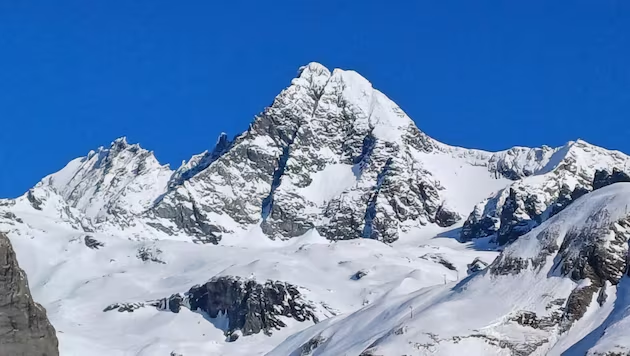
Grossglockner climbing death is the subject of a trial in Austria after a climber’s girlfriend died of hypothermia during a winter ascent of the country’s tallest mountain. The incident occurred on January 19, 2025, and has raised concerns about the dangers of high-altitude winter climbing, preparation, and decision-making in extreme weather conditions.
The climber, identified by Austrian media as Thomas P, allegedly left 33-year-old Kerstin G unprotected and exhausted near the summit during a snowstorm while he went to seek help. The Innsbruck court is examining whether negligence contributed to the tragedy. If convicted, Thomas P could face up to three years in prison.
Prosecutors Allege Negligence
Prosecutors in Innsbruck argue that Thomas P, being the more experienced climber, acted as the responsible guide for the expedition. They claim he made multiple errors that led to the fatality:
-
Starting the climb two hours later than planned, which delayed the summit attempt
-
Failing to carry adequate emergency bivouac equipment, essential for survival in harsh winter conditions
-
Allowing Kerstin G to wear snowboard soft boots, unsuitable for high-altitude, mixed-terrain climbing
Authorities also cited extreme weather conditions, with winds up to 74 km/h (45 mph) and temperatures of minus 8°C (17°F), producing a wind chill of minus 20°C (minus 4°F). Prosecutors contend that Thomas P should have turned back earlier due to these dangerous conditions.
The prosecution claims the couple became stranded near the summit at 8:50 pm and failed to signal a police helicopter passing overhead. Early communication could have facilitated a faster rescue.
For more context on the mountain, see Grossglockner Wikipedia.
Defense Statement
The defense rejects the allegations, describing the incident as a “tragic accident.” Thomas P’s lawyer said that both climbers jointly planned the expedition, felt adequately prepared, and had significant Alpine experience.
According to the defense, the couple initially felt fine near the summit. Severe exhaustion reportedly occurred later, prompting Thomas P to contact mountain police around 12:30 am. Prosecutors claim he left her at 2 am and delayed notifying authorities until 3:30 am, which could have affected the rescue timeline. Strong winds prevented rescue teams from reaching the site overnight.
Timeline of the Fatal Climb
The ascent began on January 19, 2025, with Thomas P and Kerstin G attempting a winter climb of Austria’s tallest peak. The late start, combined with severe weather, contributed to the couple’s predicament. By evening, wind speeds increased and temperatures dropped dramatically. Stranded near the summit, the climbers faced life-threatening conditions.
Authorities emphasize the critical importance of preparation, timing, and decision-making in extreme alpine environments. More information on safe mountain climbing in Austria can be found at the Austrian Alpine Club.
Winter Climbing Risks and Statistics
Winter climbing accidents, such as the Grossglockner climbing death, highlight the risks associated with high-altitude expeditions. Hypothermia, frostbite, and exhaustion are common causes of fatalities. According to the International Climbing and Mountaineering Federation (UIAA), preparation, equipment, and weather monitoring are essential to reduce risks.
Mountains like Grossglockner present unique hazards:
-
Rapidly changing weather conditions
-
Mixed terrain including snow, ice, and rock
-
High winds and extreme temperatures
-
Limited visibility during storms
Climbers are encouraged to carry emergency shelters, appropriate clothing, and survival equipment, particularly when attempting winter ascents.
Lessons from the Grossglockner Climbing Death
This case underscores important safety lessons for climbers:
-
Monitor weather conditions continuously
-
Carry emergency bivouac equipment and survival gear
-
Know personal limits and turn back early when conditions worsen
-
Maintain communication with rescue services during emergencies
The Grossglockner climbing death serves as a reminder that experience alone is not sufficient without proper planning and precautions. For additional alpine safety resources, see Winter Mountaineering Safety Guidelines.
Implications of the Trial
The trial highlights the legal responsibilities of climbers guiding or traveling with partners in high-risk conditions. While the defense emphasizes shared planning and preparation, prosecutors argue that negligence was a critical factor.
The outcome may influence mountaineering safety standards and serve as a reminder of the risks inherent in extreme winter climbing. Climbers are encouraged to follow strict protocols and ensure that all parties are adequately equipped and trained before undertaking high-altitude expeditions.
For more news, please visit our homepage