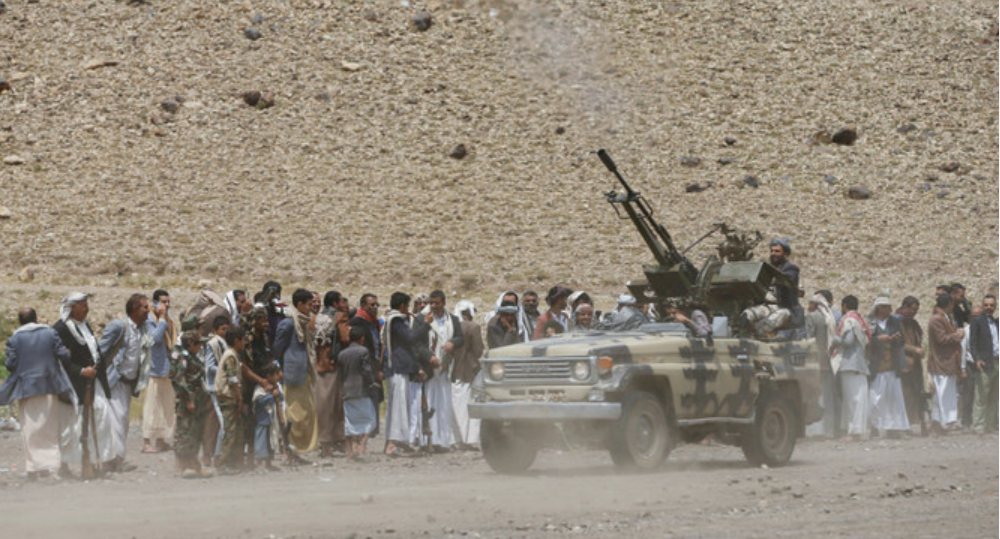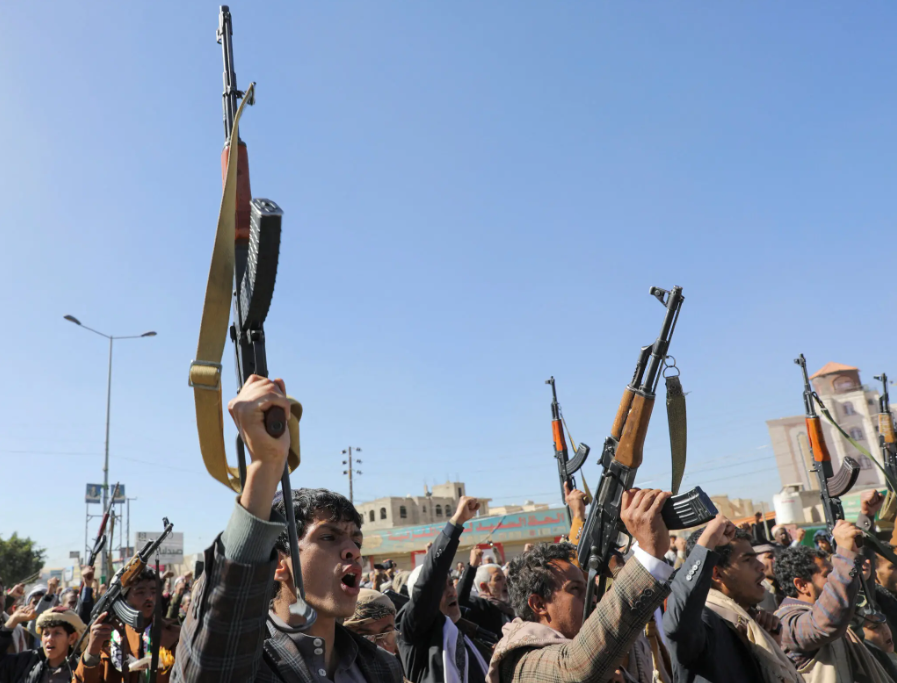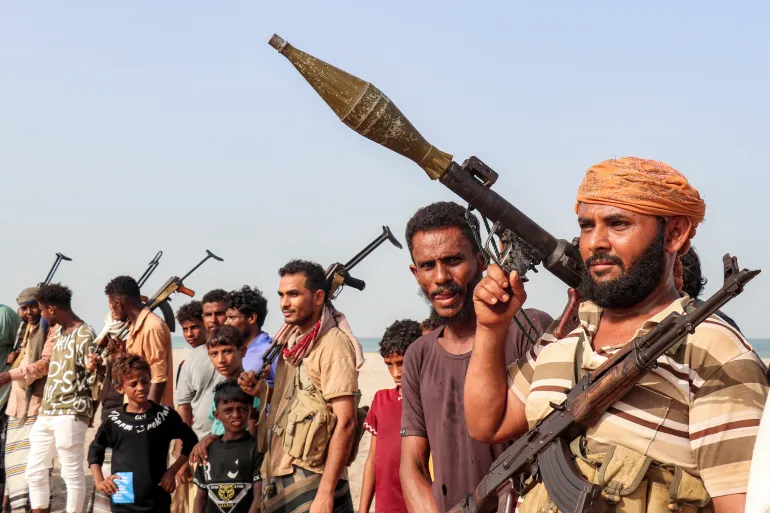
In recent weeks, Yemeni army has increased their attacks on the Houthis, carrying out coordinated strikes on their military positions on several battlefronts. These operations has reshaped Yemen’s military strategy since the UN‑brokered truce reduced large‑scale fighting nearly four years ago.
The Yemeni Ministry of Defense says the latest operation is meant to weaken the Houthis by targeting their missile launch sites, drone bases, weapons storage areas, and groups of fighters in places like Marib and Al‑Jawf provinces.

Yemeni strikes against the Houthi Coup
The Yemeni armed forces are now taking a more active approach, launching strikes before the Houthis can attack instead of just reacting to their moves.
Earlier this month on July 3rd, Yemen’s Defense Ministry said government forces struck the runway at Sanaa International Airport. They claimed the attack stopped an Iranian plane from landing. According to the ministry, the aircraft was carrying members of Iran’s Revolutionary Guard, along with weapons and financial support meant for the Houthis. This indicates that the air force is back in action after years of being mostly inactive.
People living in areas controlled by the Houthis said that security has tightened since the recent fighting. According to some locals, the Houthi forces have added more checkpoints, increased their presence around villages and farmland, and stepped up security near the front lines. Some residents see these approaches as a way to stop unrest, while government forces continue their attacks.
Military analysts stated that the recent fighting shows a clear change in the government’s battlefield tactics, but not a full‑scale offensive. They believe steady strikes on Houthi bases could cut off supply lines, limit the group’s ability to fire missiles and drones, and put more pressure on key positions in northern Yemen.
At the same time, analysts warned that the situation is still complicated, and what happens next will depend on both the fighting and ongoing political talks.