 0
0
 0
0
Peter Mandelson Steps Down From the House of Lords but Keeps His Title
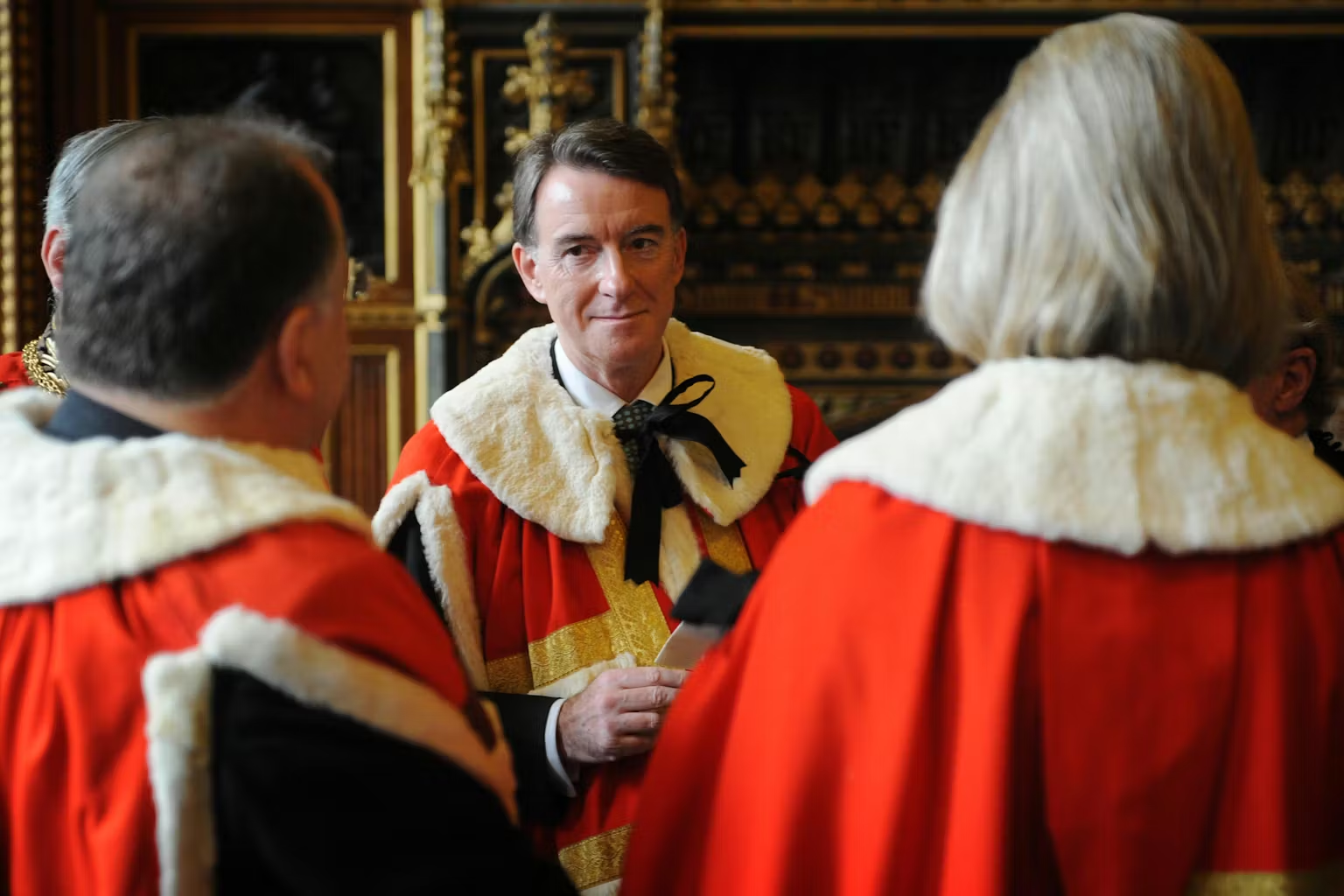
Peter Mandelson has resigned from the House of Lords following renewed scrutiny over his past links to Jeffrey Epstein. The allegations include claims of financial transfers involving Mandelson’s husband, lobbying against United States bank reforms while serving as a government minister, and sharing sensitive information.
Prime Minister Keir Starmer had publicly indicated that Mandelson should leave the House of Lords. However, the prime minister does not have the legal authority to remove a sitting peer. Mandelson’s decision to resign avoided a prolonged constitutional dispute over removal powers.
Despite stepping down from the chamber, Mandelson retains his peerage title. He remains Lord Peter Mandelson of Foy and Hartlepool, even though the prime minister has stated that continued use of the title is inappropriate.
Why Removing a Peer Was Once Nearly Impossible
Before reforms introduced in 2014, membership of the House of Lords was effectively for life. Peers could not formally resign and could remain members even if they stopped attending indefinitely. Suspension was possible, but permanent expulsion was not.
Imprisonment alone did not automatically end membership. Death was the only guaranteed way a peer lost their seat. This system left little room to address serious misconduct.

What Changed After the 2014 and 2015 Reforms
Legislative reforms introduced limited ways for peers to leave or be removed. These include voluntary resignation or retirement through written notice, automatic removal for non attendance during an entire parliamentary session without approved leave, and expulsion following conviction for a serious criminal offence with a prison sentence exceeding one year.
Further changes in 2015 allowed the House of Lords to suspend or expel members following findings of serious misconduct by its Conduct Committee.
Even with these reforms, the prime minister, the government, and the monarch cannot directly remove a peer from the House of Lords.
Why Mandelson’s Title Remains
Leaving the House of Lords does not automatically cancel a peerage title. Under long standing constitutional principles, once the Crown grants a peerage, removing it is extremely difficult.
A peerage title cannot be voluntarily surrendered, and even the Crown cannot revoke it after it has been created through letters patent. The government has confirmed that only an Act of Parliament can remove a peerage once granted.
This has happened only in exceptional cases, such as during the First World War when peers who supported Britain’s enemies lost their titles. More recently, Parliament confirmed the same legal standard when royal titles were removed from Andrew Mountbatten Windsor.
Because of these legal barriers, officials have reportedly described the removal of Mandelson’s title as constitutionally difficult, even with a strong parliamentary majority.
What This Means for Future Reform
Mandelson’s resignation has allowed both the House of Lords and the government to avoid immediate action to expel a peer. However, the issue remains politically sensitive. The Labour Party has previously pledged to make it easier to remove disgraced members.
Any future reform would likely need to begin within the House of Lords itself. Granting the prime minister direct removal powers could weaken constitutional checks and balances and set a precedent that future governments might misuse.
Reforms in this area will need to balance accountability with the long term stability of the UK constitutional system.