



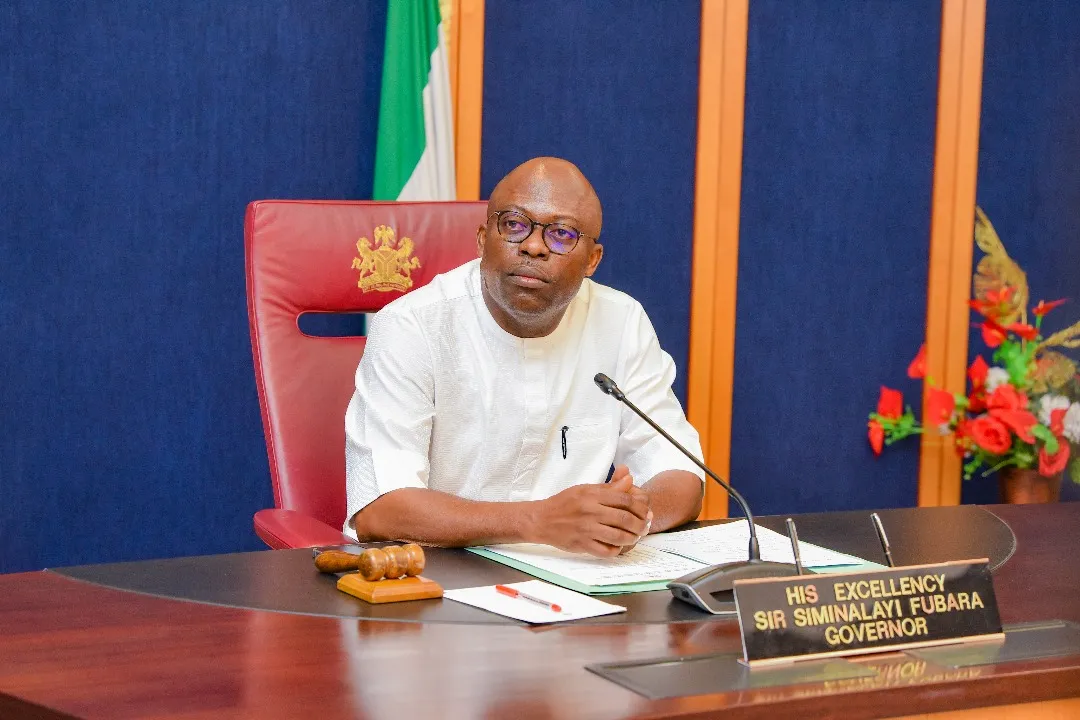
Nigeria blue economy investment Fubara has become a major talking point following renewed calls by Rivers State Governor Siminalayi Fubara for increased private sector participation in Nigeria’s maritime and ocean-based economic activities. The Nigeria blue economy investment Fubara discussion centers on unlocking the vast economic potential of the country’s coastal and marine resources through strategic partnerships between government and private investors.
The governor made the remarks during a major economic conference in Port Harcourt focused on trade, investment, and maritime development across the Gulf of Guinea region.


Overview of Fubara’s Call for Blue Economy Investment
The Nigeria blue economy investment Fubara initiative highlights the need for urgent action in developing Nigeria’s ocean-based resources. Governor Fubara stressed that failure to act quickly could result in foreign dominance of the sector.
Key message from the conference
At the Annual General Meeting and conference of the Nigerian Association of Chambers of Commerce, Industries, Mines and Agriculture (NACCIMA), the governor emphasized:
- The importance of private sector participation
- The need to harness maritime resources
- The urgency of economic diversification
Conference theme and focus
The event was centered on:
- Gulf of Guinea economic opportunities
- Blue economy development pathways
- Trade, investment, and maritime security
- Vision for a $1 trillion regional economy
Understanding Nigeria’s Blue Economy Potential
The Nigeria blue economy investment Fubara discussion reflects growing attention on the country’s maritime resources as an alternative revenue source.
What the blue economy includes
The blue economy covers:
- Fishing and aquaculture
- Marine transportation and shipping
- Offshore energy resources
- Coastal tourism development
Economic importance for Nigeria
Nigeria’s blue economy is considered significant because it:
- Offers diversification beyond oil and gas
- Supports job creation in coastal regions
- Provides export and trade opportunities
- Strengthens regional maritime trade
Fubara Warns Against Foreign Dominance
A key part of the Nigeria blue economy investment Fubara message was the warning that foreign entities may dominate the sector if local investors fail to act.


Concerns raised by the governor
Fubara noted that:
- Foreign trawlers operate in Nigerian waters
- Some operators extract resources without paying taxes
- Local participation in the sector remains limited
Call for urgent action
He stressed that:
- “Nature does not allow vacuum” in economic sectors
- Nigeria must protect its maritime resources
- Immediate investment is necessary to retain economic control
Role of Private Sector in Blue Economy Development
The Nigeria blue economy investment Fubara initiative strongly emphasizes collaboration between government and private investors.
Government-private partnership focus
Fubara called for:
- Increased private sector investment
- Joint development initiatives
- Infrastructure expansion in maritime industries
Areas of opportunity for investors
Key investment areas include:
- Commercial fishing and seafood processing
- Port development and logistics
- Marine tourism and hospitality
- Offshore energy exploration
Economic Potential of the Gulf of Guinea Region
The Nigeria blue economy investment Fubara discussion is tied to broader regional ambitions for economic transformation.
$1 trillion economic vision
The conference explored pathways toward:
- A $1 trillion regional economy
- Expanded trade networks in West Africa
- Improved maritime security and cooperation
Strategic importance of the Gulf of Guinea
The region is important because it:
- Hosts major shipping routes
- Contains rich marine resources
- Serves as a trade hub for West Africa
Security and Regulation in the Maritime Sector
The Nigeria blue economy investment Fubara initiative also touches on security challenges affecting Nigeria’s waters.
Maritime security concerns
Issues include:
- Illegal fishing activities
- Unregulated foreign vessels
- Weak enforcement of maritime laws
Importance of regulation
Experts emphasize:
- Stronger surveillance systems
- Improved enforcement capacity
- Better monitoring of coastal activities
Economic Diversification Beyond Oil and Gas
The Nigeria blue economy investment Fubara call aligns with Nigeria’s broader push for economic diversification.
Reducing oil dependency
The blue economy offers:
- Alternative revenue sources
- Sustainable economic growth options
- Long-term investment opportunities
Job creation potential
Development of the sector can support:
- Fisheries and aquaculture jobs
- Maritime logistics employment
- Tourism and hospitality growth
Government Commitment to Investment Support
Governor Fubara reaffirmed his administration’s commitment to supporting investment in the blue economy sector.
Enabling environment initiatives
He pledged to:
- Encourage private investment
- Improve business-friendly policies
- Support infrastructure development
Long-term development vision
The goal is to:
- Unlock economic potential of Rivers State
- Attract foreign and domestic investment
- Strengthen Nigeria’s maritime economy

Frequently Asked Questions (FAQ)
What is Nigeria blue economy investment Fubara about?
It refers to Governor Fubara’s call for private sector investment in Nigeria’s maritime and ocean-based economic resources.
What is the blue economy in Nigeria?
The blue economy includes fisheries, shipping, marine tourism, and offshore resources that can generate economic value.
Why is private sector investment important?
Private investment is needed to develop infrastructure, create jobs, and prevent foreign dominance of Nigeria’s maritime resources.
What did Fubara warn about?
He warned that foreign operators may exploit Nigeria’s waters if local investors fail to actively participate.
Conclusion
The Nigeria blue economy investment Fubara initiative highlights growing awareness of the economic importance of Nigeria’s maritime resources. With strong emphasis on private sector participation, Governor Fubara’s message underscores the need for urgent action to harness opportunities in fishing, shipping, and marine development.
As discussions continue, the blue economy remains a critical pathway for diversification, investment, and long-term economic growth in Nigeria.
Click here for more news


