 0
0
 0
0
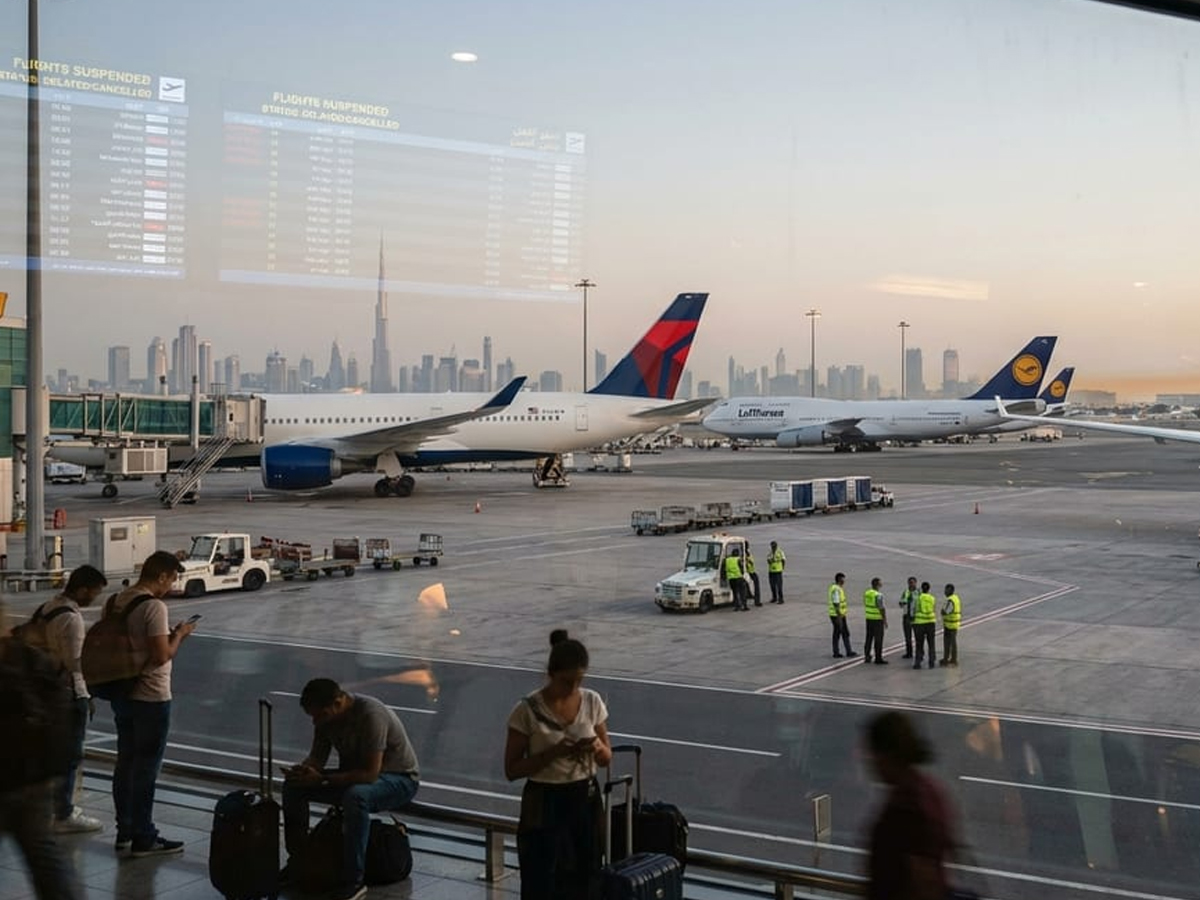
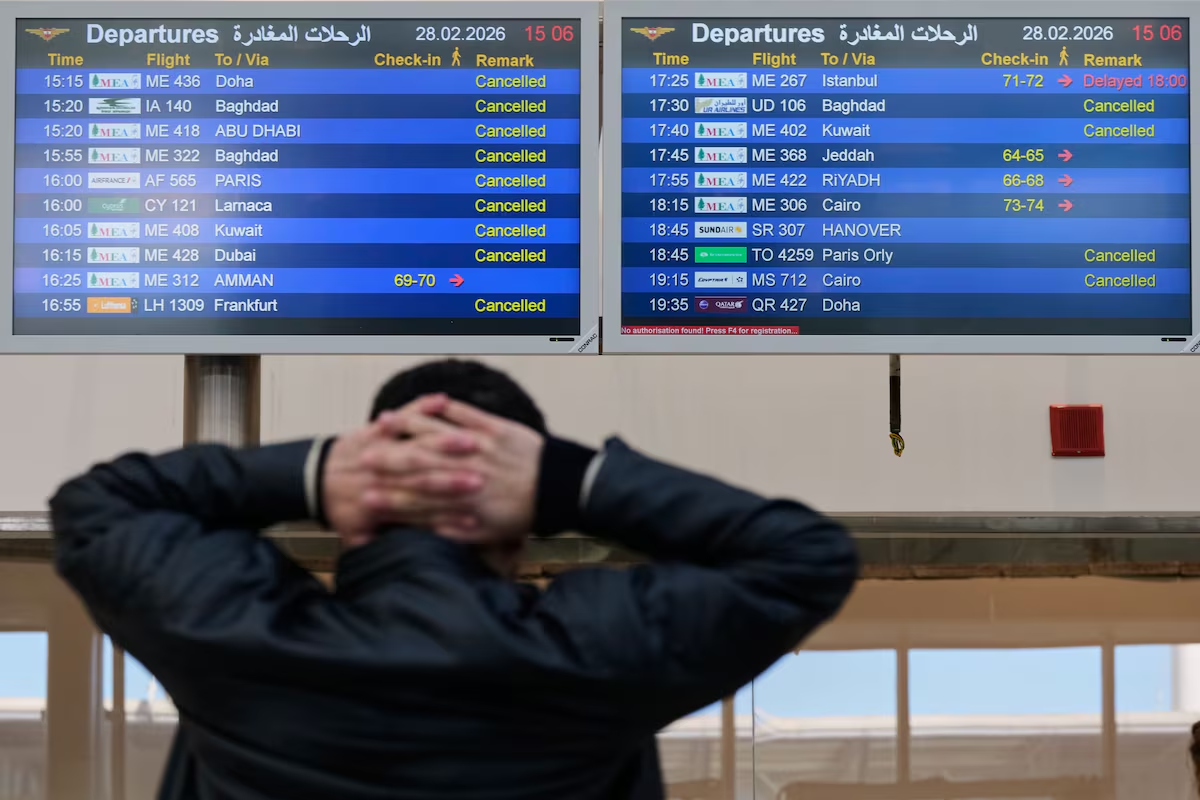
Middle East Flights Suspension has caused widespread disruption across international aviation networks following coordinated military strikes involving the United States and Israel targeting Iran. The escalating conflict has led to sweeping airspace closures, forcing airlines across Asia and Europe to cancel flights and reroute aircraft.
According to a report by Reuters, flight tracking maps on Saturday showed near empty skies over Iran, Iraq, Kuwait, Israel and Bahrain as airlines suspended operations due to heightened security concerns.
Airspace Closures Across Key Countries
The sudden escalation began after the United States and Israel launched strikes on Iran. Iran responded with missile attacks, prompting several countries to close or restrict their airspace as a precautionary measure.
Countries that announced full or partial airspace closures include:
-
Israel
-
Iran
-
Iraq
-
Bahrain
-
Qatar
-
Kuwait
-
Jordan
The closures immediately affected major aviation corridors that connect Europe and Asia through strategic Gulf hubs.
Major Airports Suspend Operations
Two of the region’s most significant airports temporarily halted operations:
Authorities advised passengers not to travel until further notice. Airlines operating out of these hubs were forced to cancel or delay services as safety assessments continued.
Among the affected carriers were:
-
Emirates
-
flydubai
Both airlines temporarily halted selected routes to and from Dubai amid the uncertainty.
European and Regional Airlines Cancel Flights
The Middle East Flights Suspension extended beyond Gulf carriers. Several European airlines suspended or cancelled services to key destinations including Tel Aviv, Dubai, Abu Dhabi, Amman and Bahrain.
Affected European carriers include:
-
British Airways
-
Lufthansa
-
Air France
-
Iberia
-
Wizz Air
Regional operators also paused select routes, including:
-
Qatar Airways
-
Kuwait Airways
-
Turkish Airlines
Preliminary data from aviation analytics firm Cirium showed nearly 40 percent of flights to Israel were cancelled, while about 6.7 percent of flights across the wider Middle East region were affected.

EU Aviation Advisory Adds Pressure
The European Union Aviation Safety Agency also advised airlines to avoid the affected airspace until further notice. The advisory added another layer of operational difficulty for carriers already navigating complex rerouting decisions.
Airlines have been forced to redirect flights over longer routes to avoid restricted zones. This has increased fuel costs, extended travel times and disrupted global schedules.
Impact on Global Travel Corridors
The Middle East is one of the world’s busiest aviation corridors. Major hubs such as Dubai, Doha and Abu Dhabi serve as key transit points linking Europe, Asia and Africa.
With airspace closures in place, thousands of passengers were left stranded at major international airports. Airlines are working to reorganise schedules, rebook passengers and manage operational backlogs.
Industry analysts warn that if restrictions persist, ripple effects could spread across international travel networks, affecting long haul connections and cargo operations.
Nigeria Issues Security Advisory
In response to rising tensions, Nigeria’s Federal Government issued a security advisory to Nigerians living in Iran and neighbouring Gulf countries.
The advisory followed reported explosions in Tehran and other cities after coordinated strikes by the United States and Israel. The government stated that it is closely monitoring military developments in the region.
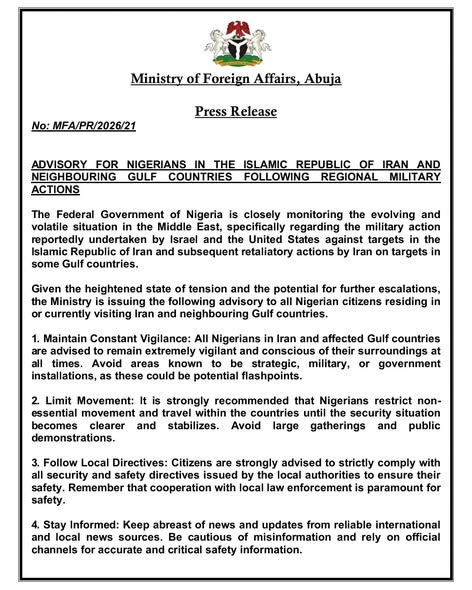
Nigerians residing in affected countries have been urged to remain alert and prioritise personal safety as the situation evolves.

What This Means for Travelers
Travelers with scheduled flights to or through the Middle East are advised to:
-
Check airline updates regularly
-
Confirm flight status before heading to the airport
-
Explore alternative routes where available
-
Follow official government travel advisories
Given the strategic importance of the region to global aviation, prolonged disruption could significantly affect international travel schedules in the coming days.
PLEASE CLICK HERE FOR MORE NEWS