


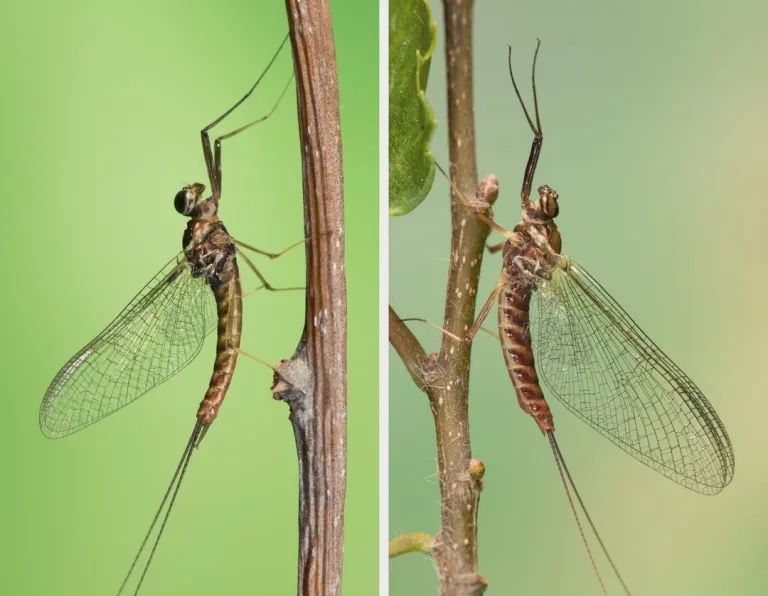
The recent mayfly mating behavior study has revealed surprising details about how these short-lived insects reproduce in midair. Scientists in Germany used freezing techniques and advanced 3D imaging tools to capture mating mayflies in action and study their anatomy in unprecedented detail.
The findings provided researchers with a closer look at the highly specialized reproductive structures of the mayfly species Ecdyonurus venosus. The study also explained how these insects manage to mate while flying above rivers and streams.
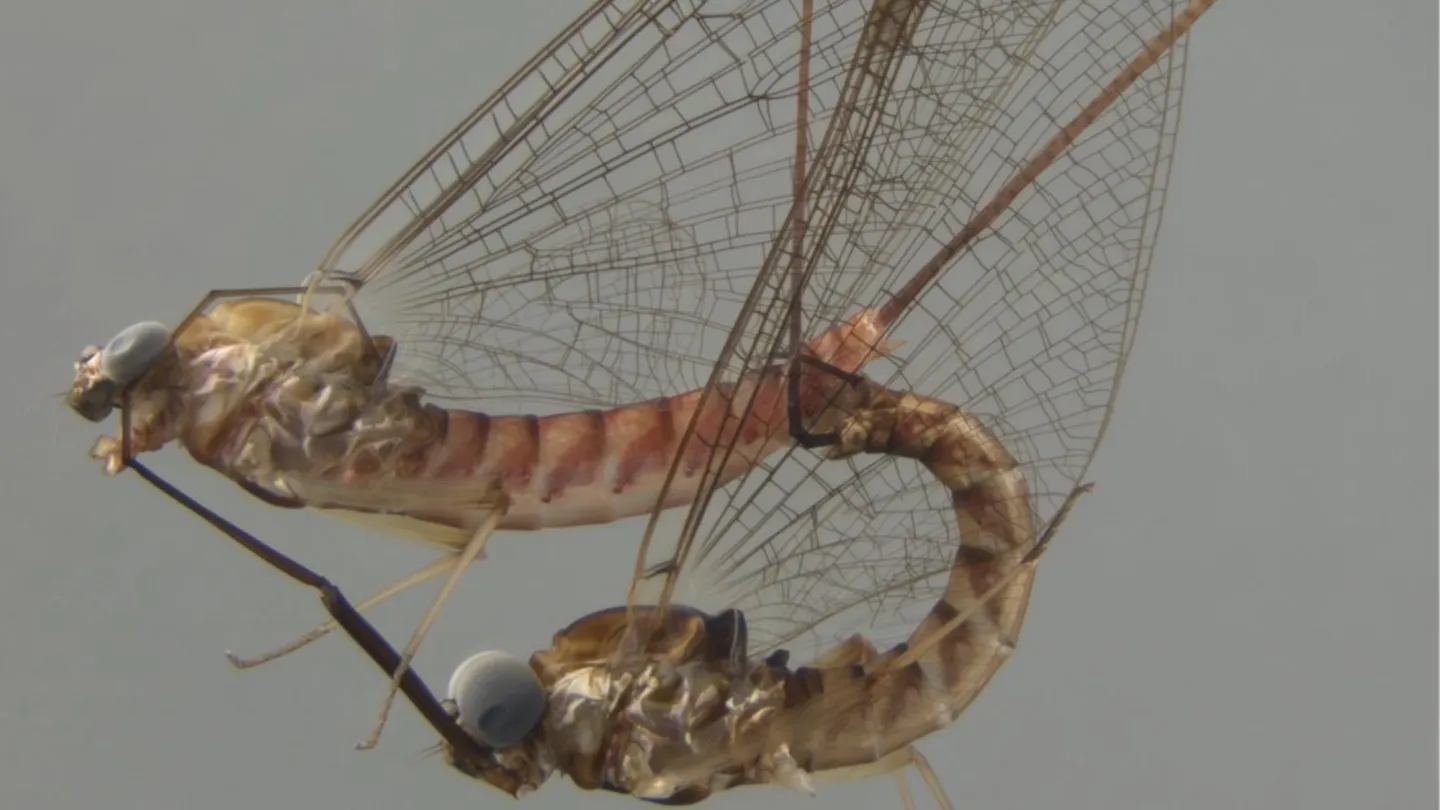

Researchers Captured Mating Mayflies Midair
Scientists involved in the mayfly mating behavior study focused on mayflies living in Germany’s Black Forest region. Because mayfly mating happens quickly and entirely in flight, researchers had struggled for years to observe the process closely.
To solve the problem, the research team used long-handled nets to catch mating pairs while they were airborne. Some insects separated immediately after being captured, but others remained connected long enough for researchers to preserve them using freezing spray.
The preserved insects were later stored in ethanol for further examination in the laboratory.
Why Scientists Froze the Insects
Freezing the insects allowed researchers to preserve the exact position of the mating structures during copulation. This made it possible to examine how the insects physically interact during reproduction.
Without preserving them in the middle of mating, scientists would have had difficulty understanding the mechanics involved because the process lasts only a few seconds.
Advanced Imaging Technology Was Used
After preservation, researchers used synchrotron X-ray microtomography, commonly called micro-CT scanning, to create detailed digital 3D models of the insects.
The scans were carried out using equipment at the Karlsruhe Institute of Technology in Germany. This technology allowed scientists to examine internal structures without damaging the insects.
The imaging process produced highly detailed visualizations of the insects’ reproductive anatomy.
Understanding the Mayfly Life Cycle
The mayfly mating behavior study also highlighted the unusual life cycle of mayflies.
Mayflies spend most of their lives underwater as larvae. Depending on the species, this stage can last several months or even years.
Once they become adults, however, their lives become extremely short.
Adult Mayflies Stop Eating
One of the most unusual biological traits of mayflies is that adult insects no longer eat. Their digestive systems become nonfunctional after they emerge from water.
As adults, their primary biological purpose is reproduction.
This limited adult lifespan explains why mating behavior must happen quickly and efficiently.
Swarming Above Water
Male mayflies gather in large swarms over rivers and streams to attract females. These swarms can contain hundreds or thousands of insects moving rapidly through the air.
When females enter the swarm, mating begins almost immediately.
Scientists observed that the male attaches himself beneath the female while both insects remain airborne.
Mating Happens in Flight
During copulation, the male grips the female using specialized front legs and reproductive appendages called claspers.
The male bends his abdomen upward to connect with the female’s reproductive pouch.
This airborne mating process is considered one of the more physically demanding reproductive behaviors among insects.
The Unique Anatomy of Ecdyonurus Venosus
One major discovery from the mayfly mating behavior study involved the anatomy of male mayflies.
Researchers found that male Ecdyonurus venosus mayflies possess paired reproductive structures that function together during mating.
Specialized Claspers Improve Grip
The male insect uses claspers positioned near its reproductive organs to hold onto the female securely.
This grip is important because mating occurs while flying at high speed over moving water.
Researchers also noted that rival males sometimes attempt to interfere during copulation, making a strong attachment even more necessary.
Reproductive Structures Change Shape
The study found that the male reproductive organ changes shape during mating.
Powerful internal muscles cause sections of the reproductive structure to fold and reposition during copulation.
This movement helps stabilize the connection between the male and female insects.
Tiny Spines Help Maintain Contact

Researchers observed that tiny spine-like structures help anchor the reproductive organs in place.
These structures stretch the female’s reproductive pouch, allowing sperm to be transferred more effectively.
Scientists believe this adaptation increases the likelihood of successful fertilization.
Why the Study Matters
The mayfly mating behavior study contributes to a broader understanding of insect evolution and reproductive biology.
Although mayflies are among the oldest groups of winged insects on Earth, scientists previously knew very little about their mating process.
A Rare Look Into Insect Evolution
Researchers say the findings could help scientists better understand how reproductive systems evolved in ancient insects.
Mayflies belong to one of the earliest insect groups capable of powered flight. Their anatomy may therefore provide clues about early insect evolution.
Studying these insects can also help biologists compare reproductive strategies across different insect species.
Importance of Modern Imaging
The study demonstrated how advanced imaging technologies can reveal biological details that traditional methods may miss.
Micro-CT scanning allowed scientists to examine soft tissue movement and organ positioning without physically dissecting the insects.
This approach is increasingly being used in entomology and other biological sciences.
Insights Into Aquatic Ecosystems
Mayflies are also considered important indicators of freshwater ecosystem health.
Because their larvae live in rivers and streams, mayfly populations can reflect water quality conditions.
Understanding their biology may help researchers monitor environmental changes in freshwater habitats.
What Happens After Mating?
The mayfly mating behavior study also examined what happens after reproduction.
Researchers noted that adult mayflies typically survive for only a very short period after mating.
Males Often Die Quickly
Male mayflies frequently die from exhaustion after prolonged swarming and mating activity.
Their energy reserves are limited because they no longer eat as adults.
This makes their adult lifespan extremely brief.
Females Lay Eggs in Water
Female mayflies release fertilized eggs into freshwater environments, often in upstream sections of rivers.
The eggs later hatch into aquatic larvae, beginning the cycle again.
After laying eggs, females also die shortly afterward.
One of Nature’s Shortest Adult Lifespans
Some mayfly species live for only a few hours as adults, although others survive for several days.
Their rapid transition from emergence to reproduction makes them unique among insects.
Scientists continue to study these insects because their biology remains poorly understood compared to many other insect groups.

Broader Scientific Interest in Insect Reproduction
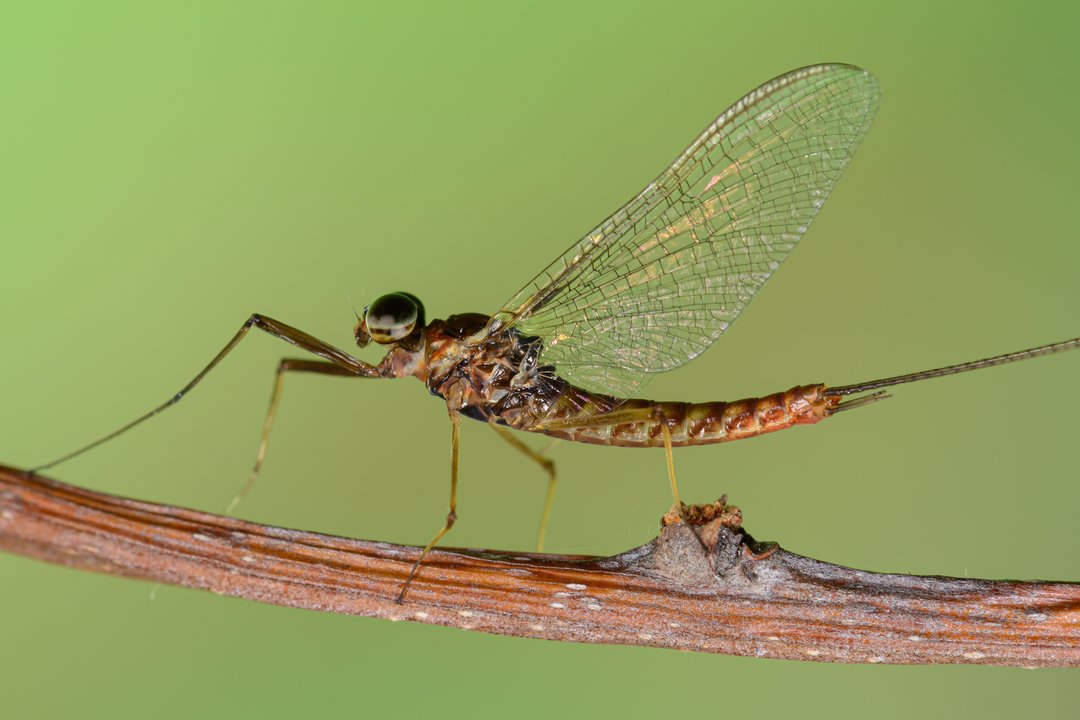
The mayfly mating behavior study joins a growing number of scientific investigations into insect reproduction and biomechanics.
Researchers increasingly use high-speed cameras, digital imaging, and 3D scanning tools to understand how insects move, mate, and survive in complex environments.
Studies like this may also contribute to future research involving:
- Evolutionary biology
- Biomechanics
- Environmental science
- Reproductive adaptation
- Aquatic ecosystem monitoring
Scientists believe many insect species still possess biological mechanisms that remain undocumented.
FAQ
What did scientists discover in the mayfly mating behavior study?
Scientists discovered that male mayflies use specialized reproductive structures, claspers, and spine-like features to maintain contact with females during midair mating.
Why did researchers freeze mating mayflies?
Researchers froze mating mayflies to preserve their exact reproductive positions for detailed anatomical analysis using 3D imaging technology.
How long do adult mayflies live after mating?
Many adult mayflies survive only a few hours or days after mating because they stop eating once they reach adulthood.
Why is mayfly mating important to scientists?
Studying mayfly mating helps researchers understand insect evolution, reproductive adaptation, and freshwater ecosystem health.
The mayfly mating behavior study provided scientists with one of the clearest looks yet at how these ancient insects reproduce in flight. Through advanced imaging and preservation methods, researchers uncovered complex biological adaptations that had previously remained hidden. The findings also highlighted the importance of mayflies in understanding insect evolution and aquatic ecosystems.
Click here for more news


