Marco Rubio Signals Shift as World Enters New Geopolitical Era
Posted on
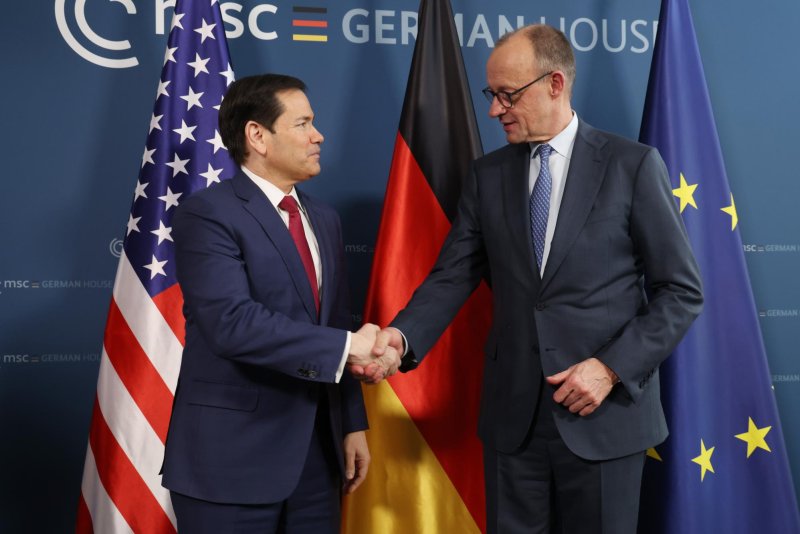
U.S. Secretary of State Marco Rubio meets German Chancellor Friedrich Merz during the Munich Security Conference.
0
0
Read Time:4 Minute, 8 Second
U.S. Secretary of State Marco Rubio has warned that global politics has entered what he described as a new era, urging European allies to reassess their roles and adapt to rapidly changing international dynamics.
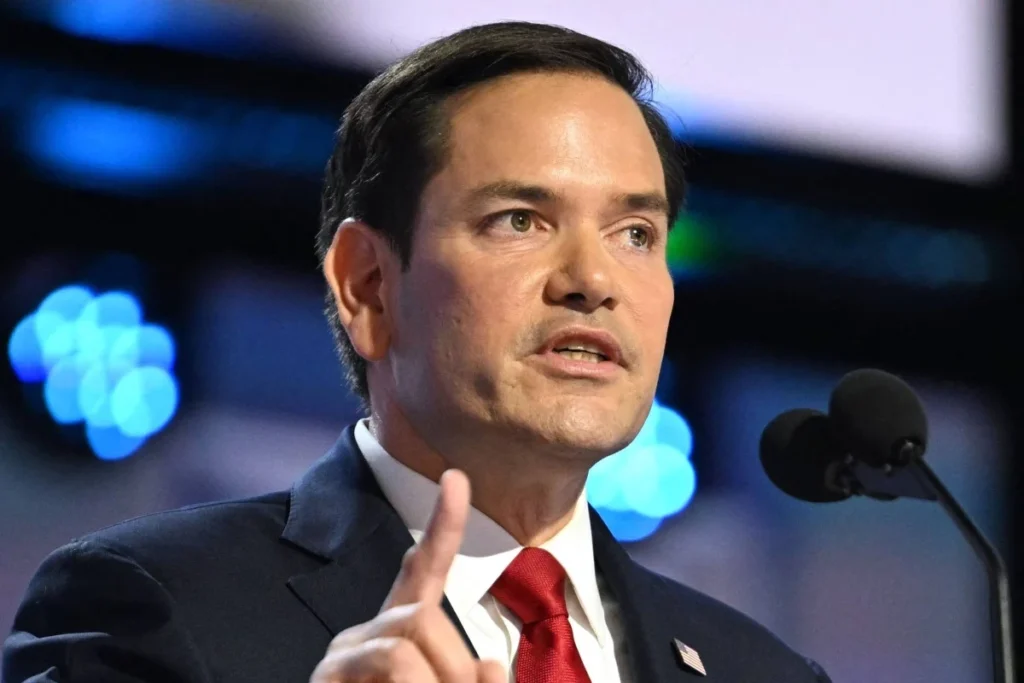
The U.S. Secretary of State delivers remarks during a global security conference addressing shifting geopolitical dynamics.
Speaking before departing Washington to attend the annual Munich Security Conference, Rubio emphasized that longstanding assumptions about global stability and trans Atlantic cooperation are evolving. His remarks come amid renewed debates over NATO, trade relations, and European defense independence.
Rubio Calls for Reassessment of Global Roles
Rubio told reporters that the world order familiar to previous generations no longer exists. He stressed the importance of candid discussions between the United States and its European partners.
According to Rubio, the pace of geopolitical change requires governments to rethink strategies and clarify their positions on defense, economic cooperation, and global leadership. He noted that private discussions with allied nations have already begun and expressed hope that meetings at the Munich Security Conference would further define shared priorities.
The Munich Security Conference is one of the most significant annual gatherings for global security leaders, providing a platform for dialogue between North American and European policymakers.
Tensions Over Greenland and Trade
Trans Atlantic relations faced turbulence earlier this year following renewed discussions about Greenland. President Donald Trump had previously suggested that the United States should acquire Greenland, an autonomous territory within the Kingdom of Denmark and a NATO member.
The proposal sparked diplomatic concerns across Europe, particularly among Danish and European Union officials. Discussions intensified after trade measures were also placed under review, including potential tariffs targeting European partners.
Although tensions eased after reassurances that no force would be used and certain tariff measures were paused, European leaders began reassessing their strategic dependencies.
The situation prompted European Union lawmakers to delay progress on a previously negotiated trade agreement with the United States, reflecting broader uncertainty in the relationship.
Europe Pushes for Strategic Autonomy
In response to shifting signals from Washington, several European leaders have accelerated conversations about defense independence.
French President Emmanuel Macron has consistently advocated for Europe to strengthen its own security capabilities. He has called for the continent to act as a strategic power capable of managing its defense and foreign policy priorities without overreliance on external partners.
German Chancellor Friedrich Merz confirmed that he has engaged in confidential discussions with Macron about exploring a European nuclear deterrent framework. While Germany remains bound by international agreements that prohibit it from acquiring nuclear weapons, the dialogue reflects ongoing concerns about long term security arrangements.
Currently, Britain and France are the only European nations possessing nuclear weapons, and they form part of NATO’s broader deterrence structure.
A scenic view of Nuuk, Greenland, highlighting the Arctic landscape and coastal settlement amid geopolitical discussions.
NATO Leaders Emphasize Continued Cooperation
Despite debates over autonomy, several European officials have stressed the importance of maintaining strong ties with the United States.
NATO Secretary General Mark Rutte and foreign ministers from Germany and the Netherlands highlighted the need for Europe to increase defense spending and strengthen security commitments while preserving the trans Atlantic alliance.
Danish Prime Minister Mette Frederiksen confirmed plans to meet with Rubio to discuss Greenland and broader security concerns. Denmark has maintained that Greenland’s status is not open for negotiation, underscoring sovereignty considerations within NATO.
In addition, a group of former U.S. ambassadors to NATO and former American supreme commanders in Europe issued an open letter urging continued U.S. engagement in NATO. They described the alliance as a force multiplier that enhances Washington’s global reach and effectiveness.
Previous Criticism at Munich Conference
The latest discussions follow sharp criticism delivered at last year’s Munich Security Conference. U.S. Vice President JD Vance criticized certain European policies, citing concerns about free speech restrictions, migration management, and shared democratic values.
That speech intensified conversations about ideological and policy differences within the alliance. This year’s conference is seen as an opportunity to recalibrate those discussions and reaffirm shared commitments.
A Defining Moment for US Europe Relations
Rubio characterized the present moment as pivotal for international relations. He suggested that while the alliance between the United States and Europe remains intact, its structure and expectations may evolve.
Security experts view the Munich Security Conference as a key indicator of how the United States and Europe will navigate future cooperation in areas such as defense spending, economic policy, and global conflict management.
As geopolitical challenges grow more complex, leaders on both sides of the Atlantic are weighing how to balance national interests with collective security commitments.
The conversations in Munich may shape the next phase of US Europe relations, NATO strategy, and broader global security planning in what officials describe as an emerging new era in geopolitics.
At BlaqLoaded Promotions, we specialize in delivering high-impact media and music promotion services designed to help artists, brands, and creatives reach a wider audience.
Lebanon peacekeepers roadside explosion 2026 has drawn global attention after multiple United Nations personnel were killed in separate incidents within just 24 hours in southern […]
A South Korean local official has faced widespread backlash after suggesting the country should import young foreign women to address its falling birth rate. Kim […]
Trump Warns of Further Military Action United States President Donald Trump has warned that the US could launch more military strikes in Nigeria. He said […]


 0
0
 0
0