


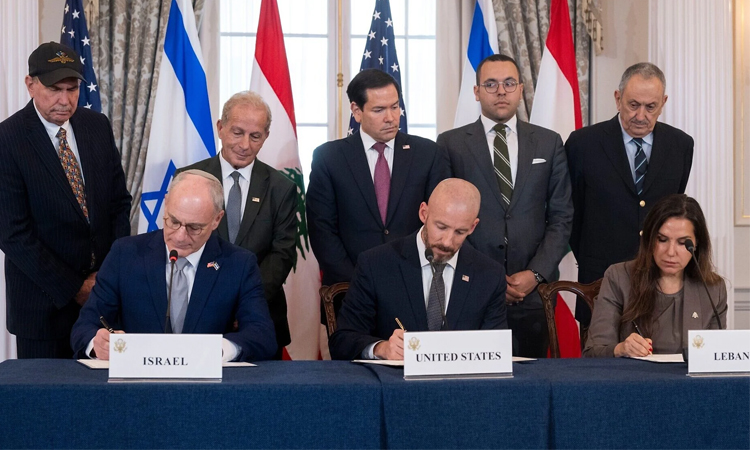
The Lebanon Israel agreement EU support has been described as a significant diplomatic development after European Commission President Ursula von der Leyen welcomed a new US-mediated framework between Lebanon and Israel. The Lebanon Israel agreement EU support highlights growing international efforts to reduce tensions and promote stability in the Middle East.
Von der Leyen emphasized that the agreement represents a critical step away from escalation, while also stressing the importance of sovereignty, disarmament efforts, and humanitarian assistance in the region.

EU Response to Lebanon-Israel Framework Agreement
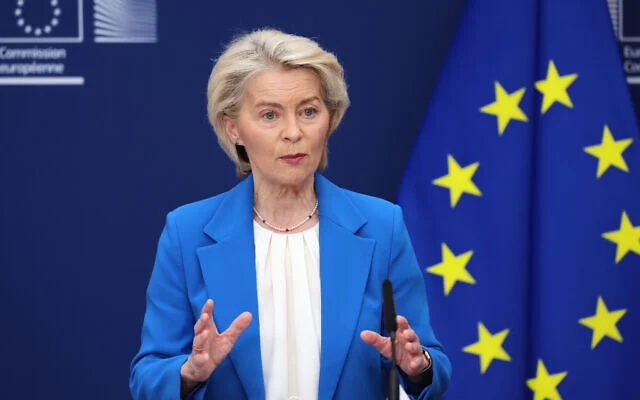
European Commission President Ursula von der Leyen publicly welcomed the agreement, describing it as an important move toward reducing regional conflict risks.
Statement on Regional Stability
In her remarks, she stressed that sustained peace requires de-escalation across all involved territories.
Key points from her statement include:
- Support for the US-mediated framework
- Recognition of reduced escalation risks
- Emphasis on long-term peace conditions
The Lebanon Israel agreement EU support reflects the European Union’s ongoing diplomatic engagement in Middle East peace efforts.
Role of United States Mediation
Von der Leyen also acknowledged the role played by Washington in facilitating discussions between Lebanon and Israel.
Key Diplomatic Contributions
- Mediation between conflicting parties
- Support for framework negotiations
- Encouragement of dialogue-based resolution
Key Conditions Highlighted by EU Leadership
The EU statement also outlined conditions considered essential for maintaining stability after the agreement.
Focus on Sovereignty and Security
One of the main concerns raised was ensuring that Lebanon’s sovereignty and territorial integrity remain intact.
Key Requirements Mentioned
- Preservation of national sovereignty
- Respect for territorial boundaries
- Reduction of armed tensions
The Lebanon Israel agreement EU support underscores that peace efforts must be supported by structural political stability.
Disarmament of Non-State Groups
A major element of the EU’s position is the call for disarmament of non-state armed groups operating in the region.
Strategic Goals
- Reduce risk of renewed conflict
- Strengthen state authority in Lebanon
- Support long-term regional peace
Humanitarian Assistance and EU Financial Support
Beyond diplomacy, the European Union also highlighted its commitment to humanitarian relief efforts in the region.
€100 Million Aid Package for Displaced Populations
The EU announced continued humanitarian support for people affected by displacement.
Aid Package Details
- €100 million mobilized assistance
- Focus on displaced civilians
- Support for emergency relief operations
The Lebanon Israel agreement EU support includes both political backing and humanitarian intervention.
Areas of Humanitarian Focus
EU assistance is expected to target:
- Emergency shelter and housing
- Food and medical aid
- Support for vulnerable communities
Regional Impact of the Agreement
The Lebanon-Israel framework has broader implications for stability across the Middle East.


Reduction in Escalation Risks
The agreement is seen as an attempt to prevent further military escalation in the region.
Key Stability Factors
- Lower risk of cross-border conflict
- Encouragement of diplomatic engagement
- International monitoring of compliance
Political Reactions in the Region
The agreement has drawn attention across multiple countries, with varied reactions reflecting regional complexities.
Observed Responses
- Support from international mediators
- Political debate within Lebanon
- Security-focused responses from neighboring states
The Lebanon Israel agreement EU support highlights the sensitivity of regional diplomacy.
EU Commitment to Long-Term Peace Efforts
The European Union reaffirmed its readiness to continue supporting peace-building initiatives in the Middle East.
Diplomatic and Financial Support
EU involvement extends beyond statements to active engagement in stability programs.
Areas of Continued Support
- Peace negotiations facilitation
- Humanitarian aid distribution
- Institutional support for governance
Long-Term Stability Goals
The EU’s broader objectives include:
- Strengthening regional cooperation
- Supporting governance reforms
- Preventing future conflict escalation
Background Context of Lebanon-Israel Relations
Relations between Lebanon and Israel have historically been tense, marked by periodic conflict and ongoing political disputes.
Historical Tensions
Key issues influencing relations include:
- Border disputes
- Security concerns involving armed groups
- Periodic military escalations
The Lebanon Israel agreement EU support represents a renewed attempt to manage these long-standing tensions through structured dialogue.
Importance of International Mediation
International involvement has often played a key role in reducing conflict risks in the region.

FAQ
What is the Lebanon-Israel agreement about?
The agreement is a US-mediated framework aimed at reducing tensions and promoting stability between Lebanon and Israel.
What did the EU say about the agreement?
EU Commission President Ursula von der Leyen welcomed the agreement as a critical step toward reducing escalation in the Middle East.
Is the EU providing support for the agreement?
Yes, the EU has pledged humanitarian aid, including €100 million for displaced populations, alongside political support.
What are the key conditions for peace mentioned by the EU?
The EU highlighted disarmament of non-state groups and protection of Lebanon’s sovereignty and territorial integrity.
Conclusion
The Lebanon Israel agreement EU support reflects a coordinated international effort to reduce tensions and promote stability in a historically volatile region. With backing from the European Union and mediation support from the United States, the agreement is being positioned as a step toward long-term peace.
However, its success will depend on implementation, regional cooperation, and sustained diplomatic engagement from all parties involved.
Click here for more news


