 0
0
 0
0
Lake Baikal bus accident has left seven Chinese tourists and a bus driver feared dead after their vehicle plunged into icy waters when the frozen surface of the lake cracked beneath it in Russia’s Siberia region.
Authorities confirmed that one tourist managed to escape, while rescue teams continue searching for the missing passengers.
The incident occurred on a frozen stretch of Lake Baikal, widely recognized as the deepest lake in the world and a major winter tourism destination.
Ice Breaks Beneath Tourist Bus
According to local officials, the tourist bus was driving across a frozen section of the lake when the ice suddenly gave way. The vehicle sank into the freezing waters within moments.
Igor Kobzev, governor of the Irkutsk region, shared details of the accident through his official Telegram channel, confirming that emergency services were deployed immediately. Authorities said one passenger survived by escaping the sinking vehicle.
The Irkutsk region prosecutor’s office has opened a criminal investigation to determine the exact circumstances of the Lake Baikal bus accident.
Popular Winter Destination Turns Dangerous
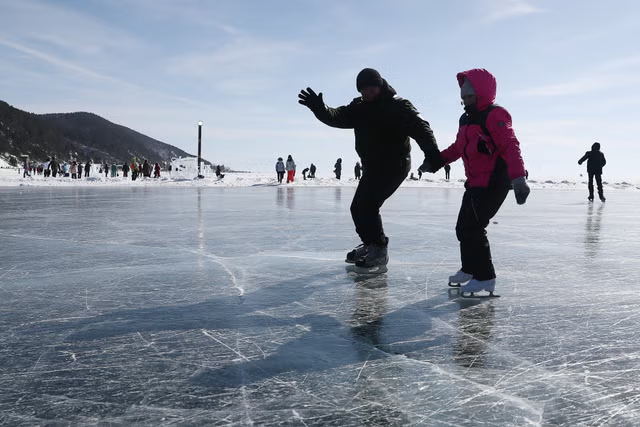
Lake Baikal, located north of Mongolia and in Siberia, attracts thousands of tourists each winter. During the colder months, the lake’s surface freezes into a thick sheet of ice, creating opportunities for skating, biking, hiking, skiing, and even driving across its vast frozen expanse.
Chinese tourism to Russia has significantly increased in recent years, following closer diplomatic ties and the introduction of a mutual visa-free travel regime between the two nations.
Tour groups frequently visit the lake during winter to experience its crystal-clear ice and dramatic landscapes.
About Lake Baikal
Often referred to as the “Blue Eye of Siberia,” Lake Baikal is considered one of the natural wonders of the world. It holds approximately 20 percent of the world’s unfrozen freshwater supply.
The lake is also a designated UNESCO World Heritage Site, recognized for its ecological significance and unique biodiversity. More than 2,500 species of animals and plants inhabit the lake, with roughly 80 percent found nowhere else on Earth.
Among its most famous inhabitants is the Baikal freshwater seal, a rare species that has lived in the landlocked lake for thousands of years despite being far from any ocean.
In winter, the ice covering Lake Baikal can be so clear that visibility extends up to 40 feet beneath the surface. However, experts warn that ice thickness can vary significantly depending on weather conditions, posing risks to vehicles and tourists.
Environmental Concerns Surrounding Lake Baikal
Beyond the tragic Lake Baikal bus accident, environmental organizations have long expressed concerns about threats facing the lake.
According to the World Wide Fund for Nature, the lake is endangered by pollution, poaching, industrial development, mining activities, and agricultural runoff. Past incidents have heightened concerns about contamination risks.
In 2019, reports emerged about an overflowing river affecting a former pulp and paper mill near the lake. There were fears that untreated industrial waste stored at the Soviet-era facility could be swept into the lake’s pristine waters.
Environmental experts continue to advocate stronger protections to preserve the ecological balance of the region.
Investigation and Ongoing Search Efforts
Search and rescue operations remain ongoing following the Lake Baikal bus accident. Authorities are working in freezing conditions to locate the missing passengers.
Officials have not yet confirmed whether the vehicle was operating within permitted safety guidelines for driving on frozen surfaces. Investigators are examining whether weather conditions, ice thickness, or human error contributed to the tragedy.
Local authorities have pledged transparency as the investigation unfolds.
Growing Tourism and Safety Questions
The increase in cross-border tourism between China and Russia has brought economic benefits to Siberian regions. However, incidents such as the Lake Baikal bus accident raise questions about safety regulations and enforcement during extreme winter conditions.
Driving vehicles across frozen lakes can be hazardous, particularly when ice stability changes rapidly due to temperature fluctuations.
As rescue efforts continue, families of the missing tourists await updates while authorities assess next steps in the investigation.
For more news, please visit our Homepage