 0
0
 0
0
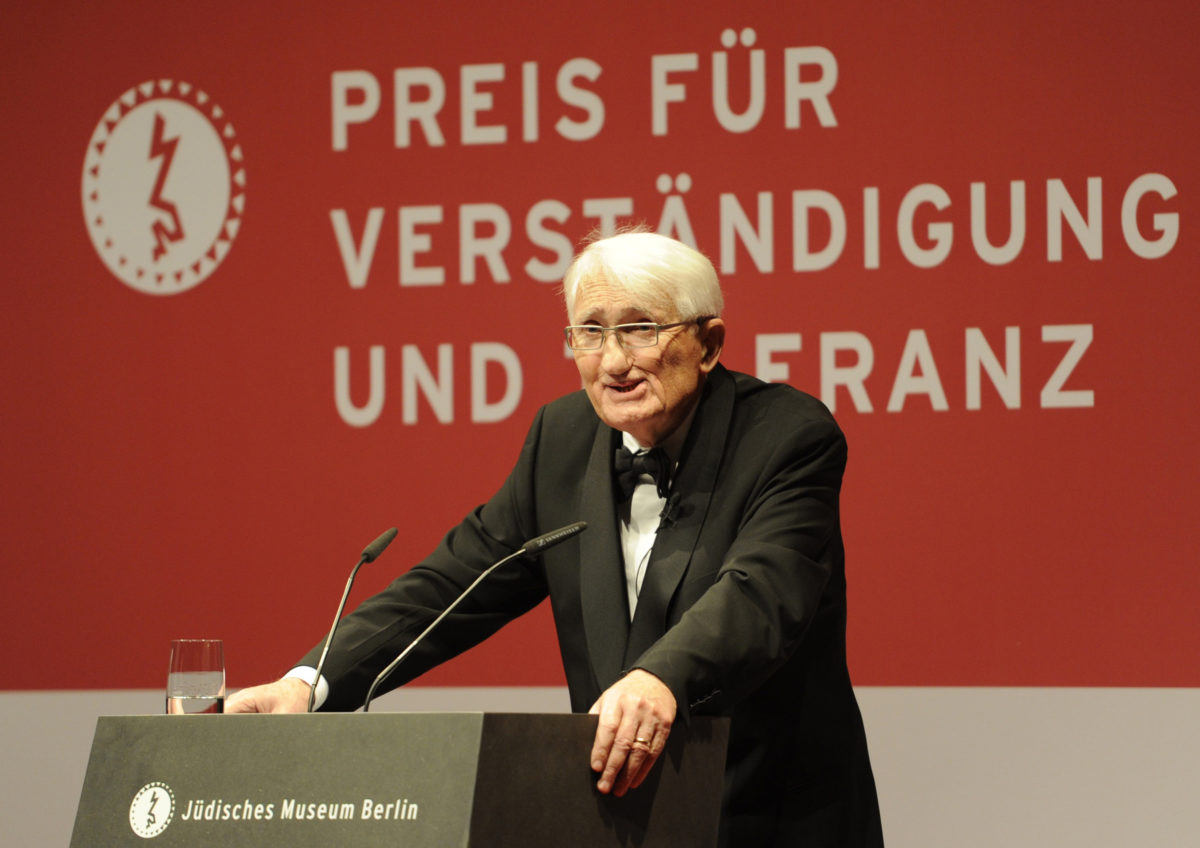
Jürgen Habermas death 2026 marks the passing of one of the most influential philosophers and public intellectuals in modern Europe. The German thinker, known for shaping contemporary debates about democracy, communication, and social theory, died at the age of 96.
The announcement of his death was made by his publisher, Suhrkamp, bringing an end to the life of a scholar whose ideas influenced political philosophy, sociology, and democratic theory for decades.
Early Life in Nazi-Era Germany
The story surrounding Jürgen Habermas death 2026 also highlights the historical context that shaped his intellectual development. Habermas was born in June 1929 in Düsseldorf, Germany, during a period that would soon see the rise of Nazi rule.
Family Background
Habermas grew up in a family connected to local business circles. His father served as the head of the local chamber of commerce and joined the Nazi Party in 1933, the same year Adolf Hitler came to power.
As a child in Nazi Germany, Habermas experienced the social and political pressures of the era.
Youth During World War II
During the war years, Habermas was enrolled in the Hitler Youth, a common requirement for young Germans at the time. However, he was too young to serve as a soldier before the end of World War II.
The experience of growing up under authoritarian rule later influenced his lifelong interest in democracy, communication, and public discourse.
Academic Career and Rise in Philosophy
Following the war, Habermas pursued academic studies that would lead to an influential career in philosophy and sociology.
Education and Doctorate
After completing his studies, Habermas earned a doctorate in philosophy from Marburg University. His academic work soon led him to join the Institute of Social Research at the University of Frankfurt, one of the most important centers of critical social theory.
Teaching at the University of Frankfurt
Habermas began teaching philosophy and sociology at the University of Frankfurt in the 1960s, a time marked by significant political and cultural change across Europe.
During this period, he became closely associated with the Frankfurt School, a group of thinkers known for developing critical theory.
Role in the Frankfurt School of Thought
The intellectual movement known as the Frankfurt School became central to the ideas discussed after Jürgen Habermas death 2026.
Critical Theory and Social Criticism
The Frankfurt School developed critical theory, an approach that analyzes how economic systems, culture, and power structures influence society.
Prominent members included:
-
Max Horkheimer
-
Theodor Adorno
-
Jürgen Habermas
These thinkers argued that modern capitalist societies often reduce citizens to passive consumers rather than active participants in democratic life.
Habermas’s Contribution
Habermas expanded the ideas of earlier Frankfurt School scholars by focusing on communication and rational debate as the foundation of democratic societies.
He argued that public discussion and open dialogue allow citizens to shape political decisions collectively.
Support for the 1960s Student Movements
Another important aspect often discussed after Jürgen Habermas death 2026 is his engagement with political activism during the 1960s.
West German Student Protests
During the student revolts that swept through West German universities in the late 1960s, Habermas expressed support for student demands for political reform and democratic participation.
The protests were part of a broader global movement questioning traditional authority structures in politics and education.
Intellectual Engagement With Public Debate
Habermas frequently participated in public discussions and debates, becoming known not only as an academic philosopher but also as a public intellectual.
His writings and commentary often addressed contemporary political issues in Germany and Europe.
Debate Over Germany’s Historical Responsibility
Habermas played a significant role in a major intellectual debate in the 1980s regarding Germany’s interpretation of its past.
The Historikerstreit Debate
In the Historikerstreit, or historians’ dispute, Habermas strongly criticized attempts by some conservative historians to reinterpret the Holocaust in a way that reduced its unique historical significance.
He argued that the Holocaust represented a defining moment in German history and required honest reflection rather than revisionist interpretations.
Defense of Democratic Values
Habermas emphasized the importance of confronting historical injustices to strengthen democratic values and prevent the re-emergence of authoritarian ideologies.
Influential Philosophical Work
Among the many topics discussed after Jürgen Habermas death 2026 is his intellectual legacy through books and theoretical contributions.
The Theory of Communicative Action
One of his most influential works is The Theory of Communicative Action, published in 1981.
The book proposed that human societies function best when social coordination occurs through rational communication rather than through power or economic control.
Key ideas in the work include:
-
Rational dialogue as the basis for democracy
-
Public discourse as a foundation for political legitimacy
-
Communication as a tool for resolving conflicts
The book remains widely studied in philosophy, sociology, and political science.
Criticism of Mass Media Culture
Habermas also examined the role of modern media and mass entertainment in shaping public debate.
He argued that commercialized media could weaken critical discussion by turning citizens into passive consumers of information rather than active participants in democratic conversation.
Views on German Unification and Europe
Habermas remained active in political debates well into the late 20th century.
Concerns About German Reunification
During the 1989–1990 reunification of Germany, Habermas expressed concern about the rapid integration of East Germany into West Germany.
He feared that a sudden unification might revive nationalist sentiment and advocated for a more gradual integration process.
Support for European Integration
In the 1990s, Habermas became a strong supporter of a united Europe, believing that deeper European cooperation could help prevent the resurgence of nationalist rivalries.
He viewed European unity as an important safeguard for peace and democratic values.
Personal Experiences That Shaped His Thinking
Habermas’s intellectual interests were also influenced by personal experiences.
Childhood Medical Challenges
He was born with a cleft palate, which required several surgical operations during his childhood.
Later in life, Habermas said this experience shaped his understanding of language and communication.
Influence on His Philosophical Focus
His reflections on speech, dialogue, and communication became central themes in his philosophical work, particularly in discussions about how individuals participate in public discourse.
FAQ
Who was Jürgen Habermas?
Jürgen Habermas was a German philosopher and sociologist known for his work in critical theory and his influential book The Theory of Communicative Action.
Why is Jürgen Habermas important in philosophy?
He developed theories about communication, democracy, and public discourse that shaped modern political philosophy and social theory.
What is the Frankfurt School?
The Frankfurt School is a group of scholars associated with critical theory, focusing on the relationship between society, culture, politics, and economics.
What is The Theory of Communicative Action about?
The book argues that societies function best when political decisions are guided by rational dialogue and open public debate rather than power or economic control.
Conclusion
The news of Jürgen Habermas death 2026 marks the end of a remarkable intellectual life that influenced debates on democracy, communication, and social criticism. Through his writings, teaching, and public engagement, Habermas helped shape modern discussions about how societies can foster meaningful dialogue and democratic participation. His ideas continue to be studied and debated across philosophy, sociology, and political theory.
PLEASE CLICK HERE FOR MORE NEWS