


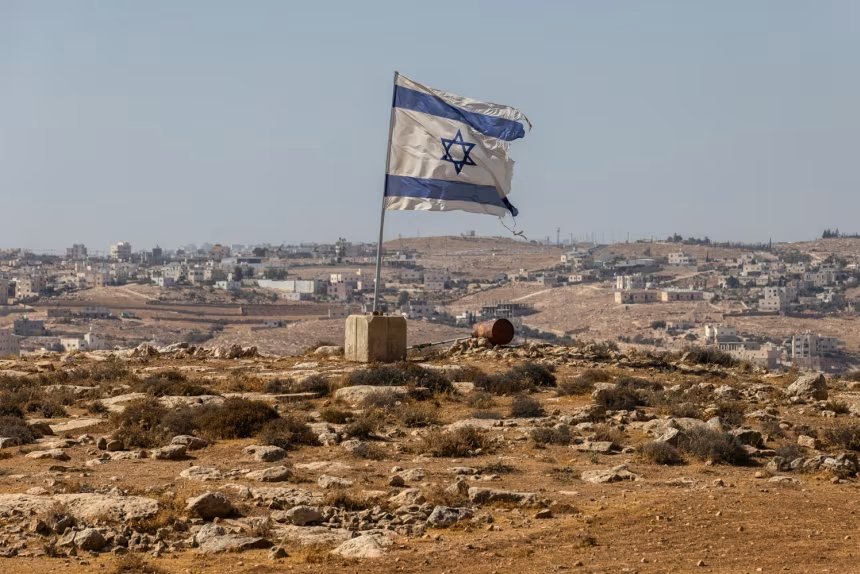
The Palestinian Foreign Ministry condemned Israeli West Bank Settlement Plan as a violation of international law and existing agreements covering the occupied lands. According to the ministry he argued that the plan extends settlement policies in ways that could obstruct progress toward a political settlement. Officials maintained that settlement growth weakens the outlook for peace and escalates tensions across the West Bank.
The ministry asserted that Israel lacks sovereignty over the occupied Palestinian territories and reiterated its longstanding position that settlements established there have no legal legitimacy under international law.
The Palestinian officials stated that continued Israeli West Bank Settlement Plan contributes to unrest and weakens attempts to restart peace talks.
The ministry called on the international community, including the United Nations and the UN Security Council, to take concrete steps to prevent further settlement expansion. Palestinian representatives pressed for stronger measures to uphold international law and ensure implementation of UN resolutions governing the occupied territories.
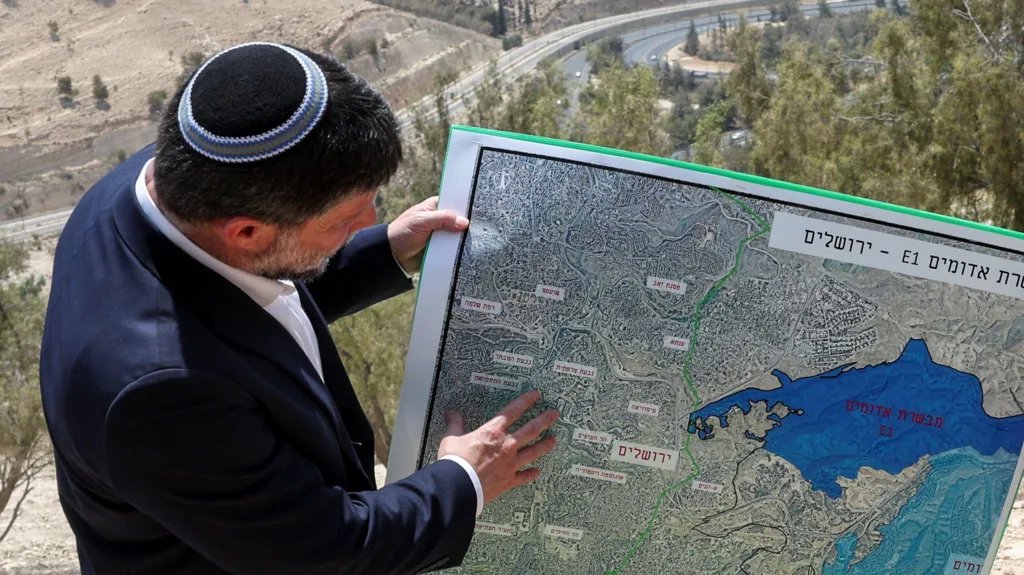

Israeli West Bank Settlement Plan
Media reports in Israel Hayom indicated that the proposal was developed by the Settler Farms Association alongside the Havat Forum . According to the report, the proposal aims to establish a coordinated presence across roughly 100 strategically chosen sites throughout the occupied West Bank.
The proposal reportedly concentrates on Area A, an administrative zone defined under the Oslo II Agreement of 1995. Area A falls under Palestinian Authority civil and security control, yet Israeli military activity continues within its boundaries. The proposal has drawn criticism for targeting sites long under Palestinian administrative control.
The report noted that organizers intend to stage a coordinated deployment across several sites on what they termed an ‘execution day’. The proposal reportedly seeks to reshape territorial realities by expanding Israeli settler communities in strategic areas of the West Bank.
At the time of reporting, no official Israeli government announcement had been issued confirming implementation of the proposal.
The Oslo II Accord of 1995 divided the occupied West Bank into three administrative zones:
Area A encompasses many of the West Bank’s largest Palestinian cities and remains under the Palestinian Authority’s responsibility for civil administration and internal security.
Despite this arrangement, Israeli forces continue to conduct regular military operations inside Area A.
Area B functions under joint administrative arrangements involving both Israeli and Palestinian authorities, while Area C remains under full Israeli civil and security control.
Area C comprises the majority of the West Bank’s territory and contains most of the Israeli settlements established there.
The framework of Areas A, B, and C provides context for why settlement-related developments in Area A generate considerable international reaction..


The legal status of Israeli settlements continues to be a matter of significant international dispute.
Israeli West Bank Settlement Plan are widely viewed by the United Nations and numerous states as violations of international law, though Israel challenges this view. Settlement expansion has often been cited as a major obstacle to resuming comprehensive peace negotiations.
Over the years, diplomatic efforts have attempted to reconcile security needs, territorial disagreements, and the national aspirations of Israelis and Palestinians, though no lasting agreement has been reached.
The Israeli West Bank Settlement Plan has added a new dimension to the longstanding Israeli-Palestinian conflict. Palestinian authorities have called on international institutions to respond, while attention remains on whether the reported plan progresses beyond the proposal stage. The issue remains under close watch because of its possible consequences for regional security, diplomatic efforts, and the trajectory of peace negotiations.
PLEASE CLICK HERE FOR MORE NEWS


