 0
0
 0
0
Israeli Airstrikes in Eastern Lebanon killed at least six people and injured more than 25 others on Friday evening, according to Lebanon’s state media, marking another serious escalation in cross border tensions.
The strikes targeted multiple locations in the Bekaa region, including mountainous areas and locations near Baalbek. The incident adds to growing instability in the region following months of ceasefire violations and military exchanges.
Casualties Reported in Bekaa Region
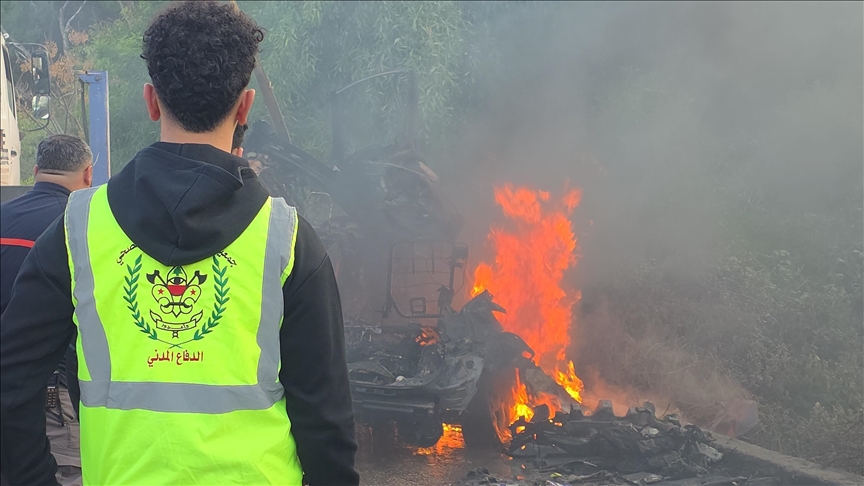
Lebanon’s state run National News Agency reported that six people were killed and more than 25 wounded in the attacks. The injured were transported to hospitals across the eastern Bekaa region for treatment.
Medical sources cited by local media indicated that some of the injured remain in serious condition, raising concerns that the death toll could increase.
The Israeli Airstrikes in Eastern Lebanon reportedly struck both the eastern and western mountain ranges in the Bekaa Valley. Witnesses described powerful explosions that echoed across surrounding towns and villages.
Areas Targeted Near Baalbek
According to local reports, three airstrikes hit the Shaara area at the foothills of the eastern Lebanon mountain range. Israeli warplanes were also seen flying over the skies of Baalbek during and after the strikes.
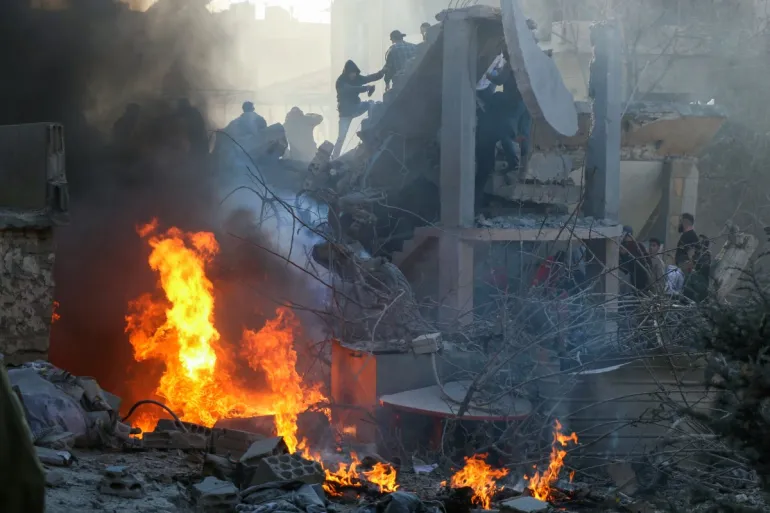
One of the attacks targeted a building near the Al Qard Al Hassan Foundation along the Riyaq Baalbek highway, leveling the structure completely. Additional airstrikes struck open plains near the towns of Qasr Naba and Tamnine al Tahta, west of Baalbek.
The intensity of the Israeli Airstrikes in Eastern Leba non caused significant structural damage in affected areas, with debris scattered across roads and nearby properties.
Israeli Military Statement
The Israeli military said that the Israeli Airstrikes in Eastern Lebanon were aimed at Hezbollah command centers. Officials claimed the targeted sites were being used for military coordination and planning.
Hezbollah has not immediately issued a detailed response to the specific claims regarding the targeted locations. However, tensions between Israel and Hezbollah have remained high despite a ceasefire agreement reached in November 2024.
Israel maintains that its operations are defensive measures intended to prevent threats along its northern border.
Ceasefire Under Strain
The latest Israeli Airstrikes in Eastern Lebanon come amid repeated accusations of ceasefire violations. Since the November 2024 agreement, both sides have accused each other of breaching terms of the truce.
Lebanese officials have repeatedly condemned Israeli military actions on Lebanese territory, describing them as violations of sovereignty. Israel, on the other hand, argues that it reserves the right to act against what it calls security threats.
Despite the ceasefire, sporadic clashes, airstrikes, and artillery exchanges have continued along border areas, contributing to instability and civilian casualties.
Strategic Importance of the Bekaa Valley
The Bekaa Valley is considered strategically important due to its proximity to the Syrian border and its role in regional logistics and supply routes.
Israeli Airstrikes in Eastern Lebanon frequently focus on mountainous terrain and suspected infrastructure believed to be linked to Hezbollah operations. The region has long been viewed by Israel as a key area of concern due to alleged weapons transfers and military buildup.
The continued targeting of areas near Baalbek underscores the strategic calculations involved in ongoing military operations.
Humanitarian Impact
The Israeli Airstrikes in Eastern Lebanon have raised fresh humanitarian concerns. With six confirmed fatalities and more than 25 injured, local hospitals are managing an influx of casualties.
Residents in affected towns reported fear and panic as explosions shook buildings and windows. Families in nearby communities sought shelter as warplanes continued flying overhead.
Repeated cycles of airstrikes have disrupted daily life in the Bekaa region, affecting businesses, schools, and public services. Infrastructure damage further complicates recovery efforts in already strained communities.
Regional and International Reactions
While official international responses were still emerging at the time of reporting, previous incidents involving Israeli Airstrikes in Eastern Lebanon have drawn calls for restraint from global actors.
The broader conflict dynamics between Israel and Hezbollah remain closely monitored by regional powers and international organizations concerned about potential escalation into a wider confrontation.
Diplomatic efforts aimed at reinforcing the November 2024 ceasefire continue, though repeated military incidents have tested the durability of the agreement.
Ongoing Occupation Dispute
Lebanese authorities have also pointed to Israel’s continued control of five hilltops seized during the most recent conflict, in addition to other disputed areas held for decades.
These territorial disputes remain a central issue in the broader conflict narrative and contribute to recurring tensions between the two sides.
Israeli Airstrikes in Eastern Lebanon often occur within this broader context of unresolved border disputes and long standing hostilities.
Security Outlook
Security analysts suggest that continued Israeli Airstrikes in Eastern Lebanon increase the risk of retaliatory actions, potentially triggering a cycle of escalation.
Although both sides have expressed interest in avoiding full scale war, the fragile ceasefire framework remains under pressure. Each new strike raises concerns about miscalculation and broader regional instability.
For civilians in eastern Lebanon, the immediate priority remains safety and access to medical care. Local authorities are assessing damage while emergency services continue to respond.
Conclusion
The Israeli Airstrikes in Eastern Lebanon that killed six people and injured more than 25 represent a serious development in ongoing cross border tensions.
With strategic areas in the Bekaa region targeted and allegations of Hezbollah command centers being struck, the situation remains volatile. As diplomatic channels attempt to preserve the ceasefire, the region faces renewed uncertainty.
Further developments are expected as both Israeli and Lebanese officials continue to assess the aftermath of the latest Israeli Airstrikes in Eastern Lebanon.
For more news, please visit our Homepage