


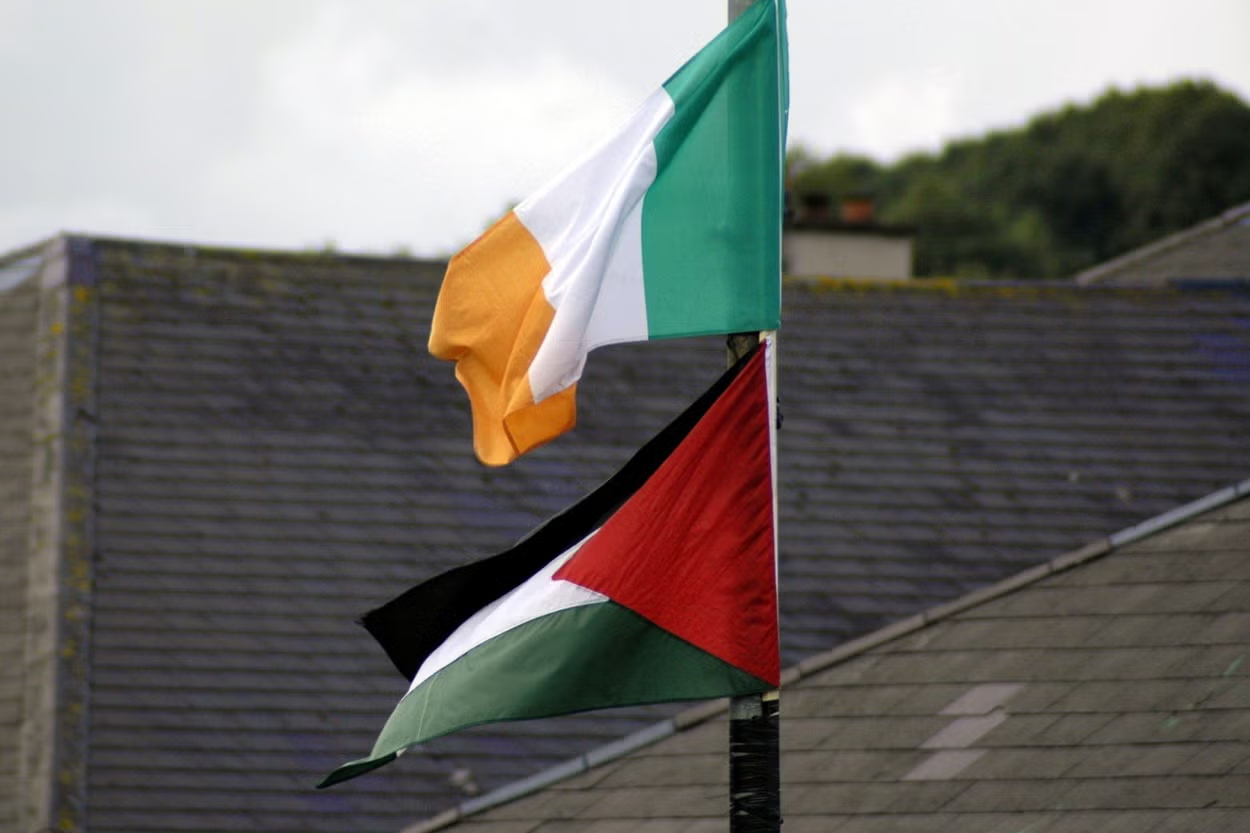
Ireland ban on Israeli settlement imports is drawing international attention after the Irish government confirmed plans to consider new legislation targeting goods from Israeli settlements located in occupied Palestinian territories.
The proposed law, expected to be discussed by Ireland’s Cabinet, would prohibit the importation of products originating from Israeli settlements in territories occupied by Israel. The move reflects Ireland’s long-standing position on the Israeli-Palestinian conflict and its support for international law concerning occupied territories.
Foreign Minister Helen McEntee is scheduled to present the draft legislation to Cabinet members as the government seeks approval to move forward with the bill. Reports indicate that the coalition government hopes to complete the legislative process before July 2026.


Ireland’s Proposed Import Ban Explained
The proposed legislation is officially titled the Israeli Settlements (Prohibition of Importation of Goods) Bill. If approved and enacted, it would prevent goods produced in Israeli settlements within occupied Palestinian territories from entering the Irish market.
The bill is being introduced amid growing international debate over settlement activity and increasing pressure on governments to respond to developments in the region.
What the Legislation Would Cover
The proposed measure is expected to focus specifically on goods originating from settlements considered illegal under international law by many countries and international organizations.
The legislation would likely include:
- Restrictions on importing settlement-produced goods
- Enforcement measures for customs authorities
- Legal definitions of occupied territories
- Penalties for violations of the import ban
Irish officials have not yet released the full legal text publicly, but government discussions are expected to provide further details in the coming days.
Why Ireland Is Taking This Step
Ireland has consistently supported a two-state solution and has frequently expressed concern over settlement expansion in occupied Palestinian territories.
According to reports from Irish broadcaster RTE, Foreign Minister Helen McEntee is expected to tell Cabinet colleagues that Israel’s actions demonstrate little intention of ending the occupation or pursuing a peaceful resolution to the conflict.
The Ireland ban on Israeli settlement imports proposal is therefore being framed as part of Ireland’s broader foreign policy position regarding international humanitarian law and the Israeli-Palestinian conflict.
Timeline for the Proposed Bill
Government sources suggest the coalition aims to pass the legislation before July 2026.
The process is expected to involve:
- Cabinet approval of the draft bill
- Debate in Ireland’s parliament
- Committee review and amendments
- Final legislative approval
- Implementation by relevant authorities
While political support exists among several lawmakers, the bill may still face legal and diplomatic scrutiny before becoming law.
International Reaction and EU Context
The Ireland ban on Israeli settlement imports proposal arrives at a time when European governments continue to debate how to address Israeli settlement policies.
Ireland has reportedly continued to advocate for collective European Union action rather than isolated national measures. However, progress toward a unified EU-wide policy has remained limited.
Ireland’s Position Within the European Union
Ireland has often taken a more vocal stance on Palestinian issues compared to some EU member states.
Irish officials have repeatedly emphasized:
- Support for international law
- Opposition to settlement expansion
- Advocacy for humanitarian protections
- Commitment to a negotiated peace settlement
Despite this position, the Irish government still prefers broader European coordination on trade and diplomatic responses.
EU Trade and Settlement Policies
The European Union already distinguishes between products made within Israel’s internationally recognized borders and those produced in settlements located in occupied territories.
Current EU rules require proper labeling of settlement goods, but there is no EU-wide ban on their importation.
Ireland’s proposal could therefore become one of the strongest individual national measures introduced by an EU member state concerning settlement trade.
Background on Israeli Settlements in Occupied Territories
Israeli settlements are communities established by Israel in territories captured during the 1967 Middle East war, including the West Bank and East Jerusalem.
Many international bodies, including the United Nations, consider these settlements illegal under international law. Israel disputes this interpretation and maintains differing legal and historical claims regarding the territories.


Areas Commonly Referenced in Settlement Discussions
The occupied Palestinian territories typically include:
- The West Bank
- East Jerusalem
- Gaza Strip (though Israeli settlements were withdrawn from Gaza in 2005)
Settlement activity has remained one of the most contentious issues in Israeli-Palestinian negotiations for decades.
Why Settlement Goods Are Controversial
Critics argue that purchasing settlement goods indirectly supports occupation and settlement expansion. Supporters of restrictions say economic measures can increase pressure for political negotiations and compliance with international law.
Others argue that trade restrictions may complicate diplomatic relations or affect economic cooperation.
The debate continues internationally, with governments adopting varying policies regarding settlement products.
Possible Economic and Diplomatic Effects
The proposed Ireland ban on Israeli settlement imports could carry diplomatic and trade implications if enacted.
Impact on Irish-Israeli Relations
Trade restrictions connected to settlements may affect political relations between Ireland and Israel.
Potential consequences could include:
- Diplomatic objections from Israeli officials
- Increased political debate within the EU
- Legal challenges under trade agreements
- Reactions from international advocacy groups
At the same time, Irish officials are expected to stress that the legislation targets settlement goods rather than Israeli products generally.
Economic Significance of Settlement Trade
Trade involving settlement-produced goods represents a relatively small portion of overall commerce between Ireland and Israel.
However, the symbolic significance of the proposed legislation could be substantial internationally, especially if similar measures are later considered by other countries.
Reactions From Advocacy Groups
Human rights organizations and pro-Palestinian groups have previously called for stronger international measures regarding settlements.
Meanwhile, critics of such bans often argue that they could deepen divisions or complicate peace efforts.
The legislation is therefore likely to remain a topic of international political discussion even before any final parliamentary vote occurs.
Ireland’s Longstanding Position on the Conflict
Ireland has historically supported Palestinian statehood and humanitarian protections in the region.
The country has repeatedly called for:
- A negotiated two-state solution
- Respect for international law
- Protection of civilians
- Resumption of peace negotiations
Irish lawmakers and government officials have also expressed concern over rising tensions, humanitarian conditions, and the lack of progress toward a lasting political settlement.
Previous Irish Actions on Palestinian Issues
Over the years, Ireland has:
- Supported humanitarian assistance efforts
- Backed UN resolutions related to Palestinian rights
- Raised concerns about settlement expansion
- Advocated for diplomatic engagement
The Ireland ban on Israeli settlement imports proposal represents one of the most significant trade-related measures considered by the country in recent years.
What Happens Next
The next step will be Cabinet discussions and possible approval of the bill’s draft text.
If approved, lawmakers will begin formal parliamentary consideration, where debates and possible amendments are expected.
Observers will also watch closely for reactions from the European Union, Israel, Palestinian officials, and international organizations.
The final outcome could influence future discussions within Europe regarding settlement-related trade policies and broader diplomatic strategies connected to the Israeli-Palestinian conflict.
FAQ
What is the Ireland ban on Israeli settlement imports proposal?
The proposal is a planned Irish law that would ban the import of goods produced in Israeli settlements located in occupied Palestinian territories.
Why does Ireland want to ban settlement imports?
Irish officials say the move reflects concerns about settlement expansion, international law, and the lack of progress toward a peaceful resolution in the Israeli-Palestinian conflict.
Does the proposed law target all Israeli products?
No. Reports indicate the legislation focuses specifically on goods originating from Israeli settlements in occupied territories rather than products from Israel generally.
When could the Irish settlement import ban become law?
The Irish coalition government reportedly hopes to pass the legislation before July 2026, though parliamentary debate and legal review are still expected.
Ireland’s proposed legislation on settlement imports marks a significant development in European political discussions surrounding the Israeli-Palestinian conflict. While the bill still faces legislative review and possible diplomatic debate, it highlights Ireland’s continued focus on international law and its support for a negotiated resolution to the conflict. The coming weeks are likely to determine whether the proposal advances into formal law and how international partners respond.
Click here for more news


