

 0
0
 0
0
Iranian president defies US demand for an “unconditional surrender” as tensions across the Middle East escalate following continued air strikes by Israel and the United States on Iranian targets. The remarks came amid growing fears that the conflict could expand further across the Gulf region.
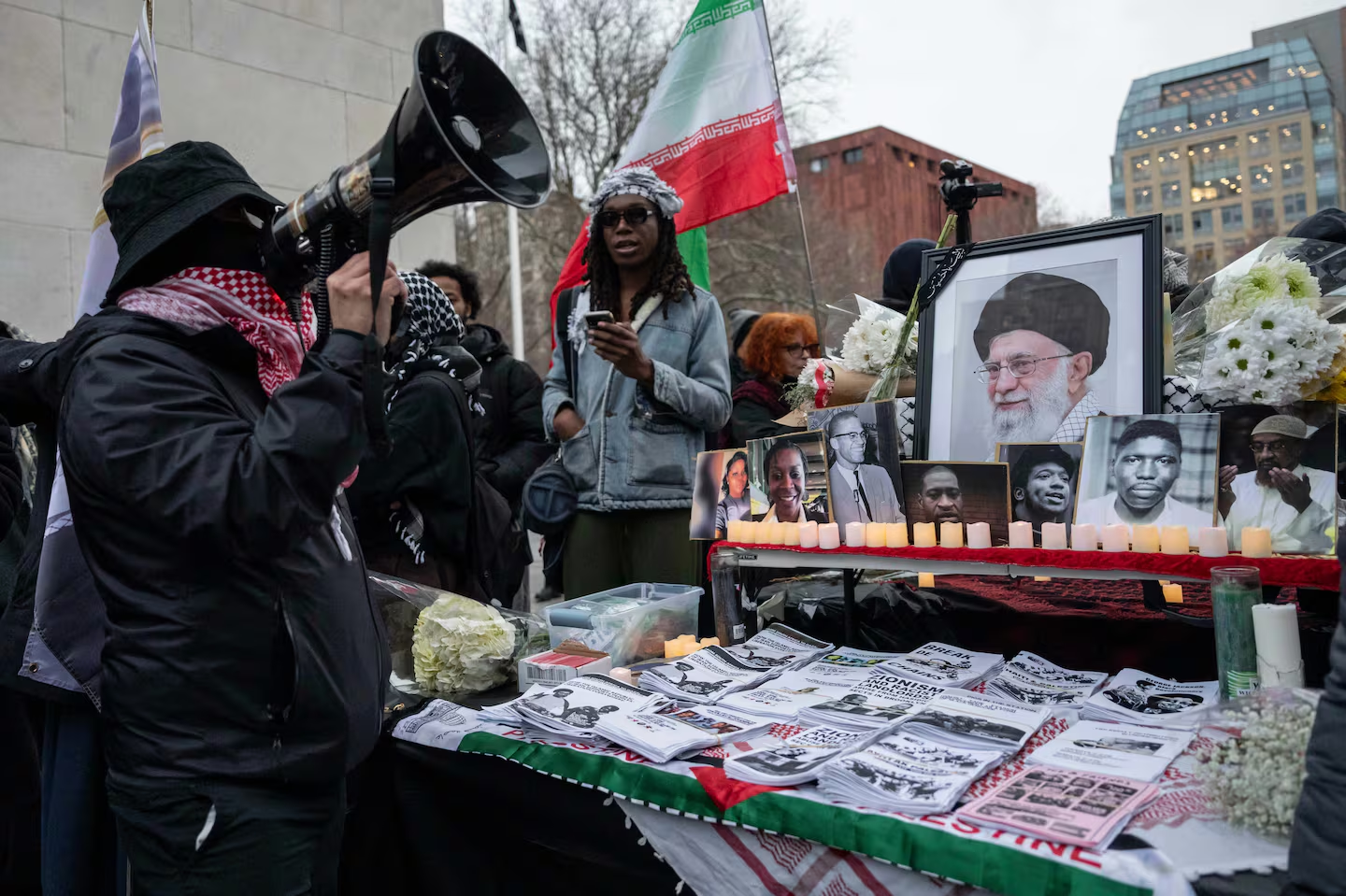
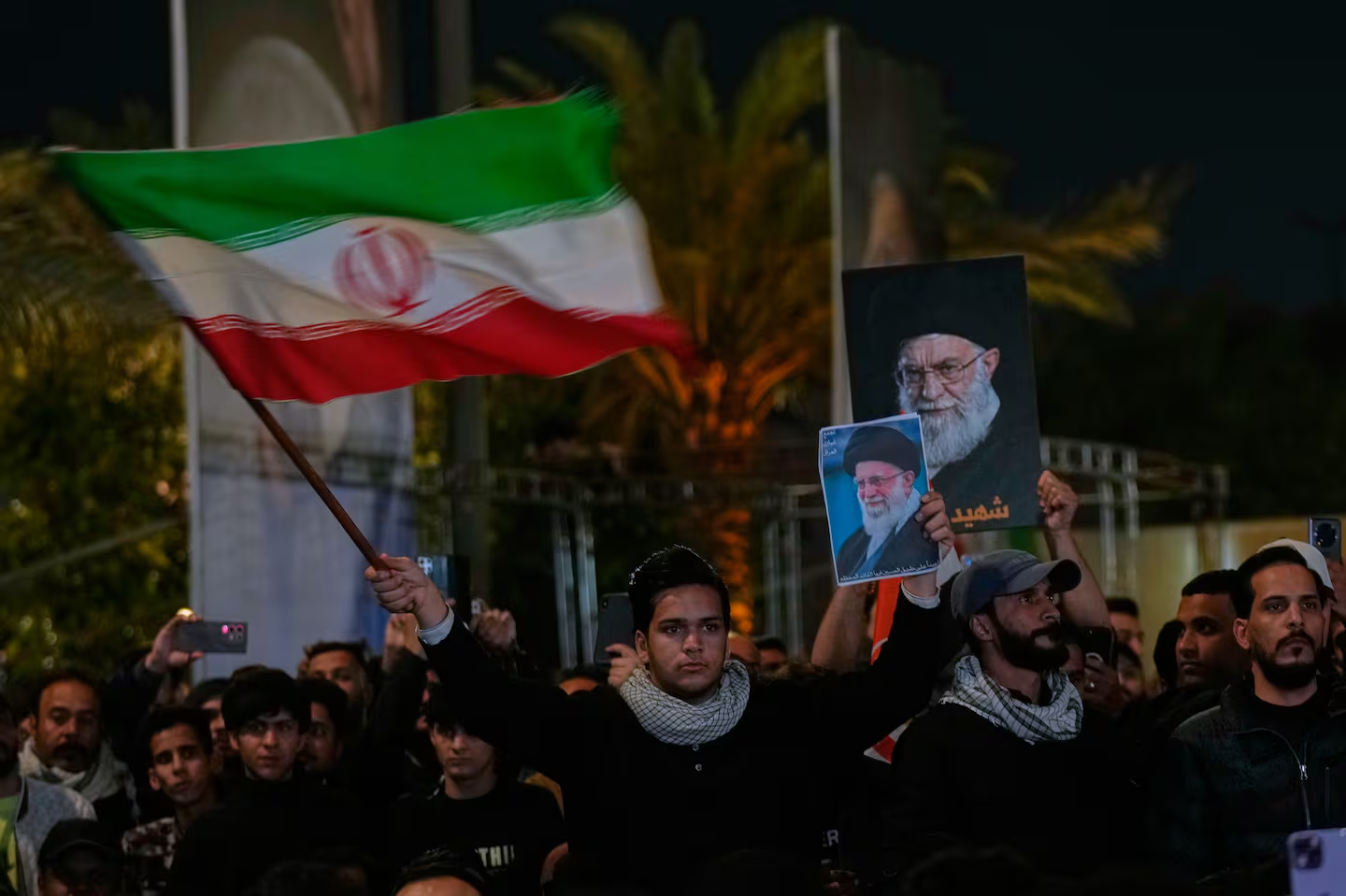
In a pre-recorded address broadcast on Iranian state television, President Masoud Pezeshkian rejected Washington’s demand for surrender, calling it unrealistic. He said the demand was a “dream they should take to their grave,” signaling that Tehran has no intention of backing down despite mounting military pressure.
The statement quickly gained global attention after the Iranian president defies US demand, highlighting Tehran’s determination to resist pressure from Washington despite growing military threats and regional instability.
Iranian President Defies US Demand Amid Escalating Regional Tensions
The moment the Iranian president defies US demand has become a significant turning point in the rapidly escalating conflict. Analysts say Tehran’s refusal to comply with Washington’s call for surrender could prolong the war and further destabilize the region.
President Pezeshkian also addressed recent Iranian attacks against neighboring countries. He apologized for the strikes on regional states, suggesting that some of the attacks may have resulted from miscommunication within Iranian military ranks. He insisted that Iran would halt such attacks moving forward.
Despite that statement, several Gulf states reported renewed missile and drone activity on Saturday morning. Bahrain, Saudi Arabia and the United Arab Emirates all experienced air defense alerts as Iranian projectiles were detected heading toward their territories.
Explosions Heard in Dubai as Air Defenses Activated
In Dubai, residents reported hearing several loud explosions early Saturday. Authorities confirmed that air defense systems had been activated to intercept incoming threats. The security situation also affected travel at Dubai International Airport, the world’s busiest airport for international passengers.
Passengers waiting for flights were temporarily directed into underground train tunnels at the massive airport complex while authorities responded to the security alert.
Shortly afterward, long-haul airline Emirates briefly suspended flights to and from Dubai before later resuming operations once the situation stabilized.
The escalating conflict has raised serious concerns about the safety of international travel and trade in the region.
Israeli Air Strikes Continue Across the Region
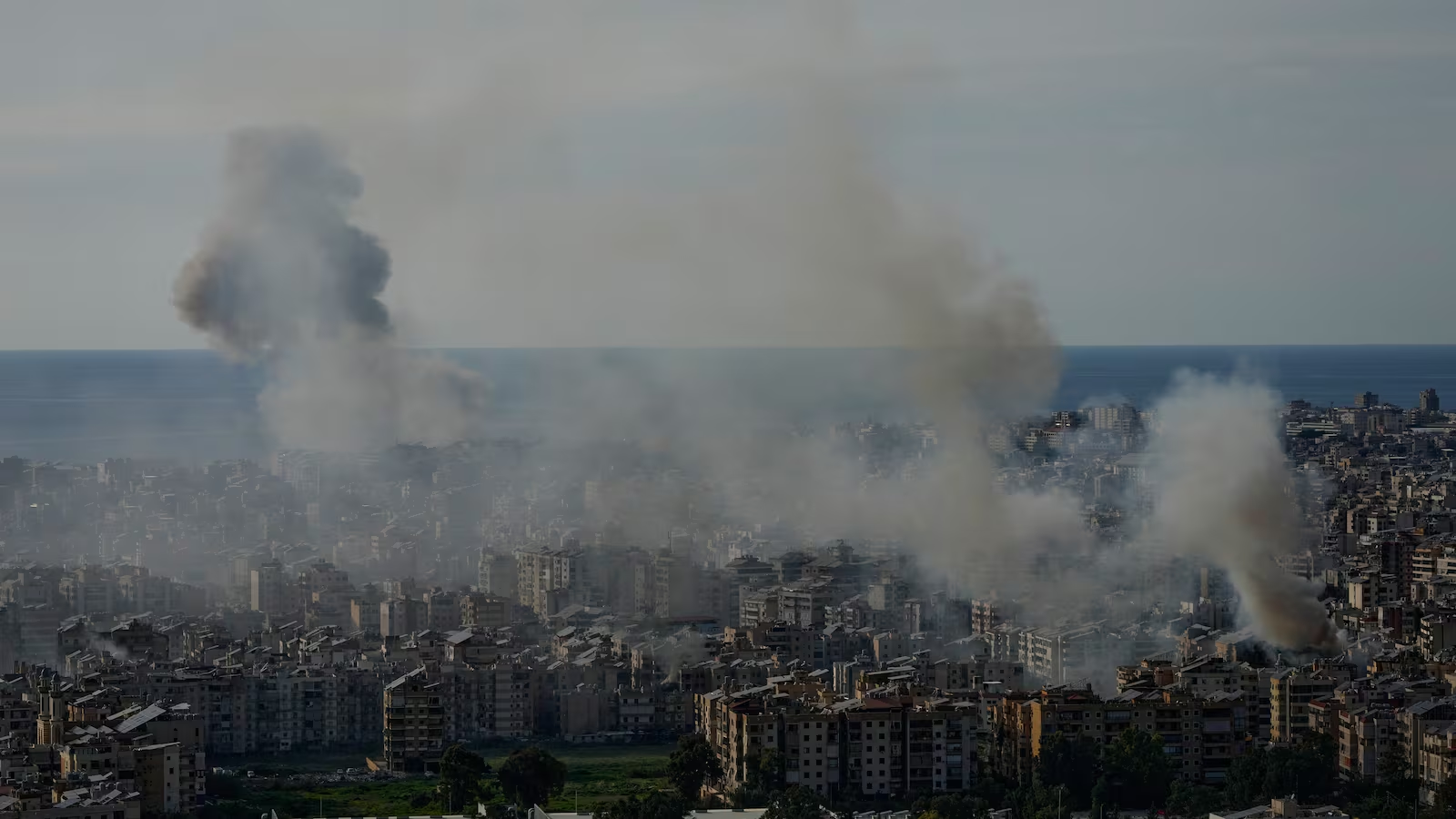
Meanwhile, Israeli air strikes continued to hit multiple targets linked to Iran and its allies. In Lebanon, explosions were reported in Dahiyeh, a southern suburb of Beirut that is known as a stronghold of the Iranian-backed militant group Hezbollah.
The Lebanese health ministry said that Israeli attacks since Monday have killed more than 217 people and injured nearly 800 others.
Hezbollah fighters also reportedly clashed with Israeli forces late Friday in mountainous areas of eastern Lebanon after Israeli troops conducted a landing operation in the region.
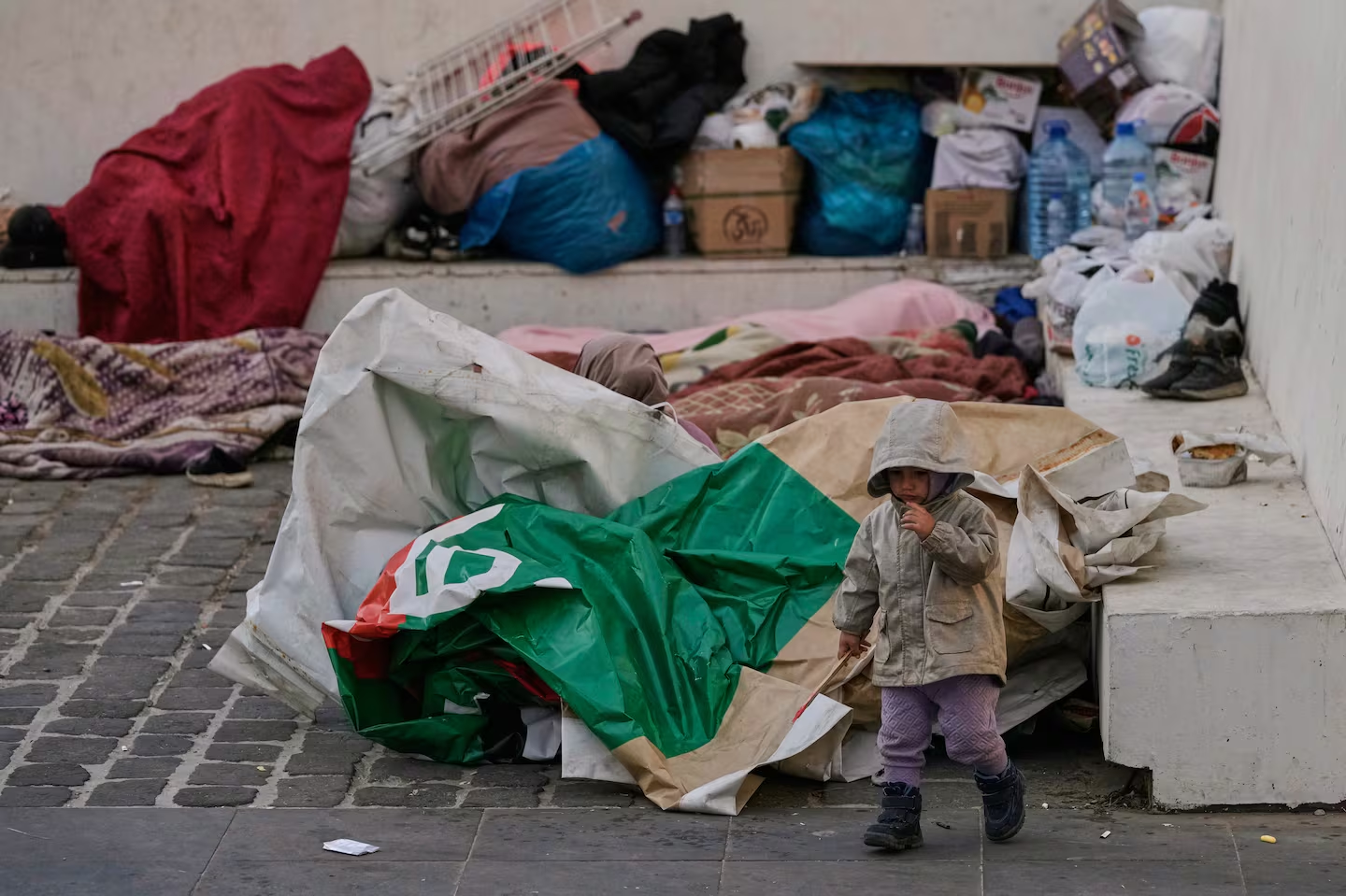
The violence has displaced thousands of civilians, particularly in southern Beirut where many residents fled following repeated waves of air strikes.
US Approves New Military Aid to Israel
The United States has continued to support Israel militarily during the conflict. The administration of President Donald Trump recently approved a new 151 million dollar arms sale to Israel.
Mr Trump has also maintained a hardline stance toward Tehran. In a social media post, he declared that there would be no negotiations with Iran unless it agreed to “unconditional surrender.”
However, the moment the Iranian president defies US demand suggests that diplomatic negotiations may not be possible in the near future.
US officials have also warned that a major bombing campaign targeting Iran could be launched soon, potentially becoming the most intense phase of the conflict so far.
Conflict Spreads to Gulf States
The conflict has increasingly spread beyond Iran and Israel. Sirens sounded early Saturday in Bahrain after Iranian attacks targeted the island kingdom.
Saudi Arabia also reported intercepting drones headed toward its massive Shaybah oil field. Officials confirmed that air defenses shot down a ballistic missile aimed at Prince Sultan Air Base, which hosts American military forces.
Saudi Arabia’s defense minister, Prince Khalid bin Salman, met with Pakistan’s army chief Field Marshal Asim Munir in Riyadh to discuss security cooperation and ways to respond to the Iranian attacks.
Saudi Arabia and Pakistan maintain a mutual defense agreement stating that an attack on either nation could be treated as an attack on both.
Global Economic Concerns Grow
The widening conflict has also raised concerns about global energy markets. Qatar’s energy minister, Saad al Kaabi, warned in an interview with the Financial Times that the war could have severe economic consequences.
He cautioned that the conflict might disrupt energy exports from the Gulf region and could push global oil prices as high as 150 dollars per barrel.
Oil markets have already reacted strongly to the crisis. Benchmark US crude oil prices climbed above 90 dollars per barrel on Friday, marking the first time prices have reached that level in more than two years.
Experts warn that a prolonged conflict in the Gulf could trigger widespread economic disruptions worldwide.
Rising Casualties and Growing Uncertainty
The ongoing conflict has already caused significant loss of life. Officials report that more than 1,200 people have been killed in Iran, while over 200 deaths have been recorded in Lebanon. Israel has reported around a dozen fatalities, and six US troops have also been killed.
Adding to the tension, Russia is reportedly providing Iran with intelligence that could help Tehran target American military assets in the region, including warships and aircraft.
US officials say there is no evidence that Moscow is directing Iran’s actions, but the information sharing marks a potentially significant development in the conflict.
Diplomatic Efforts Continue
Despite the escalating violence, diplomatic efforts are quietly underway. According to President Pezeshkian, several countries have begun mediation attempts to prevent the conflict from spiraling further out of control.
Still, the situation remains extremely volatile. With the Iranian president defies US demand, military operations on multiple fronts continue, leaving many uncertain about how or when the conflict might end.
For now, international observers warn that the Middle East may be entering one of its most dangerous periods in recent years.
PLEASE CLICK HERE FOR MORE NEWS



[…] clerical leadership body has chosen a successor following the death of former supreme leader Ayatollah Ali Khamenei. The development comes as military tensions in the Middle East continue to escalate, with ongoing […]
[…] The Iranian missile attacks Israel March 2026 continue to escalate, with rising civilian casualties and significant disruptions to daily life and international travel. As the conflict intensifies, concerns over safety, defense capacity, and regional stability remain central to ongoing developments. […]