 0
0
 0
0
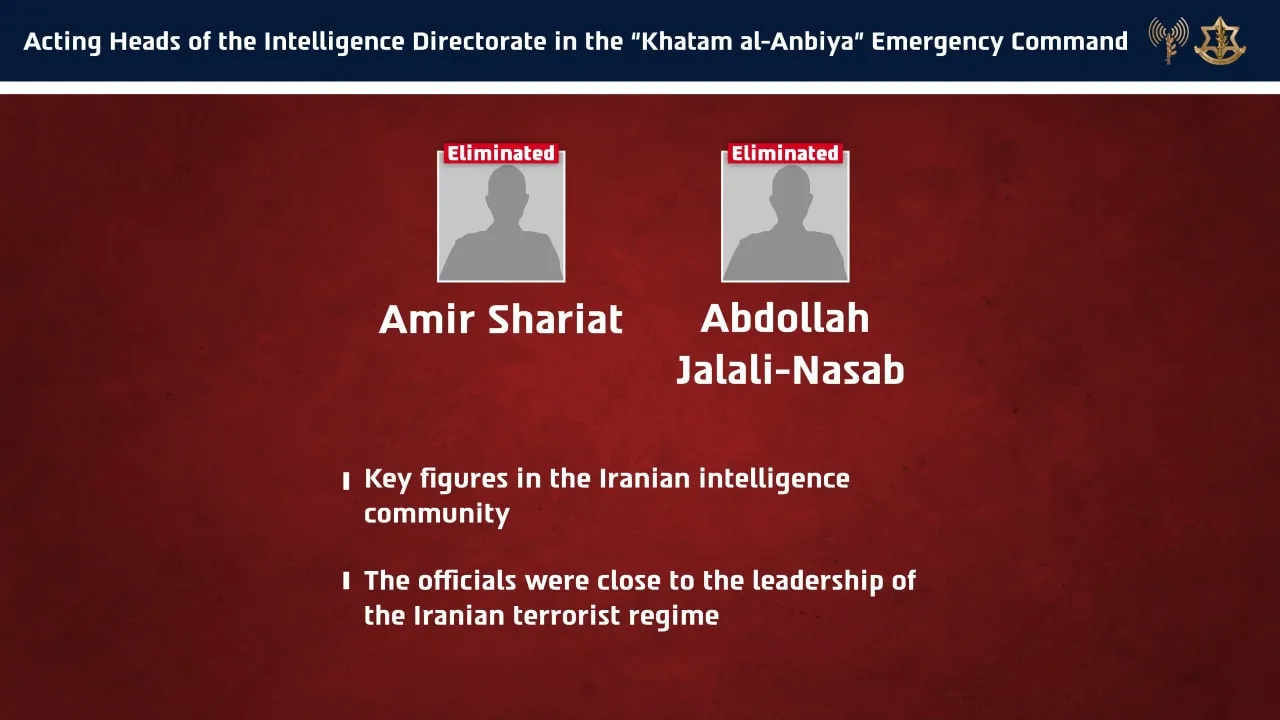
IDF Tehran strike Khatam al-Anbiya intelligence 2026 has drawn international attention after Israel’s military confirmed a targeted airstrike in Tehran that reportedly killed two senior Iranian intelligence officials. According to the Israeli Defense Forces, the operation targeted acting heads of the Intelligence Directorate within Iran’s Khatam al-Anbiya emergency command structure.
The strike, carried out by the Israeli Air Force, was reportedly guided by intelligence gathered by Israeli Military Intelligence.
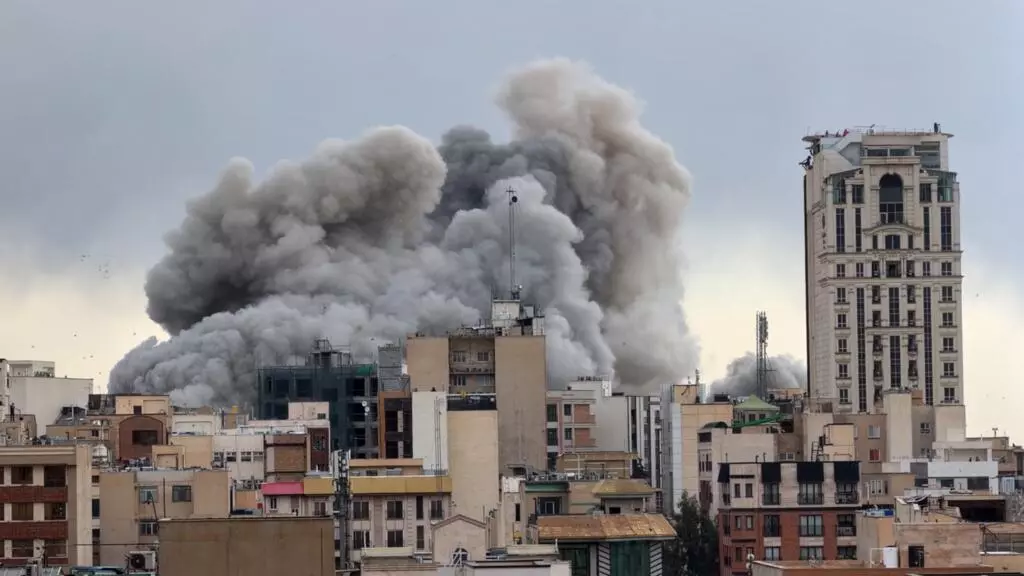
Israeli Military Confirms Targeted Strike in Tehran
Israeli military authorities stated that the IDF Tehran strike Khatam al-Anbiya intelligence 2026 operation was conducted with precise intelligence guidance. The airstrike reportedly targeted individuals believed to be key figures within Iran’s intelligence network.
Officials Identified by Israeli Military
The Israeli Defense Forces identified the two individuals killed in the strike as:
-
Abdallah Jalali-Nasab
-
Amir Shariat
According to Israeli military statements, both individuals served as acting heads within the intelligence division of the Khatam al-Anbiya emergency command.
The Israeli military described them as senior intelligence commanders who maintained close connections with the upper ranks of Iran’s leadership.
Intelligence Coordination Behind the Operation
Officials stated that Israeli Military Intelligence provided operational guidance that allowed the Israeli Air Force to carry out the targeted strike.
Precision-guided operations of this type often rely on:
-
Satellite intelligence
-
Signals intelligence
-
Human intelligence sources
-
Real-time surveillance
Such coordination is typically used in targeted military operations intended to eliminate specific high-value individuals.
Role of Khatam al-Anbiya Emergency Command
The IDF Tehran strike Khatam al-Anbiya intelligence 2026 operation focused on officials associated with Iran’s Khatam al-Anbiya emergency command, which plays an important role in coordinating military responses during crises.
Structure and Responsibilities
Khatam al-Anbiya is believed to function as a centralized command structure responsible for coordinating Iran’s air defense and emergency military responses.
Key responsibilities often attributed to the command include:
-
Coordinating national air defense systems
-
Managing military responses to external threats
-
Integrating intelligence information during crises
-
Supporting coordination between different branches of Iran’s armed forces
Because of these responsibilities, intelligence officials working within the command are often considered strategically important.
Intelligence Directorate Within the Command
The intelligence branch of the command is responsible for collecting and analyzing information related to military threats.
Typical functions include:
-
Monitoring regional military developments
-
Analyzing potential threats to Iranian infrastructure
-
Coordinating intelligence operations with other military units
Officials in leadership positions within the directorate are typically involved in strategic decision-making and operational planning.
Leadership Changes Following Earlier Operation
According to Israeli military statements, the two officials killed in the IDF Tehran strike Khatam al-Anbiya intelligence 2026 operation had recently assumed leadership roles.
Previous Intelligence Chief Reportedly Killed Earlier
The Israeli military said the officials were appointed as acting replacements after the previous intelligence director, Saleh Asadi, was reportedly killed during the opening phase of an Israeli military campaign known as Operation Roaring Lion.
Rapid Leadership Replacement
The appointment of Jalali-Nasab and Shariat reportedly occurred shortly after the earlier leadership loss, suggesting an effort by Iranian authorities to quickly restore command continuity.
Leadership turnover within military intelligence structures can affect:
-
Operational coordination
-
Intelligence decision-making
-
Strategic planning processes
However, large military organizations typically maintain multiple layers of command to ensure continuity during crises.
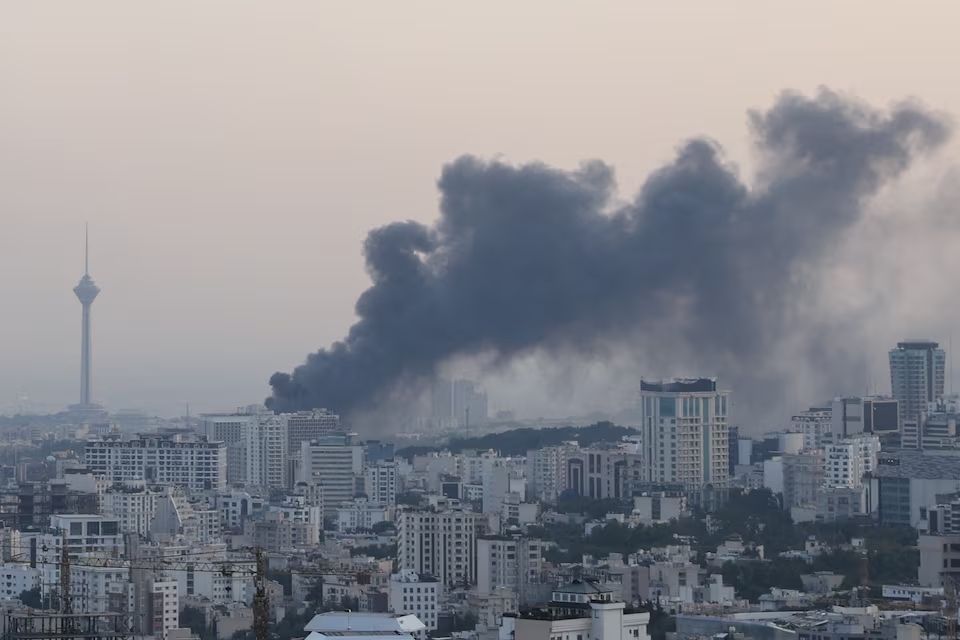
Growing Regional Military Tensions
The IDF Tehran strike Khatam al-Anbiya intelligence 2026 development reflects rising tensions between Israel and Iran.
Longstanding Strategic Rivalry
Israel and Iran have maintained a tense strategic relationship for years, particularly concerning:
-
Military activities in the Middle East
-
Regional proxy conflicts
-
Missile and drone programs
-
Intelligence operations
These tensions have occasionally resulted in covert or targeted military actions.
Impact on Regional Security
Military analysts note that targeted strikes on intelligence officials can have broader implications for regional stability.
Potential effects may include:
-
Increased military readiness by both sides
-
Heightened diplomatic tensions
-
Expanded intelligence and counterintelligence activities
At the same time, governments often avoid full-scale escalation by limiting operations to targeted objectives.
International Reactions and Monitoring
Developments related to the IDF Tehran strike Khatam al-Anbiya intelligence 2026 incident are likely to be closely monitored by international observers.
Diplomatic and Security Concerns
International organizations and governments often monitor such incidents due to potential impacts on:
-
Regional security dynamics
-
Diplomatic relations in the Middle East
-
International energy markets
-
Global military alliances
Countries in the region may also increase security monitoring in response to the evolving situation.
Importance of Verified Information
In rapidly developing situations, details about military incidents can change as additional information becomes available.
Security analysts often rely on multiple sources, including:
-
Official military statements
-
Satellite imagery analysis
-
Independent intelligence assessments
This helps provide a clearer understanding of events and their implications.
Strategic Significance of Intelligence Targets
The IDF Tehran strike Khatam al-Anbiya intelligence 2026 operation highlights the strategic importance often placed on intelligence leadership within military organizations.
Why Intelligence Leaders Are Key Targets
Senior intelligence officials typically play critical roles in:
-
Strategic military planning
-
Coordinating intelligence gathering operations
-
Analyzing threats and vulnerabilities
-
Advising political and military leadership
Because of their influence on decision-making, such officials are sometimes targeted during conflicts or covert operations.
Potential Operational Consequences
The removal of senior intelligence leaders can temporarily disrupt operational planning, although institutions usually replace personnel quickly to maintain continuity.
In large military organizations, leadership transitions are often managed through established command structures.
FAQ
What happened in the IDF Tehran strike Khatam al-Anbiya intelligence 2026 incident?
The Israeli military reported that a targeted airstrike in Tehran killed two acting heads of the intelligence directorate within Iran’s Khatam al-Anbiya emergency command.
Who were the officials reportedly killed in the strike?
According to Israeli military statements, the officials were Abdallah Jalali-Nasab and Amir Shariat.
What is Khatam al-Anbiya emergency command?
Khatam al-Anbiya is believed to be a command structure responsible for coordinating Iran’s air defense and emergency military responses.
What is Operation Roaring Lion mentioned in the report?
Operation Roaring Lion is described by Israeli sources as a military campaign during which the previous intelligence leader, Saleh Asadi, was reportedly killed.
Conclusion
The IDF Tehran strike Khatam al-Anbiya intelligence 2026 incident represents another development in the complex security relationship between Israel and Iran. As details continue to emerge, analysts will likely monitor the potential impact on regional stability, intelligence operations, and military strategies in the Middle East.