Putin US Israel Iran Confrontation Dominates Russian Security Council Talks
Posted on
Putin US Israel Iran confrontation reviewed during closed security talks
0
0
Read Time:3 Minute, 17 Second
Putin US Israel Iran confrontation became the central focus of a high level meeting of Russia’s Security Council as tensions between Iran Israel and the United States continue to escalate. The discussion underscores Moscow’s growing concern about the security risks posed by the confrontation and its potential consequences for regional and global stability.
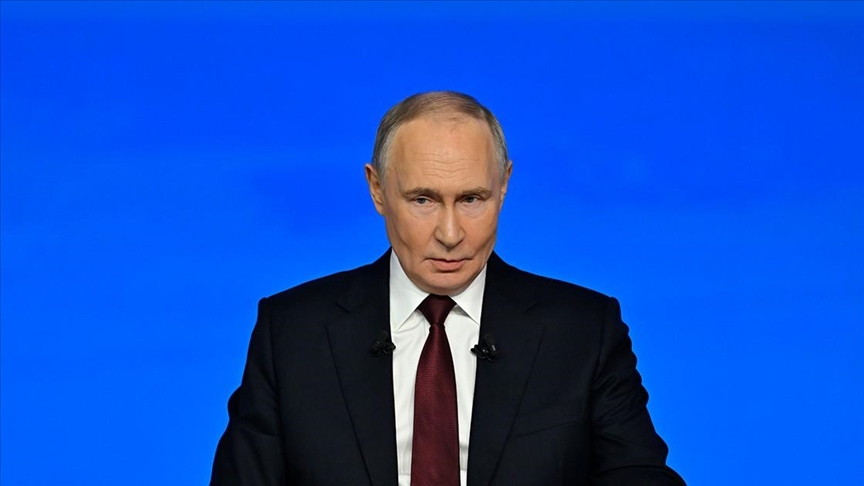
Russian President Vladimir Putin chaired the meeting via videoconference with permanent members of the Security Council. The Kremlin confirmed that the situation surrounding Iran was examined in detail following recent military actions involving Israel and the United States.
Putin US Israel Iran Confrontation Discussed at Security Council
Kremlin Reviews Putin US Israel Iran Confrontation Behind Closed Doors
Kremlin spokesperson Dmitry Peskov said the Security Council session addressed the Putin US Israel Iran confrontation in a closed format. He declined to provide further information citing the sensitive nature of the discussions.
Closed door Security Council meetings are typically convened during moments of heightened international tension. They allow Russian leadership to assess military developments diplomatic responses and potential risks to national security. The secrecy surrounding the meeting reflects the seriousness of the confrontation and its broader implications.
Putin US Israel Iran Confrontation Spurs Russian Diplomatic Action
In response to the Putin US Israel Iran confrontation Russian Foreign Minister Sergey Lavrov held a phone conversation with Iranian Foreign Minister Seyed Abbas Araghchi.
According to the Russian Foreign Ministry Lavrov condemned what Moscow described as an unprovoked armed attack on Iran by the United States and Israel. He reaffirmed Russia’s commitment to peaceful conflict resolution based on international law respect for sovereignty and balanced interests.
Russia also expressed readiness to contribute to diplomatic efforts aimed at reducing tensions and preventing further escalation in the region.
Putin US Israel Iran confrontation discussed at Russian Security Council meeting
Israel’s Military Action Intensifies Putin US Israel Iran Confrontation
Israel recently launched a military operation against Iran which it described as a preemptive strike. The operation named Lion’s Roar prompted Israeli authorities to declare a special and immediate state of emergency across the country.
Israeli officials stated that the action was necessary to address security threats. However the move significantly intensified the Putin US Israel Iran confrontation and heightened concerns about the possibility of a wider regional conflict involving multiple global powers.
United States Confirms Combat Operations in Iran
US President Donald Trump later confirmed that American forces had launched major combat operations inside Iran. He said the actions were aimed at protecting American citizens and eliminating what Washington described as imminent threats from the Iranian government.
The announcement marked a major escalation and firmly placed the United States at the center of the Putin US Israel Iran confrontation drawing increased international scrutiny.
Nuclear Negotiations Impacted by Putin US Israel Iran Confrontation
The escalation unfolded as diplomatic talks between Washington and Tehran over Iran’s nuclear program were ongoing under mediation by Oman. A recent round of discussions held in Geneva ended shortly before the latest military developments.
Analysts warn that the confrontation could derail future negotiations and complicate efforts to reach a diplomatic resolution to the nuclear dispute.
Background and Russia’s Position on the Confrontation
The current crisis follows earlier clashes including US strikes on Iranian nuclear sites during a previous Israel Iran conflict last year. Those events contributed to rising mistrust and laid the groundwork for the present confrontation.
By convening the Security Council and maintaining direct diplomatic engagement with Tehran Russia is positioning itself as a key international actor in managing the Putin US Israel Iran confrontation. Moscow continues to oppose unilateral military actions and emphasizes the importance of dialogue to prevent further destabilization.
As the situation continues to evolve global attention remains focused on whether diplomatic efforts can still reduce tensions and prevent a broader conflict.
Ilia II death Georgia Patriarch 2026 marks the end of a historic chapter for the Georgian Orthodox Church, following nearly five decades of leadership by […]
UK antisemitic ambulance attack arrests have drawn widespread attention after British police detained two suspects linked to a suspected hate-motivated arson incident in London targeting […]


 0
0
 0
0