


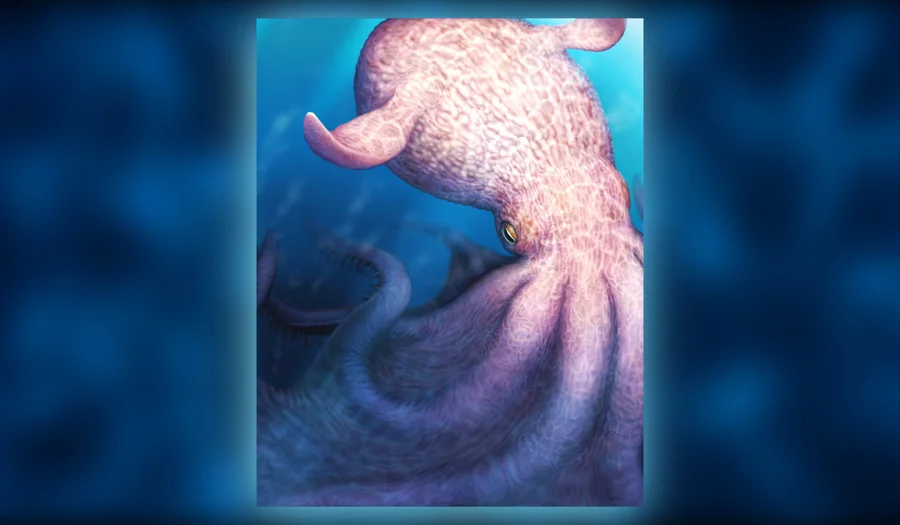
The giant octopus kraken fossils Cretaceous predators discovery is reshaping scientific understanding of ancient marine ecosystems, suggesting that enormous and intelligent octopuses once ruled the seas alongside—or even above—well-known predators like sharks and marine reptiles.
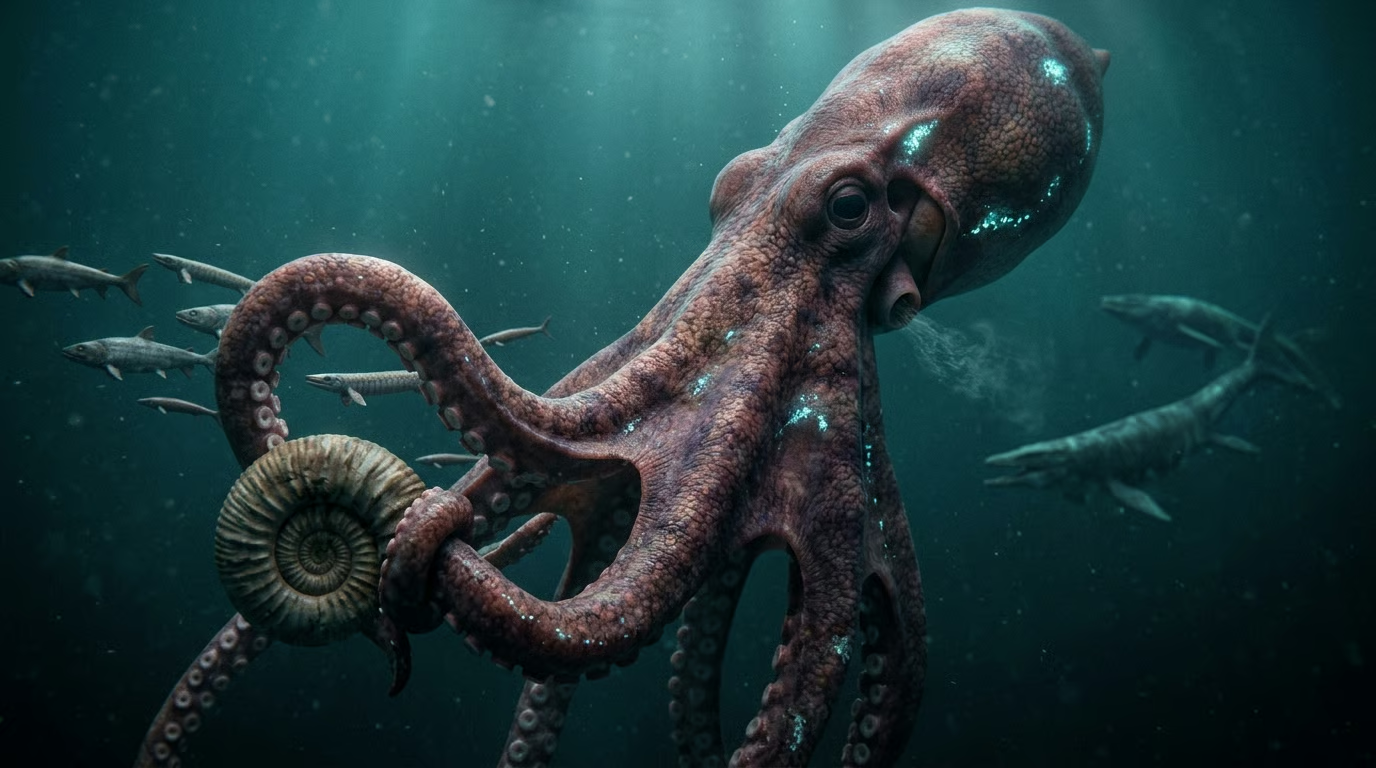

New Fossil Evidence Challenges Old Assumptions
For decades, scientists believed that large vertebrates dominated the ocean food chain during prehistoric times. However, new fossil research now points to a different reality.
Soft-Bodied Creatures as Apex Predators
Traditionally, marine ecosystems were thought to be structured as follows:
- Vertebrates (animals with backbones) were top predators
- Invertebrates (soft-bodied animals) served mostly as prey
The giant octopus kraken fossils Cretaceous predators study challenges this idea, showing that some invertebrates were powerful hunters.
Discovery of “Kraken” Octopus Fossils
Researchers analyzed fossilized jaw remains of ancient octopuses, often referred to as “krakens” due to their immense size and resemblance to legendary sea creatures.
These fossils date back to:
- Between 100 million and 72 million years ago
- The Late Cretaceous period
The findings suggest these creatures played a far more dominant role than previously assumed.
Massive Size of Prehistoric Octopuses
One of the most striking findings from the giant octopus kraken fossils Cretaceous predators research is the enormous size of these animals.
Two Identified Species
Scientists identified two species from fossil remains:
- Nanaimoteuthis jeletzkyi
- Nanaimoteuthis haggarti
These species belonged to a group known as finned octopuses.
Record-Breaking Length
The larger species, Nanaimoteuthis haggarti, may have reached:
- Up to 18.6 meters in length
- Comparable to the size of a large bus
For comparison:
- Modern giant squids reach about 13 meters at most
This makes the ancient octopus potentially one of the largest marine animals of its time.
Feeding Behavior and Hunting Abilities
The giant octopus kraken fossils Cretaceous predators findings also shed light on how these creatures hunted and fed.
Evidence from Fossilized Jaws
Researchers examined wear patterns on fossilized beaks (jaws), which are made of a durable material called chitin.
The analysis revealed:
- Damage consistent with crushing hard prey
- Signs of feeding on shelled animals and possibly bones
- Indications of strong bite force

Advanced Hunting Techniques
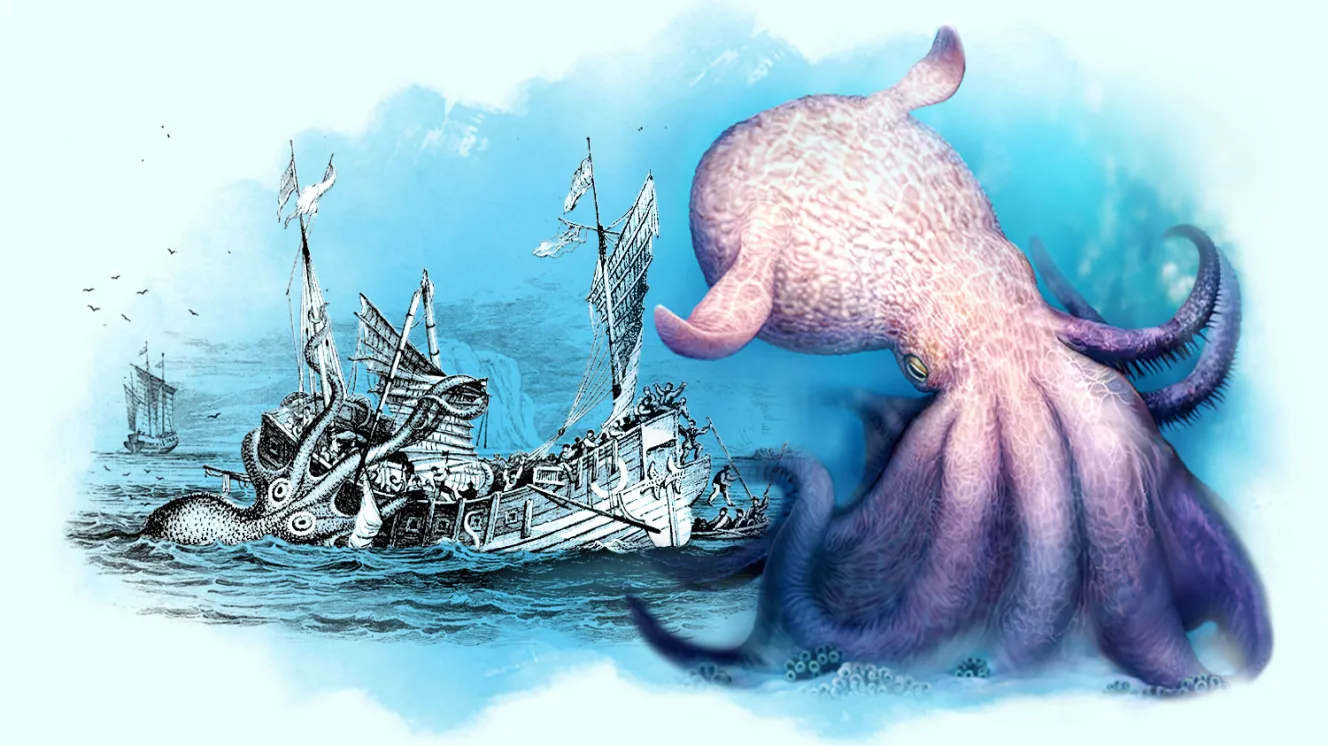
Despite lacking long jaws like marine reptiles, these octopuses likely used:
- Flexible arms to capture prey
- Powerful beaks to break down food
- Strategic movements to overpower targets
This combination made them highly effective predators.
Intelligence and Brain Development
Beyond size and strength, the giant octopus kraken fossils Cretaceous predators research suggests these creatures were also intelligent.
Signs of Advanced Cognition
Scientists observed asymmetrical wear on the fossil jaws, which may indicate:
- Specialized brain functions
- Division of tasks within the nervous system
- Complex feeding behavior
This points to advanced cognitive abilities uncommon among invertebrates.
Evolution of Intelligence in the Ocean
The findings support the idea that intelligence evolved independently in different marine species, including:
- Vertebrates like marine reptiles
- Invertebrates like cephalopods (octopuses and squids)
This parallel evolution highlights the importance of adaptability in survival.
Competition with Marine Reptiles
The Late Cretaceous oceans were thought to be dominated by large marine reptiles such as mosasaurs.
Rethinking Marine Food Chains
The new evidence suggests that:
- Giant octopuses competed with top vertebrate predators
- The food chain was more complex than previously believed
- Multiple apex predators may have coexisted
This challenges long-standing views of marine dominance.
Shared Evolutionary Traits
Both vertebrates and cephalopods developed similar features over time, including:
- Efficient feeding mechanisms (jaws or beaks)
- Streamlined bodies for better swimming
- Increased size and intelligence
These traits helped both groups reach the top of the food chain.
Fossil Locations and Research Insights
The fossil evidence used in the study was collected from multiple locations.
Key Discovery Sites
Researchers analyzed fossils from:
- Japan
- Vancouver Island, Canada
These sites provided crucial data for reconstructing the animals’ size and behavior.
Scientific Methods Used
The study relied on:
- Fossil jaw analysis
- Wear pattern examination
- Comparative anatomy
These methods allowed scientists to estimate feeding habits and ecological roles.
Broader Implications for Paleontology
The giant octopus kraken fossils Cretaceous predators discovery has important implications for the study of ancient life.
Changing Views on Invertebrates
The research suggests that:
- Invertebrates played a more dominant role than previously thought
- Soft-bodied animals could reach extreme sizes
- Marine ecosystems were more diverse and competitive

Understanding Evolutionary Adaptations
The findings also provide insight into:
- How intelligence evolves in different species
- The role of physical adaptations in survival
- The dynamics of ancient ecosystems
FAQ
What are “kraken” octopuses?
They are giant prehistoric octopuses identified from fossil remains, named after mythical sea creatures due to their massive size.
How big were these ancient octopuses?
Some species, like Nanaimoteuthis haggarti, may have reached lengths of up to 18.6 meters.
Were these octopuses apex predators?
Yes, fossil evidence suggests they were powerful hunters at the top of the marine food chain.
How do scientists know what they ate?
Researchers studied wear patterns on fossilized jaws, indicating they crushed hard prey like shells and bones.
Conclusion
The giant octopus kraken fossils Cretaceous predators discovery is transforming scientific understanding of ancient oceans. By revealing that massive, intelligent octopuses may have been apex predators, the research challenges long-held assumptions about marine ecosystems. These findings highlight the complexity of prehistoric life and the surprising roles that different species played in shaping the ocean’s history.
Click here for more news


