Gaza Rubble Removal Could Take 7 Years, UNDP Warns
Posted on
UNDP warns Gaza rubble removal may take seven years amid severe living conditions
0
0
Read Time:3 Minute, 51 Second
Gaza Rubble Removal could take up to seven years if current clearance rates continue, according to the United Nations Development Programme. The agency says the vast majority of Gaza’s population remains exposed to dangerous living conditions amid widespread destruction.
Speaking during a virtual briefing from Jerusalem after a recent visit to the Gaza Strip, UNDP chief Alexander De Croo described the humanitarian crisis as the most severe he has witnessed in his years of development work.
Gaza Rubble Removal Progress at Just 0.5 Percent
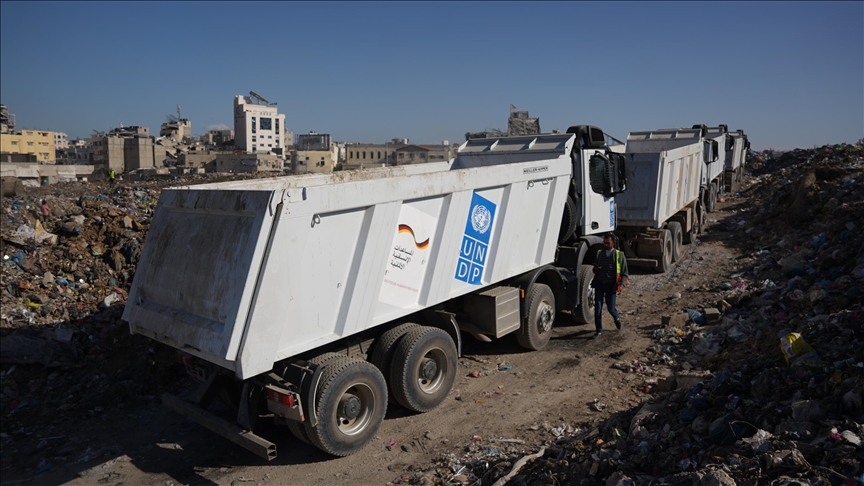
De Croo said that debris and solid waste removal is one of the UNDP’s primary recovery priorities. However, progress remains slow.
“Rubble removal, we have done approximately 0.5 percent of the total,” he stated, adding that at the current pace, Gaza rubble removal could take seven years to complete.
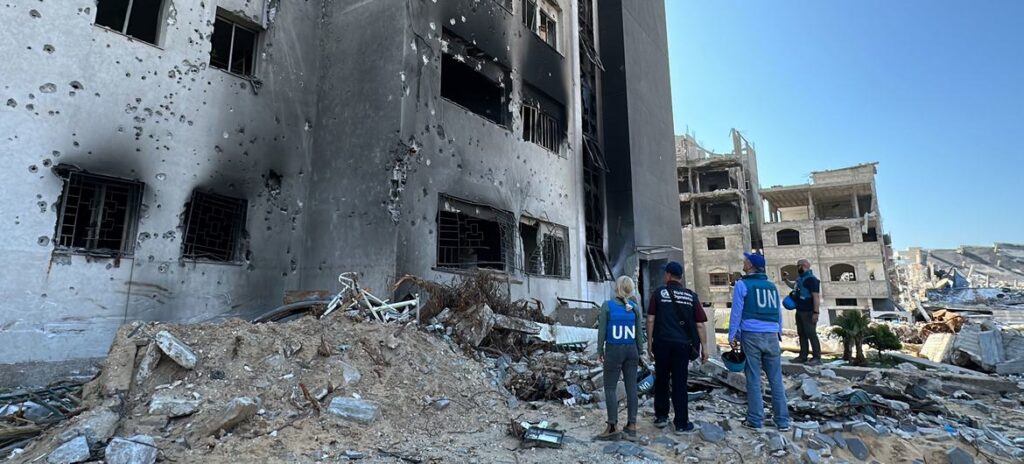
The scale of destruction across the enclave is extensive, with collapsed buildings, damaged infrastructure, and hazardous debris covering residential areas. The slow pace of Gaza rubble removal has raised concerns about safety risks, environmental hazards, and the ability to begin meaningful reconstruction.
The UNDP has emphasized the need for expanded authority and operational capacity to accelerate debris removal and recycling efforts.
UNDP warns Gaza rubble removal may take seven years amid severe living conditions
90 Percent Living in Dangerous Conditions
According to De Croo, approximately 90 percent of Gaza’s residents are currently living amid rubble and unsafe surroundings.
“This is the worst living conditions that I have ever seen, extremely painful conditions to live in,” he said during the briefing.
Many displaced families are staying in makeshift shelters that lack basic infrastructure. De Croo noted that most residents are living in what he described as very rudimentary tents, highlighting the urgent need for safer temporary housing solutions.
The hazardous environment created by slow Gaza rubble removal increases risks related to injury, disease, and structural instability.
Temporary Housing Needs Far Exceed Supply
The second priority identified by the UNDP is temporary housing. While the agency has constructed 500 recovery housing units and prepared 4,000 additional units, these numbers fall far short of the estimated need.
De Croo said that between 200,000 and 300,000 housing units are required to provide safer living conditions for displaced residents.
Even with ongoing efforts, the gap between available housing and the scale of displacement remains significant. The lack of adequate shelter complicates recovery efforts and prolongs humanitarian hardship.
Accelerating Gaza rubble removal is considered essential for enabling large scale housing construction and rebuilding efforts.
Restarting Gaza’s Private Sector
The third focus area for the UNDP is revitalizing Gaza’s private sector. Much of the local economy has been largely inactive due to prolonged conflict and destruction.
Recovery initiatives include limited investment programs and cash for work schemes designed to provide short term income opportunities while supporting community rebuilding efforts.
Economic recovery is closely linked to Gaza rubble removal, as clearing debris is necessary to reopen commercial spaces, repair infrastructure, and restore public services.
Without faster progress in debris clearance, private sector recovery may continue to face obstacles.
Call for Greater Access to Materials
To speed up operations, De Croo said the UNDP has requested greater access from Israeli authorities for construction materials, housing units, and logistical support.
He emphasized that security concerns should not prevent humanitarian agencies from accessing the resources required to address urgent needs.
Increased access, according to the UNDP, would allow faster Gaza rubble removal, expanded housing projects, and broader economic support initiatives.
Ceasefire Context and Ongoing Challenges
A US backed ceasefire has been in place since October 10, halting two years of war that, according to Gaza’s Health Ministry, has resulted in more than 72,000 deaths and over 171,000 injuries since October 2023.
However, Gaza authorities report that hundreds of violations have occurred since the ceasefire took effect, with additional casualties recorded.
The continuing instability complicates humanitarian operations and recovery planning, including Gaza rubble removal efforts.
Long Road to Recovery
The UNDP’s assessment highlights the immense scale of reconstruction required in Gaza. With only 0.5 percent of debris cleared so far, the projected seven year timeline underscores the magnitude of the challenge.
Accelerating Gaza rubble removal, expanding temporary housing, and revitalizing the local economy are central pillars of recovery efforts. Without increased access and operational capacity, humanitarian agencies warn that progress will remain slow.
As rebuilding efforts continue under fragile conditions, the focus remains on improving safety, restoring dignity, and creating pathways for long term recovery in Gaza.
Kenya HIV Prevention Shots will begin nationwide distribution in March as part of a powerful public health initiative aimed at reducing new HIV infections. The […]
A former doctor to ex Vice President Dick Cheney has urged the United States Congress to examine President Donald Trump’s mental fitness following recent statements […]
Genotype awareness drive activities took center stage at Trinity University in Sabo Yaba, Lagos, where health advocates and medical professionals educated students on genotype compatibility […]


 0
0
 0
0