 0
0
 0
0
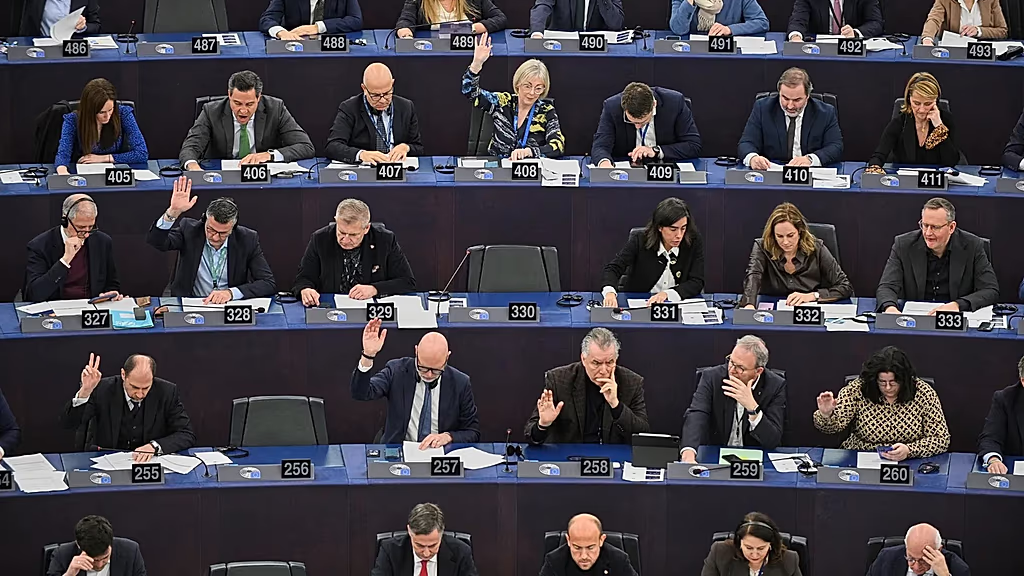
The European Parliament will vote on a report reviewing the European Central Bank’s work. This report includes a section supporting the digital euro.
Forty-eight EU lawmakers added the pro-digital euro section. The vote will take place in Strasbourg. Although the report has no legal power, it will show public support for a European digital currency.
Understanding the Digital Euro
The digital euro is electronic money issued by the European Central Bank. It will complement cash and private bank cards, rather than replace them.
Unlike card payments managed by private companies, the digital euro allows citizens to use digital public money directly. The European Commission proposes a digital wallet that works both online and offline, and it ensures transactions remain untraceable.

Why the Digital Euro Matters Now
Interest in the digital euro has increased due to economic tensions between the EU and the US. It could reduce Europe’s dependence on US-based payment networks, such as Visa and Mastercard.
Supporters argue that the digital euro strengthens Europe’s financial independence. Furthermore, it provides a backup option if global payment systems face disruption.
Political Divisions in Parliament
Although the EU Council has already backed the proposal, the European Parliament must take the final position. However, lawmakers remain divided.
Some want to limit the digital euro to offline use. This restriction would prevent it from competing with major card networks. Additionally, several far-right parties have asked the European Commission to withdraw the project entirely. Meanwhile, mainstream parties remain split. Therefore, the upcoming vote will reveal the political balance.

What the Amendment Proposes
The amendment calls for a digital euro that works online and offline. It also ensures universal access to payments and reduces reliance on private or non-European providers.
The design aligns with the European Commission’s proposal. It complements cash and private banking services. Consequently, it aims to strengthen the single market, reduce payment fragmentation, and improve financial resilience across the EU.
Support Across Political Groups
The amendment has support from multiple political groups, including the European People’s Party, Socialists and Democrats, Renew Europe, the Greens, and The Left.
Some members of the European Conservatives and Reformists group are expected to vote in favor, while support from other right-wing parties remains limited. Supporters warn that any delay could increase Europe’s reliance on US-based payment systems, widely used for daily transactions.
What Happens Next
The vote does not create law. However, it guides future negotiations on the digital euro. Strong support could advance the project, while a divided vote may delay Europe’s digital currency plans.